
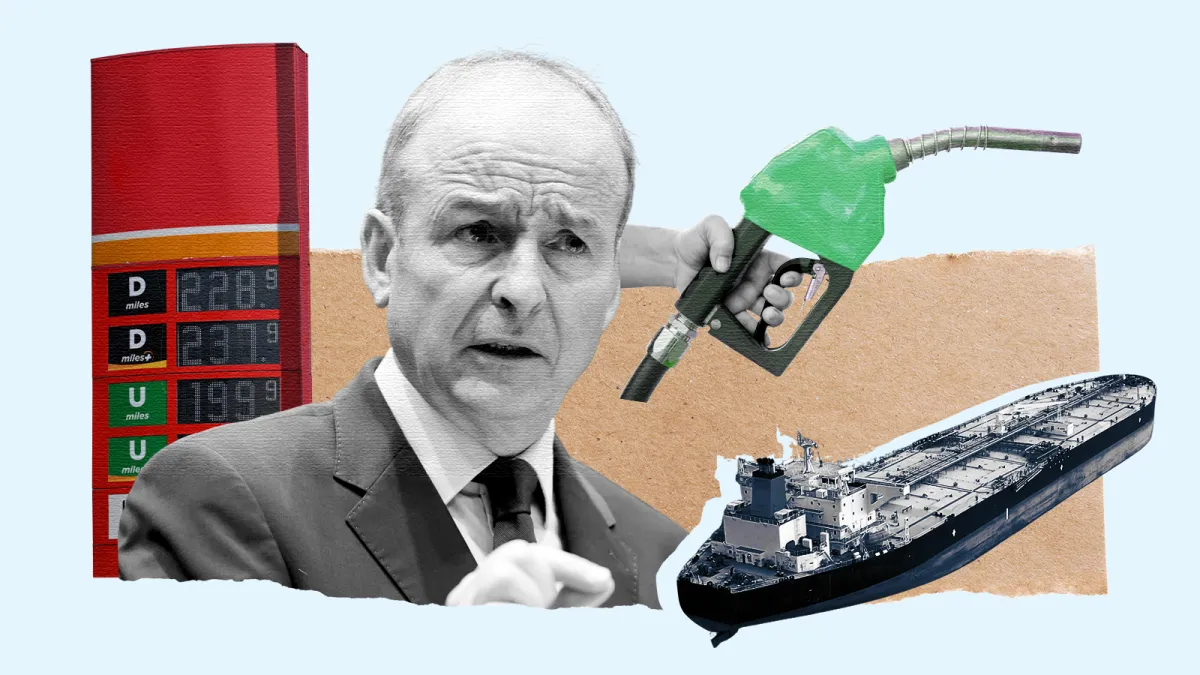
Households will be asked to curb their oil and gas use because of concerns about the supply of fuel in April and windfall taxes on energy suppliers are also on the table as the government tackles an energy crisis of historic proportions.
Conversations have begun at the centre of government about introducing new demand management measures, following in the footsteps of countries that have introduced fuel saving measures such as public holidays, mandatory work-from-home rules, fuel rationing and industrial shutdowns.
There is pushback from ministers against more stringent work-from-home requirements, however, due to concern that it would put further pressure on household finances.
At a meeting about energy supply last week between senior Department of Energy officials and industry representatives, the government was warned that if the crisis arising from the war on Iran continues, the position in relation to fuel supply could “deteriorate significantly.”
The meeting was told that the main concern is the supply of diesel and jet fuel and senior civil servants were warned by the fuel industry that the overall medium-term outlook is serious and could worsen quickly.
Two government figures told The Sunday Times that, although Ireland is not yet in the territory of fuel rationing, a contingency plan will be stress-tested in the coming weeks. Under this plan, workers in 40 frontline roles would be given first access to fuel if levels became critically low. Members of the Defence Forces or Gardai would be situated at garage forecourts to check the workers’ ID, a source said.
 Access to fuel could be prioritised for key workersGetty images
A spokeswoman for the Department of Energy said the government was “proactively managing supply in line with the oil emergency response plan. This plan provides the basis of Ireland’s response and the minister has substantial legal powers to secure and protect supply. Oil supply in March has not been impacted. Oil supply in April is booked, albeit with some adjustments to supply chains”.
At a Eurogroup meeting last Friday, attended by Fatih Birol, the head of the International Energy Agency (IEA), the possibility of a temporary windfall tax on energy profits was introduced. A government source confirmed that such a measure is under consideration, after a previous temporary windfall tax raised a total of €267 million in 2022 and 2023. The money raised from any such tax would be put towards supporting the public, with fresh cost-of-living measures back on the table for the 2027 budget, a senior source said.
Economists are privately warning the government that the effects of the energy crisis could last well into next year, even if the war on Iran and crisis with the Strait of Hormuz ended now.
After the Eurogroup meeting, Simon Harris, tanaiste and minister for finance, said the current global energy crisis is of “historic proportion.” There is also growing concern across the EU about stagflation, the combination of slow economic growth and high inflation.
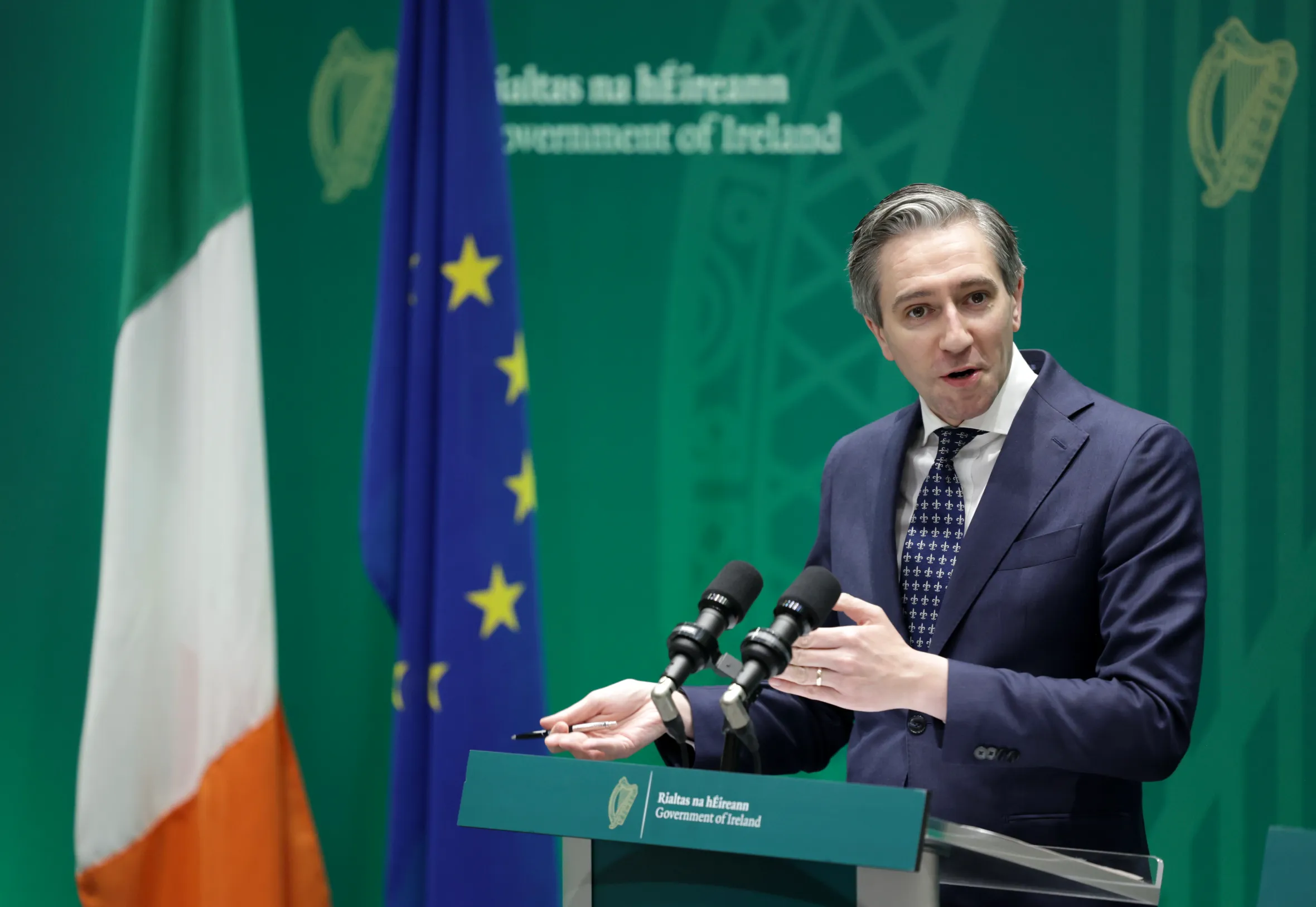 Simon HarrisLeah Farrell/RollingNews
Domestically, a campaign offering advice to households about how to conserve energy has been expedited by Darragh O’Brien, the minister for energy.
This could involve people being asked to switch off lights and appliances instead of leaving them on standby, replacing old bulbs with energy-efficient LEDs and running washing machines and dishwashers at lower temperatures. Householders will be advised to do these things, rather than being told.
Martin Heydon, the minister for agriculture, will attend a meeting of his European counterparts in Brussels on Monday to discuss the carbon border adjustment mechanism — the EU’s tool for putting a price on carbon emitting production covering iron, steel, cement, aluminium, fertilizers, electricity and hydrogen.
While member states currently don’t have the ability to suspend the tax, it’s understood that Heydon would like to discuss the bloc having the option of suspension.
Ireland newsletter
Our best in-depth reads, exclusive features, news and a note from our editors in Ireland.
Sign up with one click
European Union countries’ energy ministers will also hold an extraordinary discussion on Tuesday to discuss the effect of the Iran war on European energy security and supply.
Government sources believe that there will be more energy challenges in the coming weeks as it takes oil tankers six weeks to get to the EU, while there are also fears about knock-on impacts in the winter of 2026.
The coalition last week moved to cut excise duty on petrol and diesel, but was heavily criticised by the opposition for not cutting duty on home heating oil. Sinn Fein voted against the petrol and diesel cuts, arguing that they did not go far enough.
Government backbenchers are uneasy about the measures, believing more may need to be done to help struggling households.
While recent support packages targeted hauliers and bus operators, tillage farmers — who are reliant on heavy machinery for spraying and sowing —were excluded.
One Fianna Fail TD said: “There is a bit of frustration on this one that they weren’t included with operators and the hauliers. There will be pressure building from the lobby groups to try and put some sort of a package in place if things continue.”