
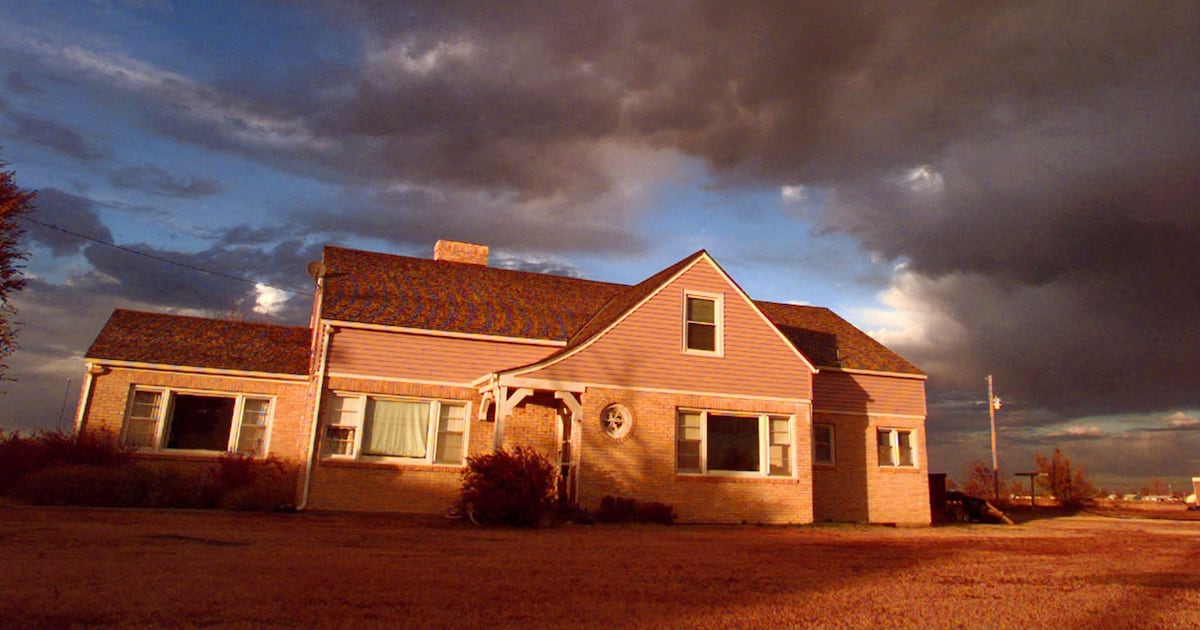
On Christmas Day, 1959, the Hope family hosted two unexpected and exotic guests at the dinner table at their home in Gillespie Place in Garden City, Kansas.
Truman Capote had arrived in Garden, by train, a few weeks earlier with the intention of writing about the reverberations of a crime so shocking that it permanently altered the sense of unassuming trust with which people lived in that part of the Great Plains.
On November 15th of that year, two drifting petty criminals had travelled to the nearby prairie town of Holcomb with the intention of robbing a prosperous farmer, Herb Clutter. They left with no money of consequence, but during appalling hours of violence had murdered Clutter, his wife Bonnie Mae and their children Nancy Mae (16) and Kenyon (15). Two older Clutter girls were away from home that night.
The murders baffled and shocked the local and wider Kansan communities. The immediate consequence was that hardware shops saw demand for all kinds of security locks. It became known as the winter when Kansas country people began to bolt their doors for the first time.
The murders made national news but the arrival of Capote, a celebrated New York author who was tiny and outré and puckish, into the general confusion caught people unawares. He was accompanied by his friend Harper Lee, who had just submitted her manuscript for To Kill A Mockingbird. Natural local generosity clashed with understandable suspicion.
Clifford Hope was attorney for the Clutter family. His wife, Dolores, was a local columnist and, as it happened, a subscriber to the New Yorker magazine. She learned that Capote and Lee would be stuck in the Warren Hotel on Christmas Day and hospitable instincts took over.
A moment from that dinner was passed down in family lore in the years afterwards. After a main dish of duck was served, Capote broke away to offer an unforgettable comment on the twice-baked potatoes. “They lack … something” he told his hosts brightly.
“I think they liked him, yes,” Rosemary Hope says of her parents when we meet near her home in Kansas City.
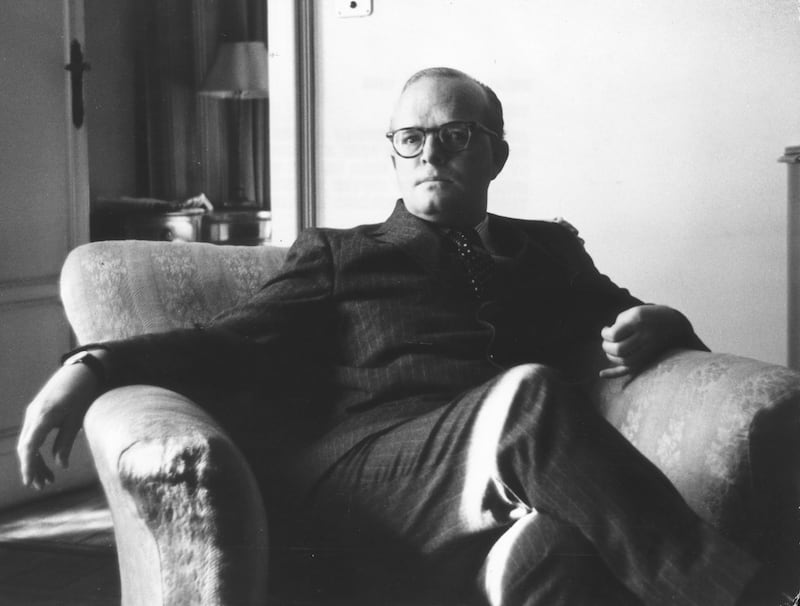 Truman Capote, in the mid-1960s. Photograph: Keystone/Getty Images
“With that comment, that was just his being honest: what you see is what you get with me. But I think people in Garden and Holcomb were quite wary of them in the beginning. Because they were such an odd couple. And people wondered what they were doing here. The crime was quite fresh and the killers had not been found. There was a real fear that they were still out there and that it may have been a grudge killing – a local farmhand or something.”
Rosemary was not been born in time for that Christmas dinner but the older children – Christine, Nancy, Quentin and Holly were fed, introduced and then allowed to spend the afternoon playing with their new toys.
Just five days later, Perry Smith and Richard Hickock were arrested in Las Vegas, Nevada and brought to Garden, where they were found guilty after a high-profile trial and, following a prolonged series of appeals, hanged in the state penitentiary in April 1965.
In Cold Blood was published in January of 1966 to sensational reviews and public appetite. Capote had been a regular visitor to Garden and Holcomb for five years. He engaged Clifford Hope as his attorney during that time. That early hospitality extended by the Hopes led to a rush of similar invitations.
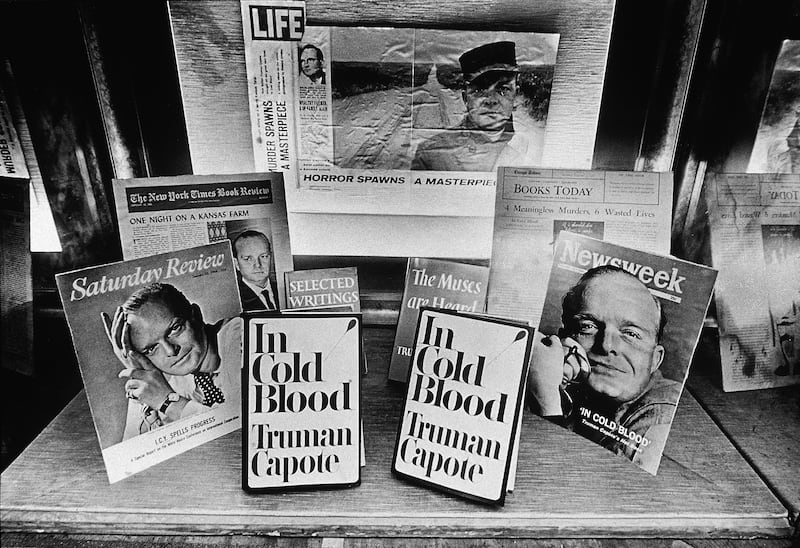 In Cold Blood by Truman Capote was a sensation when it was published. Photograph: Carl T Gossett Jr/New York Times/Getty Images
“It became the thing to have a cocktail party and invite Truman and Harper Lee only,” Rosemary says.
“You know, among the professional set. At that time, people were building houses on the Hill. Garden City is very flat. So, people were building the kind of houses that had sunken livingrooms and intercom systems. Our house was old even then.”
The six-hour drive from Kansas City to Holcomb is striking in its primary colours and spareness, with the I-70 brushing against the satellites of Lawrence and Topeka before thinning into the vividly lonesome single-lane 56 route; isolated farm houses with obligatory basketball hoops broken by small towns that are silent by night-fall with names such as Larned, Rozel, Gray and Hanston.
On a turbulent Saturday afternoon, I called into the Finney County Museum in Garden City and fell into conversation with the two ladies at the reception desk, one of whom announced herself as a diehard Daniel O’Donnell fan.
Steve Quakenbush, the museum director, wandered in and we talked about how those extraordinary years affected the local community. In Cold Blood was a sensation that never stopped, leading to a 1967 black and white documentary drama that, morbidly, featured scenes filmed in the Clutter house, and more recent films such as Infamous and Capote, which earned the late Philip Seymour Hoffman an Oscar for his uncanny portrayal.
Capote was generous to those in Kansas who had befriended him, issuing invitations to the “black and white” masquerade ball he hosted in the Plaza hotel, New York City, in November 1966. Many made the long cross-country trip to be there. The Hopes did not attend.
“I think they would have looked at it practically – they had five children at home,” says Rosemary. “But in 1965 we took a vacation to New York and Truman got my parents tickets for a Broadway show. Daddy was always very professional. He wasn’t gossipy. In fact, he’d say he could never understand guys who would go to a restaurant and sit and have coffee and … talk. He wasn’t social like that.
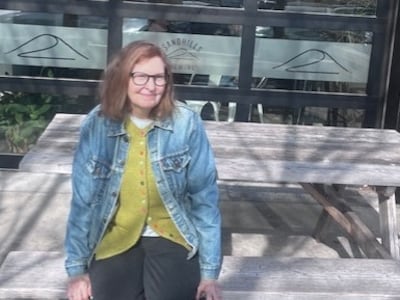 Rosemary Hope. Photograph: Keith Duggan
“He read a draft of In Cold Blood. Capote sent it to him for factual things. And Daddy always wrote on pencil in a little pad. And it was just practical things; not like [chief investigator] ‘Al Dewey wouldn’t have said that’. It was more, ‘no … wheat harvest begins this month’. Things related to Kansas.”
Photographs of that Plaza gala feature in a display dedicated to the story of the Clutter murders and the In Cold Blood phenomenon in the Finney County Museum. Many small, ostensibly safe towns have endured isolated macabre incidents. It was the fate of Holcomb and Garden that one of the most gifted US writers of the era took an interest in their grim tragedy.
Acknowledging that public phenomenon while honouring the memory of the Clutters has always been a source of tension. Herb Clutter was a community leader who had been appointed to the Federal Farm Board by president Dwight Eisenhower. They were a model family and the brutal randomness of their murders was an outlandish, difficult fact to absorb.
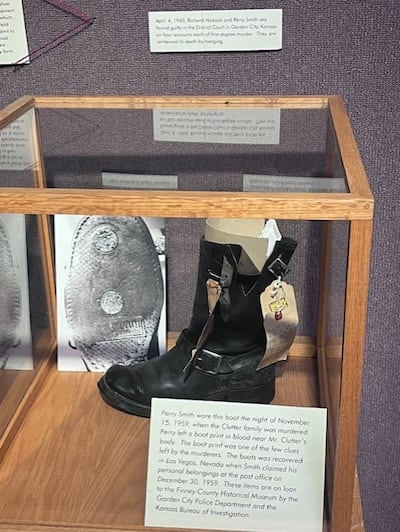 The boot worn by Perry Smith, whose footprint was the vital in connecting evidence. Photograph: Keith Duggan
The younger generations in the area know little, if anything, about the Clutter murders. But it is still part of living memory. Quakenbush says the museum sought and received approval for the exhibit from Clutter relatives before it opened. When Bobby Rupp, who had been Nancy Clutter’s boyfriend at the time of the murders, came to see it he had to brace himself before entering the room. It’s an unsettling collage of newspaper clippings and real artefacts – the boot worn by Perry Smith (whose footprint was the vital, connecting evidence), the judge’s robe, a dress worn by Marie Dewey [wife of Al Dewey] to the Plaza ball.
[ Harper Lee: A brave writer who told the truth about racismOpens in new window ]
Holcomb is a 10-minute drive along a narrow straight road from Garden. It’s a sparse, simple country town with a dignified memorial to the Clutter family in the community park. Hartman’s Café, the gathering point in Holcomb in the late 1950s, has now become the El Rancho cafe and remains the local meeting point.
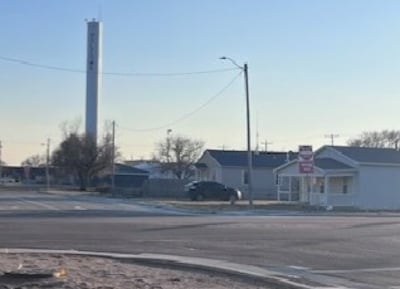 Holcomb. Photograph: Keith Duggan
When In Cold Blood was published, many Holcombites took grave exception to the transformation of a family they had known and liked into characters in what Capote described as a non-fiction novel. They were particularly aggrieved by his depiction of Bonnie Clutter. Eveanna and Beverly, the Clutter sisters who had to deal not only with their grief and shock but the unceasing strangeness of witnessing their loved ones become household names depicted on page and screen, refused to ever speak about Capote or his book.
There is a short news clip of Capote back in Holcomb shortly after the publication of In Cold Blood. He is wearing a trench coat and sunglasses, although it looks overcast, and is standing outside the post office.
“I always had a certain feeling of great sadness because of the events that had happened here and the book I was writing and what I was trying to do,” he says in narration.
“And yet coming back here has a strange quality of nostalgia as though you were visiting an old home town. The whole experience for me was a very enlarging one because I came to know and feel I understood a whole kind of world that was really new and alien to me. And by coming to know it so well, I feel it enlarged me as a person and an artist. What effect I had on western Kansas, I have no idea.”
The arrival to Garden, in 1980, of what was then the biggest slaughterhouse in the United States saw the town change rapidly.
“If you had to ship your cattle to Kansas City, they’d lose weight along the way,” Rosemary says.
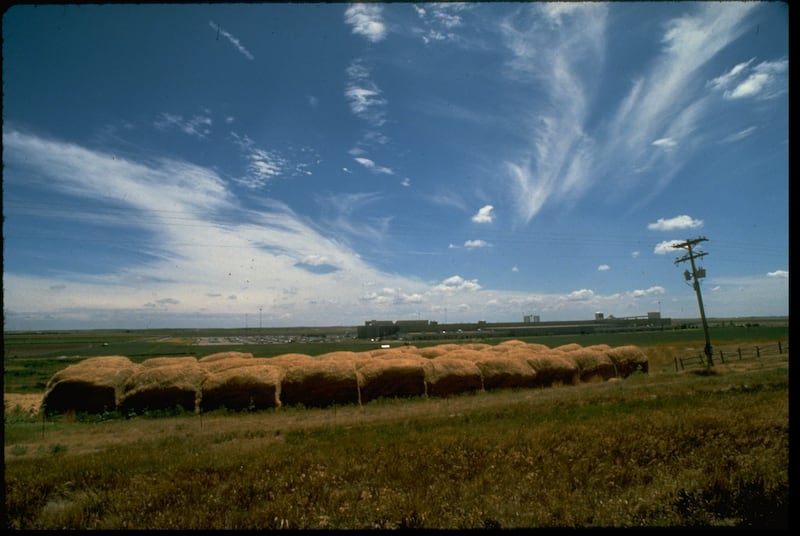 The arrival of a huge cattle slaughterhouse in 1980, which stretched across plains near Garden City, Kansas, saw the town change rapidly. Photograph: Barbara Laing/Getty Images
“So, they decided they would feed them, kill them and process them all in the same place. And that drew in many immigrants because it is hard and awful work. But you can raise your family on it. And we got in people from all over – there are more than 15 languages spoken in some schools in Garden now. It has become a very diverse place. And it wasn’t like that when we were growing up there.”
Just this year, Garden elected its first ever Asian-American mayor, who, at 22, is also the youngest person to hold that post in the town. This year also marks the 60th anniversary of the publication of In Cold Blood as a stand-alone book. Its place as a literary classic is assured but the decades have brought more than their share of ethical revisionism.
The children and teenagers of Capote’s years in what he memorably described as “the high wheat plains of western Kansas” are among the seniors now. The Associated Press sent a reporter to Holcomb to solicit the views of local people when Capote, after years of acute and very public alcoholism, died in 1984.
[ The Capote Tapes: From impoverished childhood to cocaine-fuelled declineOpens in new window ]
Although In Cold Blood propelled him into a kind of global fame, and the book sold a reported 100 million copies, it would prove to be the last completed work he published.
In Holcomb, opinion remained divided: some recalled him with affection and saw the merits of the work; others, including Rupp, retained grave objections to a book that had brought its author wealth.
Clifford Hope remembered his former client as a man who was “gracious, businesslike and intelligent”.
“I’m sorry it was ever written,” he said. “It brought fame and fortune to Capote but you might say it didn’t do anyone any particular good, least of all Capote. He wrote very little of consequence after that.”