
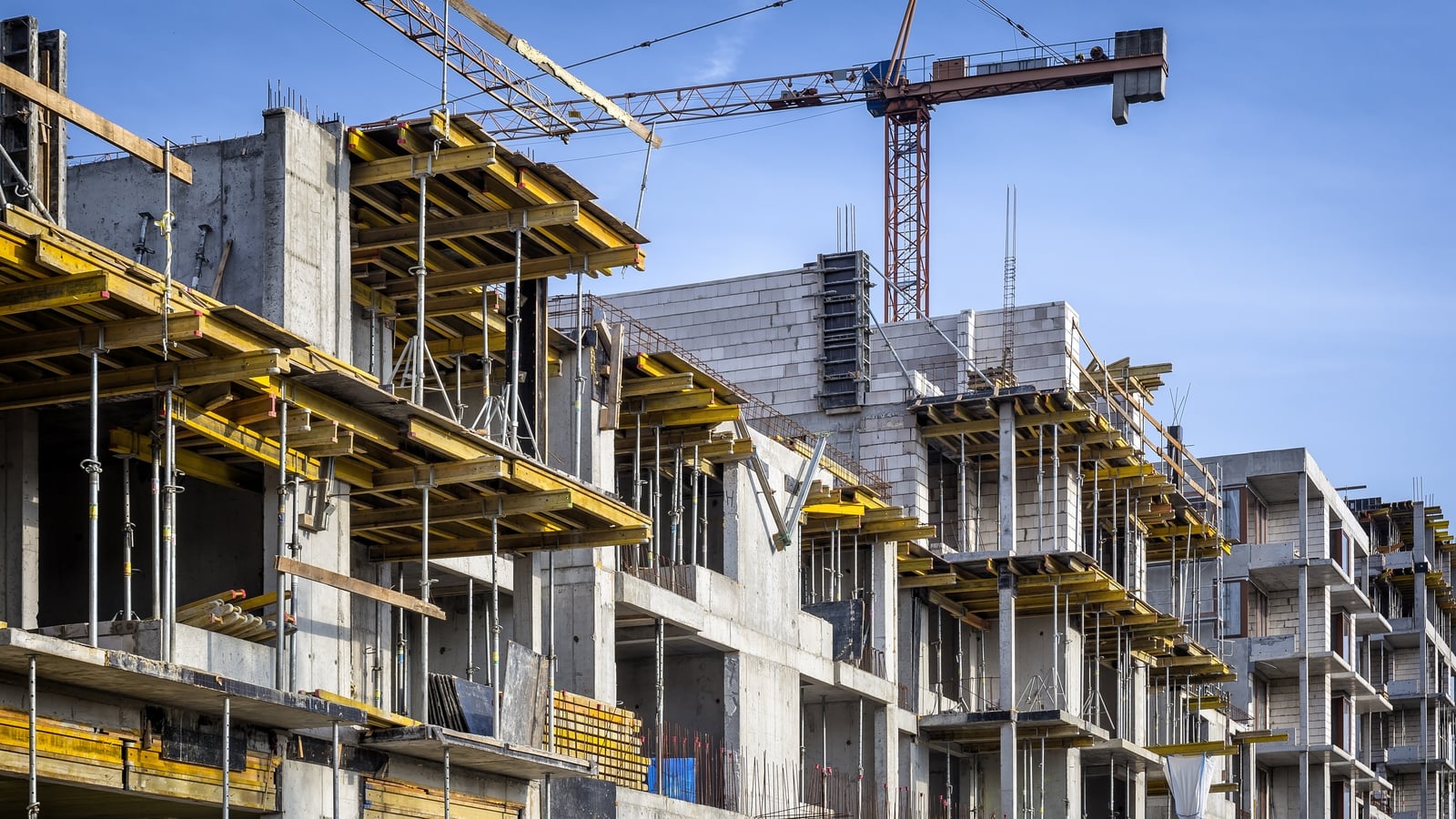
From the Covid-19 pandemic to the full-scale invasion of Ukraine there have been several global events in the past five years that have caused inflation to suddenly spike.
Consumer sentiment had already fallen to a three-year low in response to the war in the Middle East according to the latest Credit Union Consumer Index.
The Central Bank and the ESRI have warned of inflationary pressures for the country due to the constraint on oil supply driving up energy prices.
Dr Paul Davis, lecturer of public procurement at Dublin City University, told RTÉ’s ‘This Week’ that more inflation pressure is coming over the next few months, especially in the construction sector.
A world event that disrupts the international supply of energy causes a shock to the global economy that results in price rises.
Inflation can be felt very quickly in items that are bought in small quantities regularly, such as food and petrol.
However, for large-scale projects like construction, it can take longer to be felt but also last longer in its impacts.
“There’s a knock-on effect,” Dr Davis explained, “so the consumer is seeing it immediately; the public sector will see it over the next six to 12 months.”
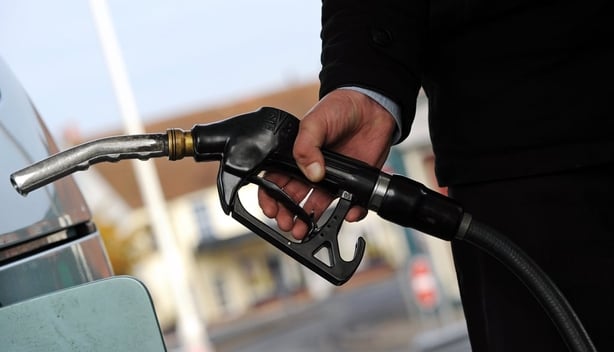
Diesel and petrol prices have soared since 28 February
“We’ll see fuel and energy costs increase, electricity and gas prices increase, shipping and logistics costs increase, and then all the input materials, the plastic, the metals, the chemicals, they increase,” Dr Davis said.
Until one month ago, when Israel and the US attacked Iran, it looked as though inflation was calming in the construction sector.
Meanwhile builders who spoke to ‘This Week’ said that as they see their costs go up, it will be passed onto the customer.
“I think it has to be passed on to customers. We’re not paying for it, our materials are going up constantly,” one builder told This Week at Brooks building supplies.
He added that while they were locked into contracts right now, any new jobs coming up would have to be repriced due to the war in Iran.
Another builder said that clients are understanding that they have to increase prices.
“The cost of labour has gone up, cost of transport has gone up, cost of materials has gone up, so we have to increase our prices accordingly.”
Builders said that as they see their costs go up, it will be passed onto the customer
Another builder said that customers are understanding of inflation but once he is locked into a contract with them, any price increases are absorbed on his side.
Vice President of the Society of Chartered Surveyors Ireland Tomás Kelly said over the past 18 months inflation had stabilised and business in the construction sector was good.
“There’s strong levels of activity,” he said, adding that he is yet to see inflationary pressures hit construction prices as a result of the war in the Middle East.
“There has been a somewhat of a wait and see approach taken by the industry,” Mr Kelly said.
“However, there is anecdotal evidence that the supply chain has been notifying contractors and the market generally about potential increases.”
Mr Kelly added that pauses to investment in the construction sector can be “slow to reverse”.
“It’s very important that the Government continues to press on with the implementation of the significant national development programme and the critical investments for infrastructure and housing as particular priorities, because the construction industry doesn’t like uncertainty,” Mr Kelly said.
Inflation impact on public sector
Ireland plans to spend €275 billion before 2035 on public capital investments, according to the Government’s National Development Plan
This includes strategic projects in water, transport, and energy as well as the delivery of more homes and schools.
Dr Davis explained for long term public capital investment projects, inflation is built into costs, but price shocks are not.
“We’re now looking at inflation increasing rapidly,” he said.
Around 80% of Ireland’s energy was imported in 2024. This makes the country particularly vulnerable to price shocks coming from the Strait of Hormuz.
One-fifth of global oil and gas shipments pass through the Strait of Hormuz.
“Because the oil is literally stopped and we’re also stopping gas coming through, we’re seeing impact on the likes of plastics and other derivative products coming from oil,” Dr Davis said.
In public sector contracts, suppliers’ terms are agreed including a normal rate of inflationary increase to provide a good or service to the public.
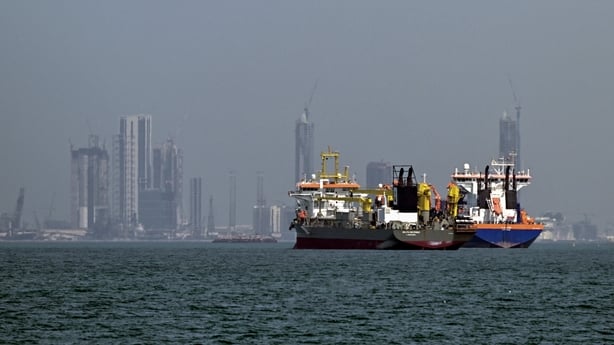
One-fifth of global oil and gas shipments pass through the Strait of Hormuz
When prices go above what the supplier can afford on a public contract, it is very difficult to renegotiate because contracts need to go out to tender.
“So, we’re not going to be able to deliver at the same level that was sitting in the press releases as to what we wanted to deliver,” Dr Davis said.
“Government needs to get realistic about the way that they’re communicating this message,” he added.
“We’re all talking about the consumer impact, but we need to look at what this impact is going to be on the services impact over the next six to 12 months.”
“If I increase my energy costs – which will happen – that means that I have to knock back services being delivered, whether that’s in schools, whether that’s in health, whether that’s in roads, whether that’s in construction,” Dr Davis said.
“I don’t think we’re having that honest conversation yet.”
Read more:
Pressure on Government over fuel prices, but what action will it take?
Russia’s oil revenues spike due to US-Iran war
MAGA backs Trump on Iran, but how strong is support?