
There is an innovative and fervently awaited greenway project near where I live that has been inexplicably delayed for years now.
When I say the delays are inexplicable, the many State agencies who take some – never all – the responsibility for the Broadmeadow Way Greenway will give you as many explanations for the delays as there are stars in the sky.
But if you’ve grown up in Malahide, Co. Dublin, (one of the towns to be served by the greenway) as I have, none of the explanations stand up, except one – Ireland has lost the ability to execute infrastructure plans.
When a section of the Broadmeadow viaduct, which carries the Dublin-Belfast railway, collapsed into the Malahide Estuary in the summer of 2009 I worked on the news story.
When I made phone calls for this newspaper that day I was told by State representatives that it would be necessary to close the Dublin-Belfast rail route for up to six months to facilitate repairs.
We played our role as a media organisation in having this ridiculous timeline reduced to about eight weeks (which is a whole other story).
When it appeared that the Broadmeadow Way Greenway was about to open in 2023, Fingal County Council was clapping itself on the back for its brilliant foresight in the midst of the disaster.
They told the credulous Irish Times that they asked Irish Rail – another State agency to be mired in the saga – to, as part of the repair work, sink 11 columns into the sea beside the railway track to allow for the future development of a cycle path.
Despite being an objective of the next two county development plans, no progress was made on the greenway for a decade and it was 2019 before the council made an application to An Bord Pleanála for the project to proceed. There were missed deadlines and excuses.
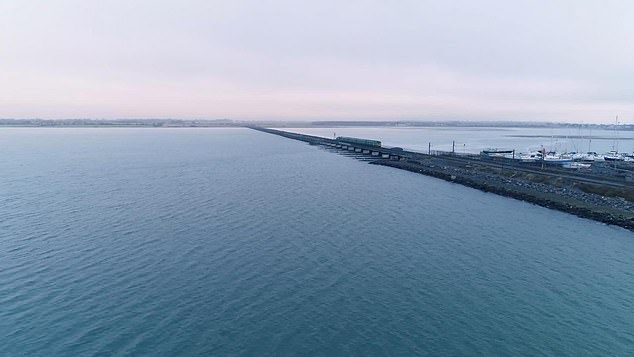
When it appeared that the Broadmeadow Way Greenway was about to open in 2023, Fingal County Council was clapping itself on the back
However, those who watched the progress eagerly saw that the major, admittedly complex, building task of constructing a cycling bridge over the rapid flowing waters had been completed a number of years ago and the opening date was announced for early 2026.
Surely, since the rest of it was just a gravel path through fields, this new, delayed deadline would be met.
Yet Labour councillor, Corina Johnson, based on the Northern side of the greenway, recently revealed to a devastated north county Dublin information she had received from Fingal County Council, that the project will not now open until ‘early 2028’.
The Council has repeatedly cited complexities, non specific construction challenges, limits on construction time caused by trains and even limits on seasonal construction due to fears for seabirds.
Challenges I’m sure there are, but nearly 20 years worth for a cycle path? You, reader, I am certain, will immediately think of something in your locality – a road, a greenway, a library, a school, a railway upgrade or even a hospital – and feel the same frustration as my community and I feel over this greenway.
As Boston politician Tip O’Neill said ‘all politics is local’. We can all relate to the national delays too, like the National Children’s Hospital.
This week an Oireachtas Committee was told the new National Children’s Hospital might not open until the autumn of 2027, with builders BAM missing the 18th completion deadline.
Yet not a single person has been sacked or even held responsible for this national embarrassment. Such incompetence or lethargy, is so endemic in the system, from the Taoiseach down to the lowest tier of the civil service, deadlines mean nothing.
That a national infrastructure project of this scale and emotive value should have missed so many deadlines is a disgrace, but the incredible trick the Coalition has performed is that nobody appears to be responsible for it, bar, they say, the developers, BAM.
But a builder just builds, it is the entity that engages and pays it that holds responsibility.
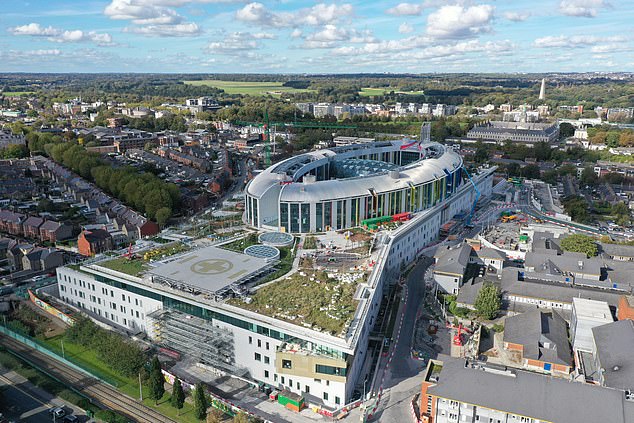
That a national infrastructure project of the scale and emotive value as the National Children’s Hospital should have missed so many deadlines is a disgrace
But the Coalition has devised a strategy where responsibility falls between the Department of Public Expenditure and the Department of Health, and I’m sure the Department of Children gets a mention, and ultimately there is no political accountability over a decade of delays.
From housing to road and rail projects, sewage provision, hospitals, schools, the Government and its ever expanding matrix of subsidiary State bodies will offer excuses and international comparisons that would make you second guess yourself, that somehow we are building an infrastructure commensurate with our wealth.
Of course the one excuse we aren’t offered is that we can’t afford it. So, forget international comparisons, Ireland of 2026, has almost unlimited financial resource, which makes it almost unique in Western democracies.
According to the Government figures Ireland’s corporation tax receipts reached a record €32.9billion in 2025, a 17.2 per cent increase from 2024, driven by incredible profitability in multinational pharma and technology sectors.
Repeatedly we are warned that this is time-limited windfall tax, but corporation tax take helped total tax revenues rise to €105.7billion, with corporate tax now over three times 2019 levels.
Part of the problem with trying to understand how Ireland can accumulate such national wealth, yet leave a population so deficient in housing, transport, hospitals and schools is that Government agencies try to bamboozle us with data, complex excuses and even more complex solutions.
There are many ways to rate Ireland’s wealth. But let’s put it this way, our current levels of Government wealth through tax takes are comparable only to the wealth generated by states that have struck oil.
Which makes me think of the 1960s US comedy series the Beverly Hillbillies (when we were kids in the 1980s this kind of thing passed for children’s programming). Hillbilly Jed Clampett made it rich, according to the iconic theme tune, ‘out shooting at some food/when up through the ground come a bubbling crude/oil that is/black gold/Texas T’.
Nearly a decade’s worth of japes and fun was wrung out of this concept: a poor, simple, Hillbilly family suddenly finding themselves with incalculable wealth that saw them move to Los Angeles’s Bel Air without the knowledge or education to help them spend the money astutely.
The Clampetts, it could be said, didn’t know how to execute. This Coalition could be renamed the Clampett Coalition.
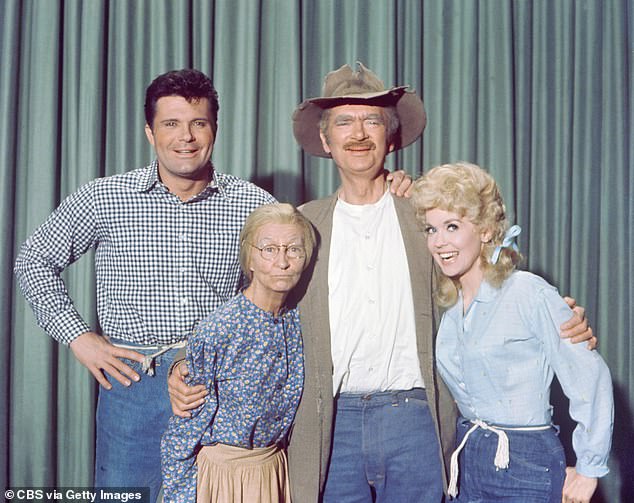
The Clampetts were a poor, simple, Hillbilly family suddenly finding themselves with incalculable wealth that saw them move to Los Angeles’s Bel Air without the knowledge or education to help them spend the money astutely.
The Coalition’s solution to the infrastructure building logjam is the Critical Infrastructure Bill which, though not yet drafted, is part of 136-page ‘Accelerating Infrastructure Report and Action Plan’.
A key strategy in the Bill is to cut down on the number of State agencies involved in building.
The Broadmeadow Way Greenway ran into trouble partly because a county council, Irish Rail, the Department of Transport, the Department of Environment etc were all involved.
Yet, as academic Lorcan Sirr recently pointed out in relation to his area of expertise, housing, the standard bearer for infrastructural building incompetence, ‘complexity does not usually deliver efficiency’. Sirr said that the Government has moved, once again, to sort out the planning process.
When it did this in 1934 ‘The Town and Country Planning Act’ was 40 pages, ‘The Planning and Development Act 1963’ was 74 pages and the 2000 Act was 271 pages.
The Planning and Development Act 2024 is 906 pages. When Micheál Martin finishes up as Taoiseach in late 2027 he will have been Taoiseach for a cumulative five years.
But between 2020 and 2027 he will have spent seven years as either Taoiseach or a new, uniquely powerful Tánaiste, who sits on every key Cabinet Committee and has full veto over every decision.
Indeed, since Fianna Fáil’s Confidence and Supply support of Fine Gael began a decade ago Martin has had full veto over every single annual Budget passed in this State.
Ireland’s inability to turn unfathomable State wealth into infrastructure befitting a State of that wealth is down to our political leadership, or lack of.
Ministers tell me that since the financial crash there is a morbid fear within the system to take risks, for anyone to be blamed for mistakes, and ultimately that is the fault of leadership.
Whether the Coalition finally pays the price for its failure to turn our national wealth into progress at the next election remains to be seen, given the only thing worse than this Government is this Opposition.
Perhaps we’ll get our greenway before that punishment comes.