
Land-access disputes and environmental concerns have made plotting greenways difficult in Ireland, stalling progress on flagship routes in the absence of straightforward, existing pathways along canals and old railway lines.
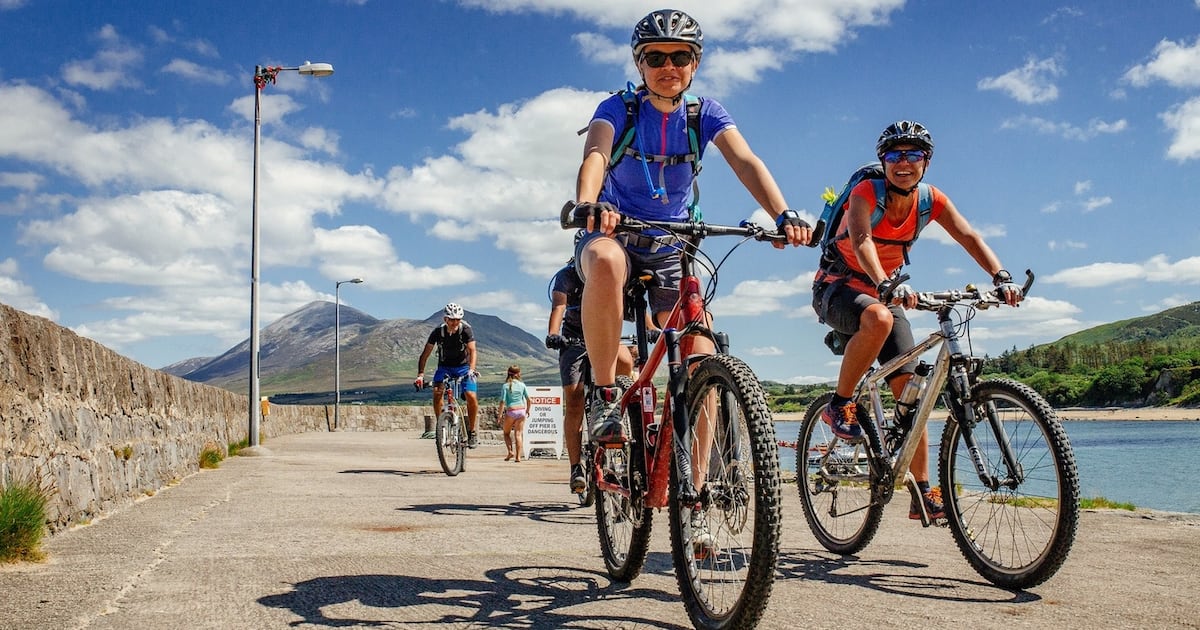
In Newport, Co Mayo, the earliest of these large-scale projects has been benefiting local businesses for 15 years. The Great Western Greenway reaches 42km from Westport to Achill Island, winding along the coast of Clew Bay and taking in sights including Croagh Patrick and Clare Island while attracting visitors to rural towns and villages.
“Before the greenway, if you wanted to get a cup of coffee in Newport, you’d have to buy a jar of Maxwell,” says Seán Kelly, the proprietor of Kelly’s of Newport, an artisan butchers that his father set up in 1930.
The family opened Kelly’s Kitchen, a cafe and restaurant, next door to the shop in 2012, made viable by the increased footfall from the greenway. They even sell “greenway pudding”, flavoured with wild Atlantic seaweed.
When the route was fully opened to the public in 2011, Kelly says the business it generated was “unbelievable”. Some 80,000 people visited the greenway in its first year, spending a total of €7 million. It inspired a succession of new developments like the Old Rail Trail Greenway in Westmeath which opened in 2015, and the Waterford Greenway which arrived in 2017.
“We don’t call it the Great Western Greenway any more. We call it ‘the’ greenway,” Kelly jokes. “What I mean by that is it was the first greenway in the country – the rest are all copies.”
Those three routes have something in common. Each was built on a disused former railway track, meaning the majority of the land they covered was public.
When the Great Western Greenway proposal encountered private land, a system of permissive access was employed, meaning landowners could decide to reject requests for the greenway to pass through, and the route would have to be adjusted accordingly.
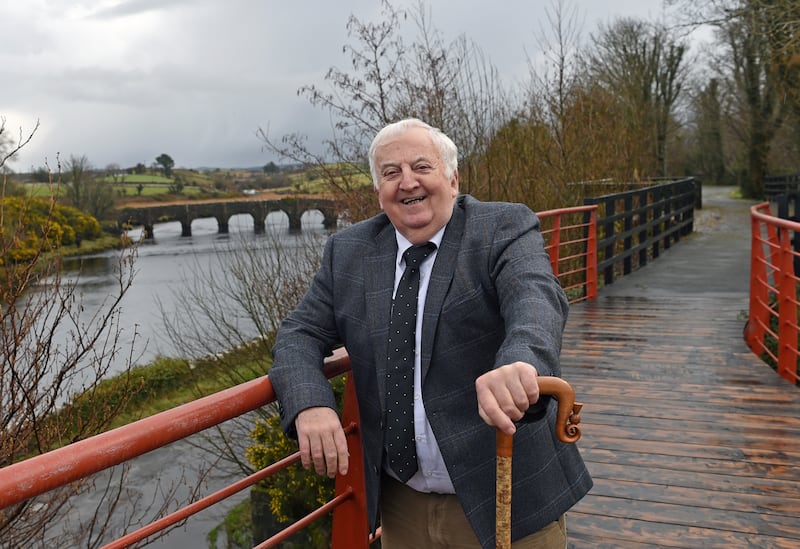 Seán Kelly on the Great Western Greenway in Newport, Co Mayo. Photograph: Conor McKeown
Those that complied with the route could maintain ownership of their land, as opposed to having to accept a forced acquisition in the form of a compulsory purchase order (CPO). CPOs have become a major point of contention around greenways, with their use permitted as a last resort to deliver new routes in cases where voluntary negotiations have failed.
Land acquisition is one of the reasons for long delays to projects like the Athlone to Galway Greenway, which would complete a route from Dublin to Galway that is now largely developed east of the Shannon.
Strong objections from farmers and landowners in east Galway put a stop to the western half of the trail, which was first suggested over a decade ago. On top of that, a Department of Transport official revealed last year that local authorities had been asked to reflect on the project after potential effects on biodiversity were identified.
The Irish Farmers’ Association (IFA) strongly objects to the use of CPOs for greenways. At a recent meeting with Transport Infrastructure Ireland (TII), the department and local authorities, the IFA’s south Leinster regional chair Paul O’Brien said that many proposed greenway routes, if implemented as planned, would sever and divide active farms.
“The severance of farmland cannot be justified for recreational projects and must be avoided in all cases,” he said, sharing the IFA’s view that, wherever possible, greenways should be developed on public lands and not on privately-owned farmland.
“Unfortunately, some local authorities are refusing to follow the agreed code of practice, which is causing huge problems,” O’Brien added.
TII says it does endeavour to use public land as often as possible. The state agency has been the approving authority for greenways in Ireland since 2021. Local authorities carry out the day-to-day delivery of greenways, and TII is responsible for the approval and provision of funding, which averages about €60 million investment per year.
“It takes a while,” Geraldine Fitzpatrick, head of roads and the Greenways Capital Programme at TII, says of plotting a route. “We start from a very high level. You have an objective to deliver a greenway from point A to point B; the first thing you do is look at the constraints and the broad study area. That’s the subject of consultation with the public.”
In particular in more rural and remote areas, there are still many, many opportunities. It’s not as if we’ve used up all the easier ones
Availability of public land is a key concern in the initial analysis of a possible route. The aim is to bring the process through on a voluntary basis, and there are compensation payments available to landowners if they engage with the process.
“We don’t look at one project in isolation, we look at it as an overall programme,” Fitzpatrick says. “If some projects are taking [longer], there might be demands to move another one forward quicker.”
Richard Bowen, TII’s roads portfolio manager, mentions the Department of Public Expenditure’s report and action plan for accelerating infrastructure as evidence of wider trends that contribute to delays.
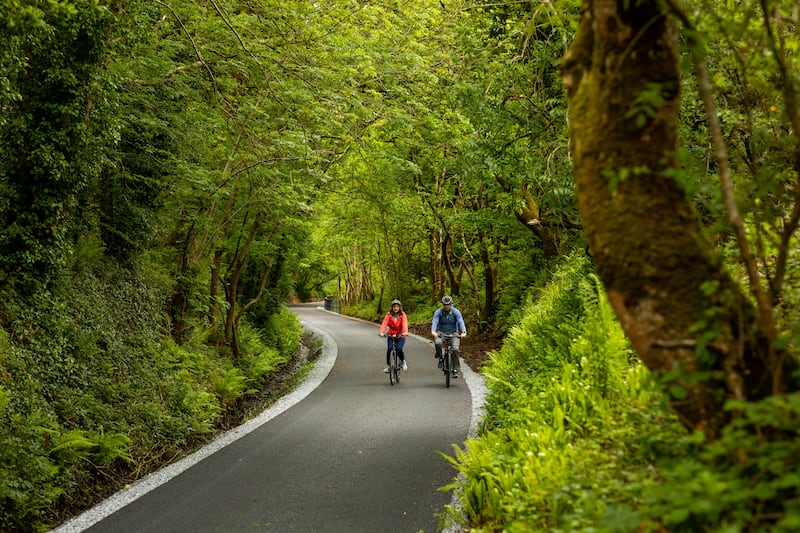 Tullig Wood on the Limerick greenway, the recently renovated 40km off-road walking and cycling route built along the former Limerick to Kerry railway line. Photograph: Seán Curtin/True Media
“This is something that’s coming up across the board on all infrastructure projects, not just greenways,” Bowen says. “They take time. The level of environmental assessment that is required is comprehensive and for good reason.”
TII is responsible for approving national greenways, while the National Transport Authority handles urban routes. Bowen says it is difficult to piece together a concise, overall map of Ireland’s network “because there are lots of small projects that are called greenways, and probably are greenways, but they don’t link anything to anything at the moment”.
He mentions the Monk’s Walk in Dromiskin, Co Louth, as an example. A “rural, off-road cycle facility”, it was largely funded by an outdoor recreational fund, separate to TII, thanks to community work on the ground by Dromiskin Tidy Towns. The Department of Transport is currently close to completing a website that will have details of the main greenways around the country and the facilities available to them.
Dr Richard Manton is the director of sustainability at University of Galway, and completed a PhD researching the planning and design of greenways for cycling in Ireland in 2015. He has recently published a book, Greenways of Ireland, (available from Three Rock Books) which charts many of the major routes.
Manton acknowledges that greenway development is more challenging in the absence of an old railway line or canal, particularly when CPOs are on the table, but he says there is still scope to follow the initial formula.
“There are just so many disused railways in Ireland that there really is quite a large network,” he says. “In particular in more rural and remote areas, there are still many, many opportunities. It’s not as if we’ve used up all the easier ones.”
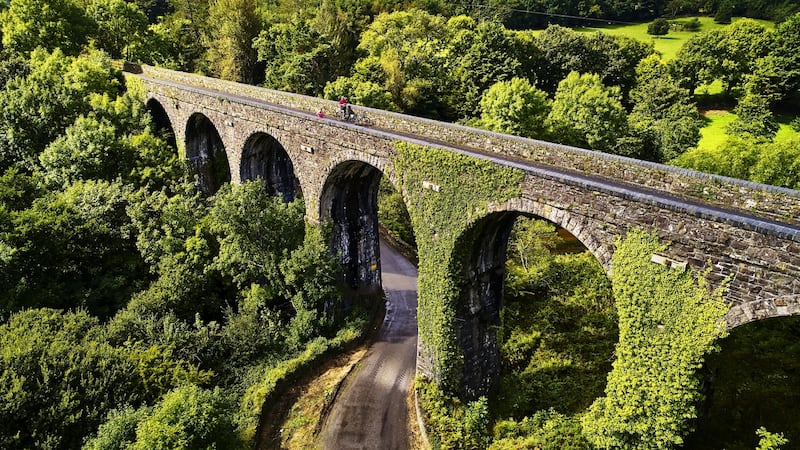 Kilmacthomas viaduct on the Waterford Greenway.
An issue with the use of defunct railroads for greenways is that many would prefer to see railways reinstated instead. Plans for a Sligo Greenway along a disused western rail corridor were shelved late last year, as Irish Rail informed the council it could not support its conversion.
Irish Rail did indicate support for a greenway parallel to the railway line. Manton says this concept is called “Rail with Trails”, which is more common in other countries but doesn’t exist for a lengthy path in Ireland.
Some of Manton’s research has focused specifically on economic impact, echoing Seán Kelly’s testament to the rural regeneration that is possible when these routes function properly.
“If you look, in Mayo, at somewhere like Newport or Mulranny, or somewhere like Kilmeaden or Kilmacthomas in Waterford, the reopening of those routes as greenways has been a social success, an environmental success and an economic success,” Manton says.
“What we need now is to try to connect them up a bit better, so that you can access them by public transport a bit easier. Connect them so you can do longer cycling or walking holidays. But I think it has been a real success.”
Minister for Transport Darragh O’Brien says greenways have “proven to be catalysts for regional economic development, as well as enhancing local community health and wellbeing.
“They showcase our beautiful landscape and encourage more sustainable walking and cycling trips. The greenways programme has benefited from over €300 million of funding since 2020, with approximately €60 million allocated for 2026 alone.
“We have an ambitious programme of individual projects that I look forward to Transport Infrastructure Ireland and individual local authorities advancing in the coming years.”