
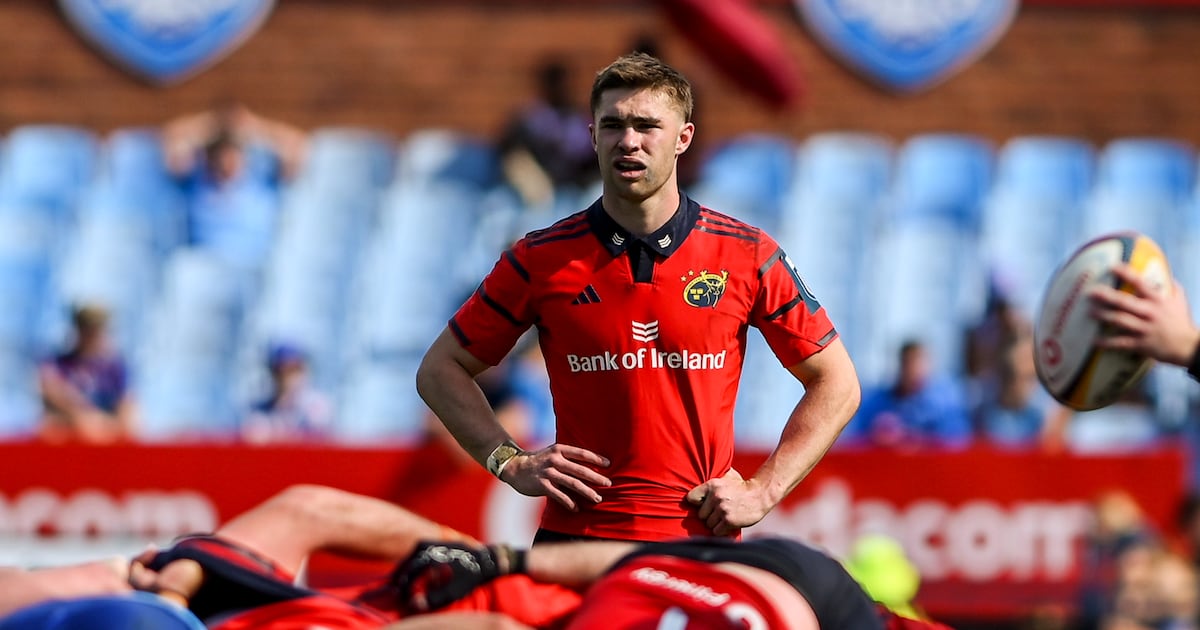
The fire still burns. Munster have some of that old fighting spirit left in them, especially when backed into a corner. Beaten 45-0 the week before at sea level, admittedly after a delayed and prolonged flight to Durban, Munster extracted two bonus points from last Saturday’s 34-31 defeat against the Bulls in the altitude of Pretoria. It was the least they deserved and could yet prove critical in troubling and difficult times for the province – inside and outside the organisation.
The Bulls match offered another reminder that Munster lack depth and quality. However, with Jack Crowley and Craig Casey giving direction, they could well have recorded a famous win. Ruan Nortje’s yellow card for making contact to the head of Diarmuid Barron when clearing out a ruck was somehow not upgraded to a red after a bunker review, further undermining the game’s disciplinary process.
The ball eluded Dan Kelly’s clutches, short of the line and the posts, when a seven-pointer looked certain. Added to the day’s frustrations, it must be noted that the Bulls scored two long-range turnover tries, while Crowley left two conversions behind as Munster outscored the home side by five tries to four.
Despite the positives, this was Munster’s seventh defeat in their last nine outings. The two wins in that sequence both came at home, against Zebre (22-20) and Dragons (21-7). They are seventh in the URC table, two points off the Lions in fifth, behind sixth-placed Cardiff on points difference, above the Bulls by a point and two points clear of Connacht in ninth. This is a taut battle for a place in the top eight – and thus the playoffs and next season’s Champions Cup.
Eight-pointers abound on Munster’s run-in, which sees them take on Benetton (away), Ulster (home), Connacht (away) and the Lions (home). On Saturday, Munster are away to Exeter in the Challenge Cup round of 16. It’s a competition they cannot be too sniffy about, not least as winning it is another avenue into next season’s Champions Cup.
The importance of achieving that basic goal was underlined by the Munster Branch revealing last week that they were offering a voluntary redundancy programme for staff members in addition to further trimming their playing budget. Given they seem to have been losing money annually for a decade, the wonder is this didn’t happen sooner.
Last Tuesday, Munster chief executive Ian Flanagan hosted a virtual meeting with the entire staff – including the playing squad and backroom team who were in South Africa – outlining this programme.
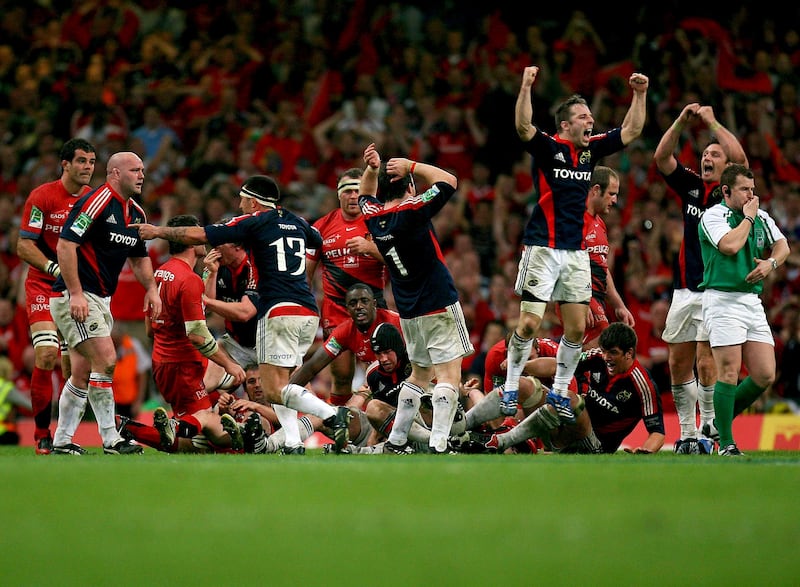 Munster players celebrate beating Toulouse in the 2008 Heineken Cup final in Cardiff. Photograph: Dan Sheridan/Inpho
The Irish Examiner reported that just one question was asked of Flanagan. This was a query about the likelihood of compulsory redundancies if the voluntary programme is under-subscribed. His response was, apparently, along the lines of “we have to wait and see”.
Munster’s declining fortunes off the pitch are, of course, inextricably linked with those on it.
Winning successive away ties against Glasgow, Leinster and the Stormers to end their 11-year trophy drought by winning the URC three seasons ago was a tremendous achievement. Yet the following season’s quarter-final win at home to the Ospreys and semi-final loss at home to Glasgow in the URC remain the only home knockout ties Munster have secured in either competition in recent seasons.
Once upon a time, qualification for the knockout stages of the Champions Cup was virtually an annual occurrence. A lucrative home quarter-final was fairly commonplace. Not any more. Where before Munster reached the quarter-finals or better in 19 of 21 seasons (including four finals and 11 semi-finals), two semi-finals have been the summit of their achievements in the last seven seasons.
The last home Champions Cup knockout tie Munster earned was the quarter-final against Toulouse in 2022, which had to be moved to the Aviva Stadium as the Munster Branch had leased out Thomond Park to Ed Sheeran. Last season’s round-of-16 win in La Rochelle was another wonderful expression of that fighting spirit, but such days are now rare.
Chickens are coming home to roost after years of mismanagement. Munster provided 11 homegrown players to the Irish matchday squad that completed the Grand Slam in Cardiff 17 years ago, including six starting forwards, another two on the bench, both halfbacks and the backup scrumhalf.
In the matchday 23 for the Triple Crown-winning finale against Scotland two weeks ago, the only starting Munster forward, Tadhg Beirne, came through the Leinster pathway followed by the Scarlets.
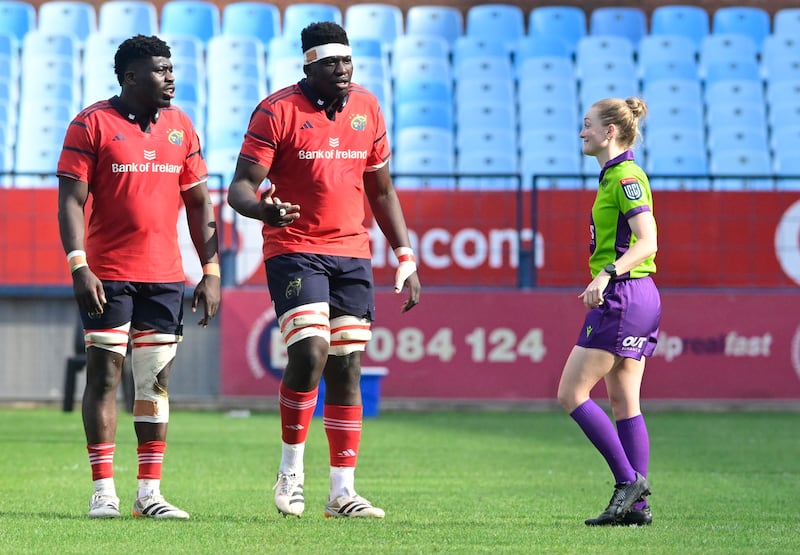 Edwin and Sean Edogbo of Munster during last Saturday’s URC defeat to Bulls in Pretoria, South Africa. The brothers’ emergence has been a rare source of good news for the province in recent times. Photograph: Sydney Seshibedi/Gallo Images/Getty Images
One feels a certain sympathy for Clayton McMillan, a good coach whose hard-nosed approach has been more popular with some than others. But there is far more disquiet with the Munster Branch hierarchy, not least among former players. Conor Murray, for one, expressed as much with a critique of the organisation in his biography.
The departure at the end of the season of the homegrown Mike Prendergast, who was overlooked to succeed Graham Rowntree despite building an extensive coaching portfolio, is simply an awful look for the province. It’s clear too that his influence is less pronounced this season, which can only have added to his frustration.
[ Munster plan return to Páirc Uí Chaoimh for Champions Cup fixture next seasonOpens in new window ]
The emergence of the Edogbo brothers is timely, but the Munster Branch and the IRFU stand indicted for the lack of succession planning, stretching back about eight to 10 years ago and notably in relation to tight-five forwards. It’s been over 20 years since Munster produced a homegrown prop.
The decline of the schools’ game (this season’s vintage PBC Cork team excepted) in Cork and Limerick is partially down to a heightened focus on hurling, while the alarming decline in the club game in both cities is partly down to socio-economic factors and migration to Dublin. All of this explains why the IRFU have sought to invest some of the money saved in culling the men’s sevens programme directly into the schools.
The Bulls-bound Thaakir Abrahams, Gloucester-bound Jean Kleyn and Michael Ala’alatoa are all moving on, and with another generation of high-profile players having retired in recent years, the team lacks poster boys. A huge weight rests on Beirne, Casey and Crowley.
Munster need more than voluntary redundancies. They need a reboot, as a declining Munster is not only bad for the province, but also for Irish rugby.