
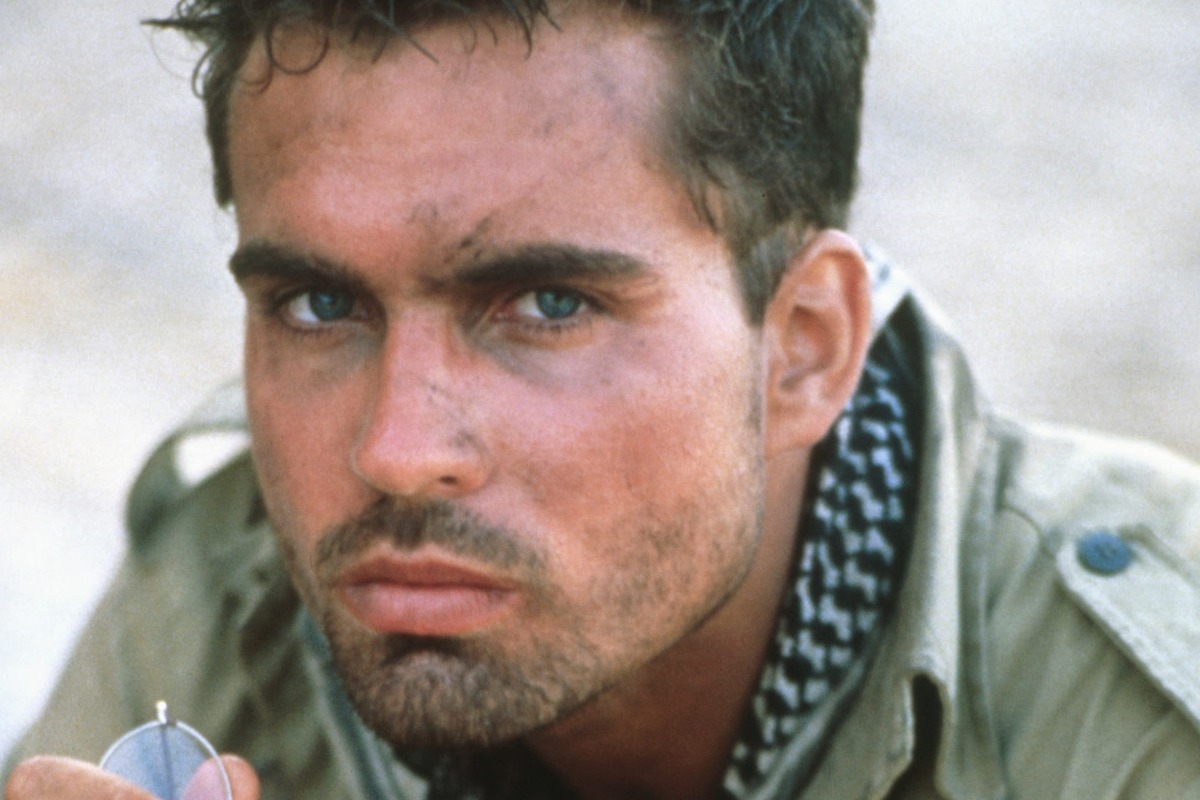
Hailed as one of the great war films, it played to near-empty theaters. What made a movie that ventured into a battlefield Hollywood avoids so easy to ignore then and so hard to shake now?
Overlooked by ticket buyers in 1988, Kevin Reynolds’s The Beast of War found its audience later, far from the multiplex. Set amid the Soviet invasion of Afghanistan, it follows a lost Soviet tank crew and the moral desert they cross, driven by a chilling performance from George Dzundza with Jason Patric and Steven Bauer alongside. Hollywood rarely touched this battlefield, and the film’s stark honesty never translated to receipts. Years on, home video and a 2022 Blu-ray put it back in circulation, where its reputation finally caught up to its ambition.
A bold story set during the Soviet-Afghan war
Released stateside in 1988, The Beast (also known as The Beast of War) did something few war dramas dared at the time. Director Kevin Reynolds, who would later deliver Robin Hood: Prince of Thieves, set his story inside a Soviet T-55 lost in Afghanistan in 1981. A crew fights thirst, terrain, and each other under the ruthless rule of Commander Daskal, while hunted by vengeful mujahideen.
An untold conflict on screen
Hollywood had spent the 80s revisiting Vietnam, from Platoon to Full Metal Jacket. The Beast looked elsewhere, toward a Cold War front most Americans barely saw on screen. Adapted from William Mastrosimone’s play Nanawatai, it frames Afghanistan’s codes of honor and sanctuary against Soviet doctrine, revealing the human costs of occupation and the seeds of that enduring label, the graveyard of empires.
From box office failure to critical darling
Despite taut filmmaking, the film tanked in US theaters. So why did it stumble? The timing and marketing worked against it, and its sympathies were complex, not rah-rah.
Limited release and modest promo compared with Rambo III.
Confusion over the title and accents, which felt foreign to many moviegoers.
A grim tone that resisted feel-good heroism, slowing word of mouth.
Home video rescued it. Cable reruns, DVD, and recent Blu-ray pressings, plus digital rentals on Amazon and Apple TV, helped audiences discover its nerve and nuance. Over time, a small but vocal following recognized a war film that asked hard questions without easy answers.
Key performances and technical brilliance
George Dzundza’s Daskal is terrifying, a true believer cracking under heat and guilt. Jason Patric brings weary intelligence to Koverchenko, while Steven Bauer, Stephen Baldwin, and Don Harvey sharpen the moral crosscurrents. Mark Isham’s score pulses like a distant rotor, amplifying dunes, silence, and sudden violence. The script keeps speeches spare, letting actions show the futility and the costs of command.
A film that resonates today
Watch it now and the film feels eerily current. It studies mission drift, tribal realities, and the price paid by civilians and soldiers alike. In addition to physical media favored by collectors, it surfaces on US streaming storefronts, making it easier than ever to see why a 1988 flop became a cult classic. Some films arrive late. This one simply waited for us to catch up.