
Update March 31st, 2026: In the hours after this article was published, a federal judge blocked the Trump Administration from moving ahead with any further work on the ballroom. “The President of the United States is the steward of the White House for future generations of First Families. He is not, however, the owner!” Judge Richard Leon noted, adding “(U)nless and until Congress blesses this project through statutory authorization, construction has to stop!”
President Trump’s controversial plans for a new ballroom on the site of the former East Wing of the White House have faced further criticism from architects and designers. Ahead of an expected National Capital Planning Commission vote to progress the scheme this week, on April 2, The New York Times has published a deep dive into the design criticisms expressed about the scheme.
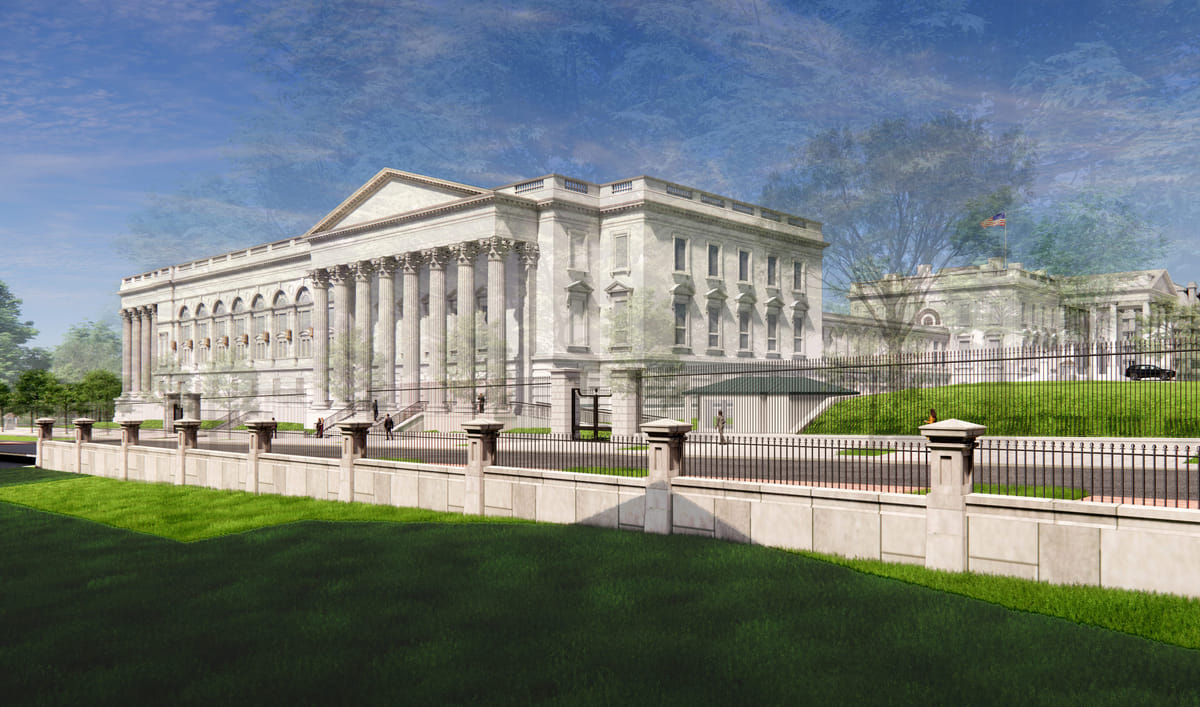
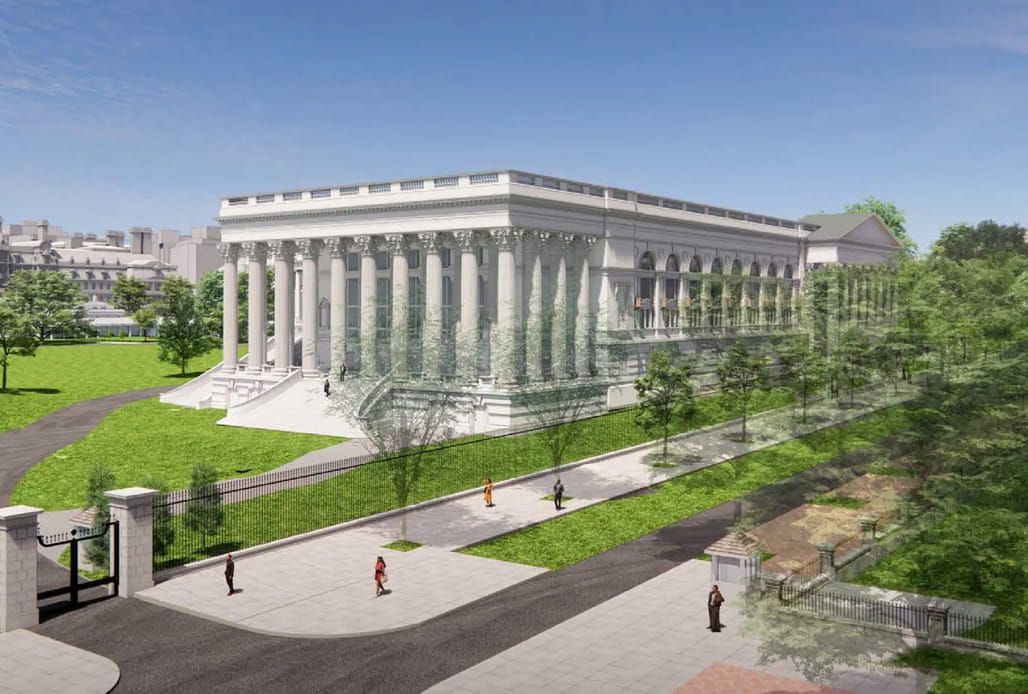
The analysis, whose authors include architect Junho Lee, identifies several apparent design flaws in the scheme, notably a dominant south portico with a grand staircase that nonetheless has no entrance to the ballroom, with a dense cluster of columns that may block light into the interior space. The move will also lead to the alteration of a symmetrical driveway by Frederick Law Olmsted.
 Previously on Archinect: ‘Hideous’ and ‘vulgar’: White House ballroom vote delayed after avalanche of public criticism
The piece notes that the ballroom itself is far larger than typical for a 1,000-capacity space, justified by the design team as a move to accommodate TV cameras, journalists, security, and ceremonial processions. An event with fewer than 1,000 attendees could feel “empty,” the piece notes.
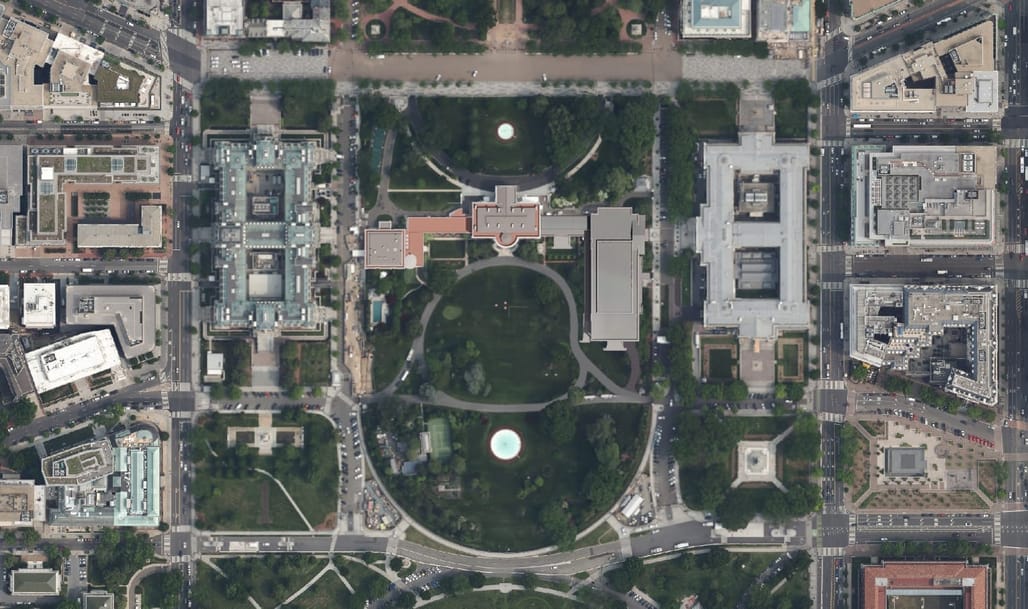
Overall, the proposed East Wing is 60% larger than the White House residence by floor area, and three times larger by cubic volume. “Viewed from the south, the ballroom’s size will make it the dominant building of the White House complex, with a portico bigger than that of the residence and a lopsided appearance disrupting any symmetry with the West Wing,” the piece argues.
 Previously on Archinect: Trump-appointed commission approves his White House ballroom project
Stepping back, the NYT argues that the design and development of the ballroom have upended the norms of the typical architectural design process, where schemes begin in concept design before methodically moving through schematic design, design development, and construction documents.
In contrast to other notable schemes such as the Smithsonian’s National Museum of African American History and Culture or the renovation to the Federal Reserve Board headquarters, the National Capital Planning Commission has undertaken a hurried review and approval sprint for the ballroom with little scrutiny, the NYT argues.
“The timeline never made any sense to me,” said Thomas Gallas, former commission member and leader of a design and planning firm.