
The war in Iran is causing economic ripples, driving up oil prices and the cost of food.
WASHINGTON — President Donald Trump is set to deliver a prime-time address Wednesday night on the war in Iran. The president’s prime-time address will offer an update on U.S. progress toward achieving his goals in Iran, according to a White House official.
Trump’s speech is set to begin at 9 p.m. Eastern. You can watch the address live on this station’s streaming app, mobile app and online.
The impact of the war in Iran can be felt at the grocery store, gas pump and retirement accounts.
The price of a barrel of Brent crude oil went above $100 for the first time since the summer of 2022 and gasoline prices have soared. That followed an extended period where the price of oil largely stayed between $60 and $70.
Investors’ attention is squarely on how long the Iran war will last, how much inflation could jump and what that could mean for the economy. Dramatic intraday swings in indexes like the S&P 500 have been common.
The uncertainty brought on by the war complicates interest-rate decisions for the Federal Reserve, which has kept rates steady this year after reducing them three times at the end of last year.
Oil
Oil prices have been dictating the U.S. stock market’s sharp swings since the Iran war began. Brent crude, the benchmark for about three-quarters of global crude oil, has shot from roughly $70 per barrel to as high as $119 at times. Investors have flipped back and forth between hopes for a fairly quick end to the war and worries that a prolonged conflict will keep oil and natural gas from the Persian Gulf out of global markets, which could create a brutal blast of inflation.
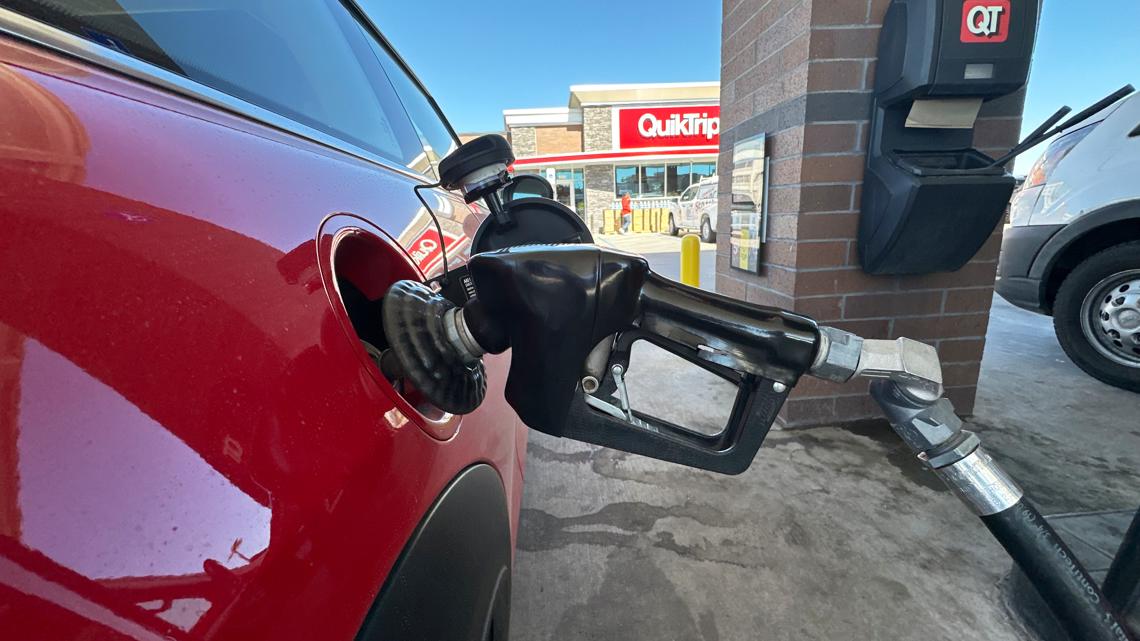
As February came to a close, drivers in many parts of the U.S. were paying under $3 for a gallon of gas. As of Tuesday, the nationwide average had topped $4 for the first time since 2022.
Several states considered suspending the gas tax to help drivers with the surge including: Arizona, South Carolina, Georgia and others.
Some states considered cheaper summer blends to help lower the cost of a gallon of gas.
Food
The higher cost of gas also led to an increase in prices at the grocery store and other businesses.
At Mayport C&C Fisheries in Atlantic Beach, manager Joshua Harris told First Coast News he watched the numbers climb for over a year. He said the business receives anywhere from 600 to 2,000 pounds of fresh fish every day, six days a week, shipped in by boat and flown into Miami before making it to Northeast Florida.
“The prices have definitely been increasing,” Harris said.
He estimates fish prices have risen anywhere from 50 cents to two dollars per pound on whole fish. By the time it gets to a restaurant as a filet, he said, that number often doubles. The fuel charges from shipping and fishing companies, charges he has little control over, get folded straight into what his customers pay.
It wasn’t just the cost of shipping that will impact food.
A chunk of the world’s fertilizer is shipped through the Strait or Hormuz. WNEP reported a Pennsylvania farmer spending 25% more on a truckload of fertilizer than they did five weeks prior – now $10,000.
“We have to absorb it, there is nowhere to pass it onto, between governmentally regulated programs and the stock market, that’s what our grain trades at. Supply and demand, the more grain there is, the lower the price is, the less there is, the price goes up,” says Randy Rhoads, co-owner of Rhoads Brothers Farm.
But if a farmer can’t afford the fertilizer, that could impact how much they are able to grow.
Heating
A survey from the Maine Department of Energy Resources released Thursday reveals heating oil prices in Maine have reached an average of $5.40 per gallon.
This weekly survey of heating fuel prices shows statewide averages as of March 23, according to a news release from the department.
Costs have increased by hundreds of dollars for Mainers, specifically by 41% since the war in Iran began, according to News Center Maine.
Other businesses
Rideshare drivers in New Orleans are feeling the pinch of higher gas prices.
They say Uber has changed its pay structure over the past few years, resulting in lower income per ride for drivers. At the same time, the cost of gas has gone up
more than a dollar per gallon since last month in Louisiana. “You take 50% on top of the gas, I might be doing this almost at a loss,” said Courtney Cosse, who has been driving for Uber in the New Orleans area for 10 years.
Cosse said he is relying on tips.
Copyright 2025 Associated Press. All rights reserved. This material may not be published, broadcast, rewritten, or redistributed.