
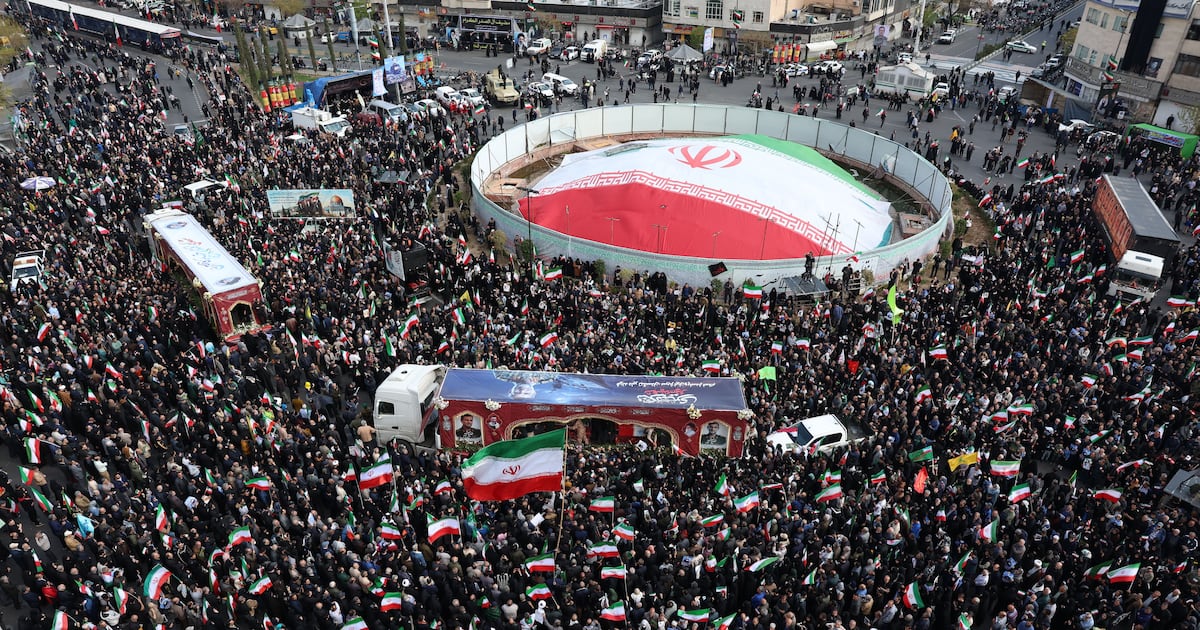
The United States will be “out of Iran pretty quickly” and could return for “spot hits” if needed, US president Donald Trump has said.
Speaking to the Reuters news agency, Trump also said Tehran was incapable of acquiring a nuclear bomb following attacks by the US and Israel.
In a separate social media post he said Iran’s “new regime president” has asked for a ceasefire, a claim denied by Tehran.
“We will consider [the ceasefire request] when Hormuz Strait is open, free, and clear. Until then, we are blasting Iran into oblivion, back to the Stone Age” he said.
The US and Israel began the conflict on February 28th. Iran’s response has included a blockade of the Strait of Hormuz, a major fuel shipment route.
Trump’s comments came hours before he was scheduled to make a prime time television address last night.
[ UN peacekeepers in Lebanon were killed by roadside bombOpens in new window ]
The US president said he would state in the speech that he is considering withdrawing the US from the Nato alliance.
In an interview with the Daily Telegraph, he said leaving Nato was “beyond reconsideration”.
“I was never swayed by Nato. I always knew they were a paper tiger, and [Russian president Vladimir ] Putin knows that too, by the way,” he said. “If Nato is just about us defending Europe if they’re attacked, but them denying us when we need them, that’s not a very good arrangement. That’s a hard one to stay engaged in.”
It was reported late on Wednesday night Nato secretary general Mark Rutte will visit Washington next week for what a spokesperson for the military alliance called a “long-planned visit”.
“I can confirm that the secretary general will be in DC next week for a long-planned visit,” Nato spokesperson Allison Hart said. A White House official also confirmed the visit.
“We’ve had some very bad allies in Nato,” Trump said. “Hopefully, we’re never going to need them. I don’t think we will need them.”
When asked about Trump’s comments, British prime minister Keir Starmer said he would act in Britain’s interest, whatever the “noise”.
London will host a virtual meeting with some 35 countries on Thursday to discuss ways of reopening the Strait of Hormuz.
According to the Wall Street Journal, the United Arab Emirates is pushing for the US to forcefully reopen the strategic waterway and is willing to assist in a military operation.
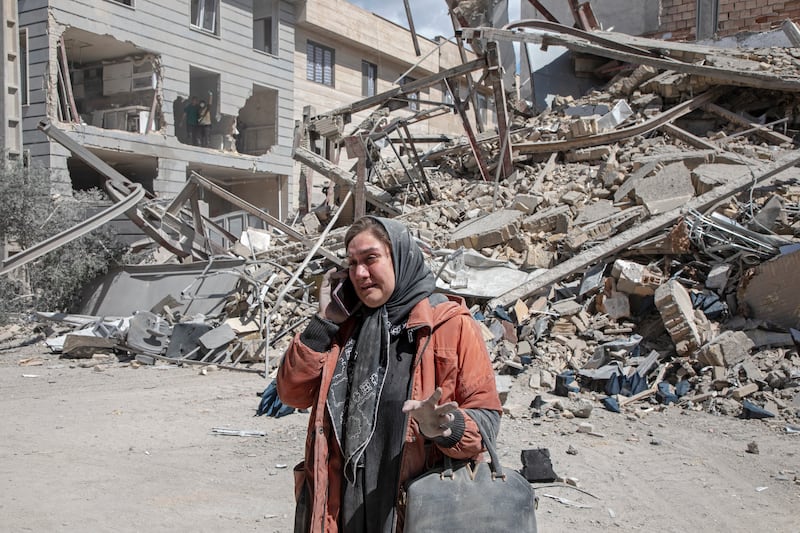 A resident weeps while talking on the phone near a residential building that was hit in an air strike in Tehran, Iran. Photograph: Majid Saeedi/Getty Images
The report said the Gulf state is also seeking a United Nations Security Council resolution that would authorise such an operation, as it faces continued Iranian attacks.
Japanese prime minister Sanae Takaichi said she had agreed to co-operate closely with French president Emmanuel Macron to help open up the Strait, following talks between the two in Tokyo.
Iran’s Islamic Revolutionary Guard Corps (IRGC) reiterated on Wednesday that the Strait will remain closed to “enemies of this nation”.
There were heavy strikes on industrial plants in Tehran as fighting continued on day 33 of the war. Israel said it killed a commander in the Lebanese Corps of the IRGC’s Quds Force in a strike the previous day in western Iran.
[ Sally Hayden in Lebanon: War shatters health care and daily lifeOpens in new window ]
The Israeli air force said it has conducted hundreds of waves of strikes in Iran, dropping over 13,000 bombs on Iranian regime and military sites, and in recent days has focused on economic assets.
As Israelis prepared for the one-week Passover festival, Iran fired its largest missile barrage in weeks. Most were intercepted but an 11-year-old girl was critically wounded by a cluster bomb in the Tel Aviv suburb of Bnei Brak.
Iran continued to attack Gulf Arab states. An oil tanker leased to the state-owned QatarEnergy was struck by an Iranian missile in Qatari territorial waters. Iranian drone strikes targeted key infrastructure in Kuwait and Bahrain, causing large fires.
Amid the heightened tensions in the Gulf, Dubai-based airline Emirates said Iranian nationals were not allowed to enter or transit the United Arab Emirates.
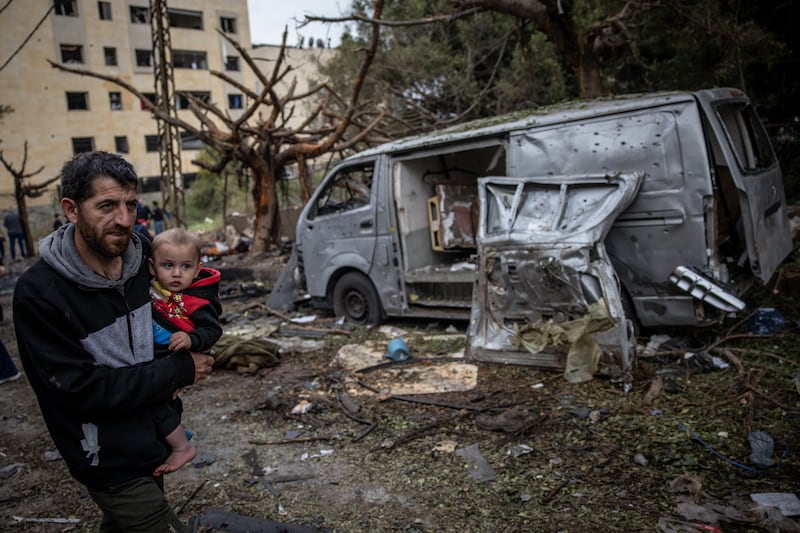 A man carries his child as he walks past destroyed vehicles and debris at the site of an overnight Israeli air strike that killed seven people in Beirut, Lebanon, on Wednesday. Photograph: Chris McGrath/Getty
Fighting also continued in Lebanon.
Hizbullah’s southern front commander, Haj Youssef Ismail, was killed in an Israeli navy strike in Beirut, the IDF said in a statement.
Fighting reignited in Lebanon early last month after Hizbullah launched rockets at Israel. Since then, more than 1.2 million people have been displaced from their homes in Lebanon and Israeli attacks have killed at least 1,318 people, according to Lebanese authorities.
Houthi forces in Yemen claimed responsibility for a missile attack on southern Israel on Wednesday morning- the third during the war – saying it was a joint operation with Iran and Hizbullah.
The militant group threatened further escalation if Israel continued its attacks on Iran and Lebanon. – Additional reporting: Reuters