
The casual use of the term “autistic” to describe certain behaviours is demeaning to people who are actually autistic, campaigners have claimed.
The annual report from autism charity AsIAm found that 85 per cent of those with the condition believe there is a lack of understanding in society about what it really is.
AsIAm chief executive Adam Harris said the phrase “isn’t everybody a little bit autistic” is commonly used if somebody makes a mistake or behaves differently.
“It’s regarded as negative and undesirable. It’s an attempt to diminish for us what is a very real experience. Autistic people face pervasive barriers within our society,” he said.
“To take a view, ‘isn’t that the same for everybody’ really misses the point when we look at quality of life outcomes for autistic people – a community of people with significantly shorter life expectancy, a community that face major barriers accessing a school place and a community of people massively underrepresented in the workforce.”
He said there has been a rise in misinformation about autism with the developmental condition being blamed on conspiracy theories about vaccination while others are promoting unproven “cures” on social media.
Research carried out by AsIAm found there was a significant shift in public attitudes in recent years towards autism. Almost 90 per cent of people have heard of it.
Nearly 80 per cent of the population see it as either a neurotype (42 per cent) or a development difference (37 per cent) while just 8 per cent see it a mental illness, 16 per cent as a mental disorder and 24 per cent as a medical condition.
Nevertheless, Harris pointed to a survey carried out of 1,676 people who are either autistic or the representatives of autistic people who contributed to its Same Chance annual report.
Some 91 per cent of those surveyed felt the Government is not doing enough to tackle misinformation about autism.
“We continue to see language around autism that medicalises the experience of autism, that speaks about it as a deficit as opposed to a difference,” he said.
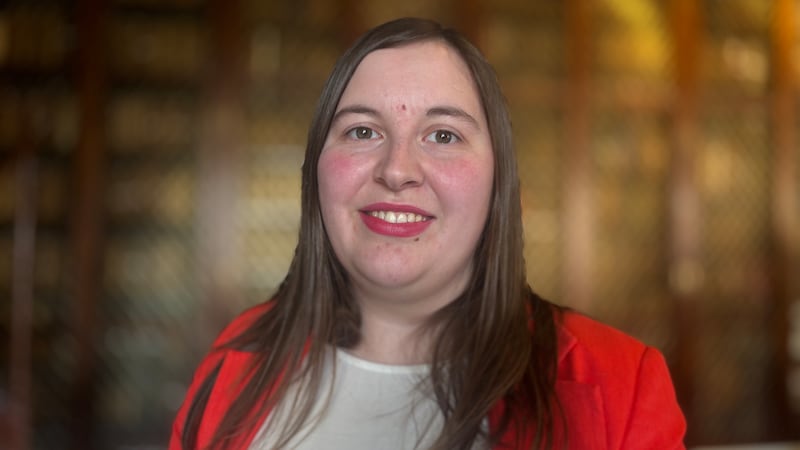 Autism ambassador Niamh Biddulph at the launch of the charity AsIAm Same Chance report.
Speaking on Autism Awareness Day, Niamh Biddulph said it was disappointing that 73 per cent of the public still think there is a stigma around autism.
Biddulph, an autistic person, has participated in the Virgin Media programme The Assembly in which neurodiverse people ask questions of prominent individuals including the Taoiseach Micheál Martin.
She called on employers to make job applications available in plain English so autistic people can apply.
Junior minister with responsibility for disabilities, Emer Higgins, admitted that the Government has not met the initial deadline to have its National Autism Strategy fully implemented by March 31st this year.
“Timelines are not important to us, actions are important to us so if we have to extend the timeline to ensure that actions get done as quickly as is practical, then that’s what we will do,” she said.
Among those who attended the launch were Carmel Ryan and her son Fiachra Ryan (25). Fiachra was the first non-verbal autistic person to graduate from a third level institution. He graduated from the Atlantic Technological University (ATU) Mayo using a letter board, computer and typing to complete the course and his Leaving Certificate before that.
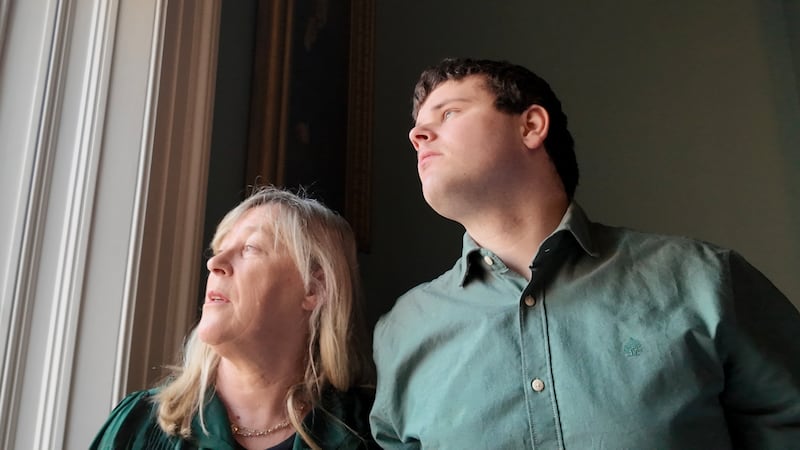 Carmel Ryan and her son Fiachra at the launch.
Fiachra said, using a letter board: “Today is a day to come together and raise understanding about us.”
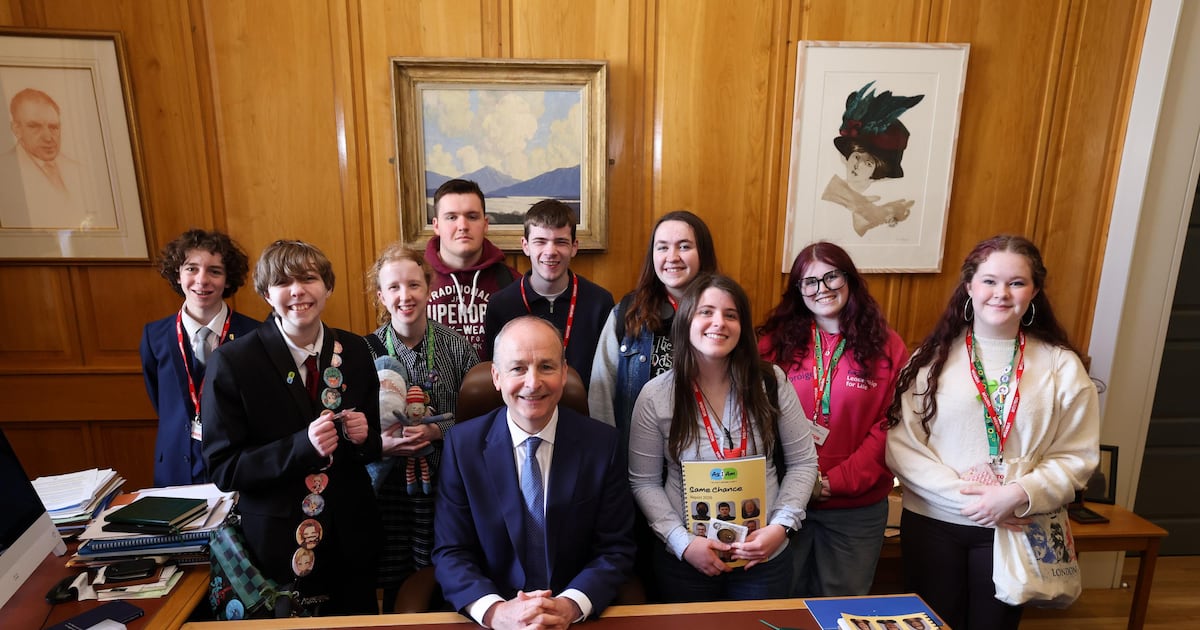
Martin later met young ambassadors for the charity in Government Buildings.