
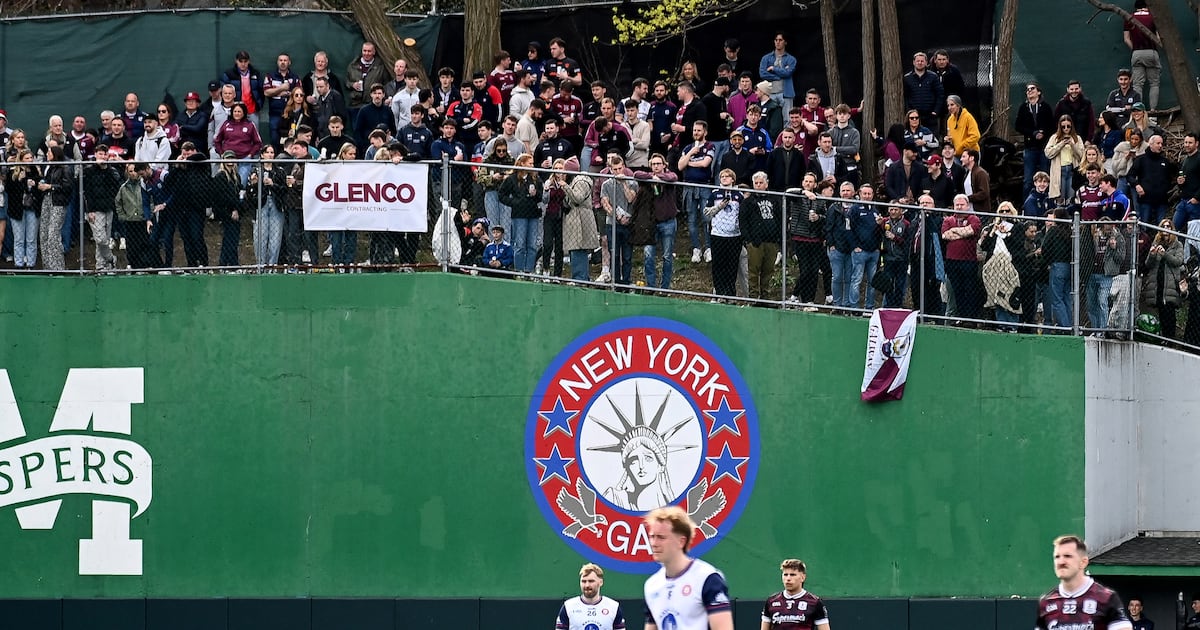
Springtime in New York, and what should be the annual football showcase for Ronan McGinley and The Exiles has become increasingly entangled in fear and uncertainty. And it’s not all to do with Donald Trump.
McGinley is in his second year as manager of the New York football team, and is 16 years living in the Big Apple. The Tyrone native has witnessed good and bad times during that period, an always passionate player and coach, but rarely has New York’s future in the senior football championship appeared so bleak.
On Sunday week, they’ll welcome Roscommon to Gaelic Park for the Connacht football quarter-final, New York’s guaranteed date in the championship since 1999. They’ll also play a preliminary quarter-final of the Tailteann Cup in June, but beyond that, the rotation and cost of the travelling Connacht opposition is up for review.
New York won’t have played any competitive matches since last year’s Tailteann Cup defeat to Offaly, and McGinley has other things to worry about. Not just the significant drop-off in the number of Irish players coming to New York, and with that New York’s ability to stay competitive, but also the “trickiness” around US work visas and travel due to the increased Ice activity since Trump’s second term as US president began early last year.
“Everyone knows the visa situation, and the old pathway of players coming out from Ireland, I’ve seen a significant drop off in that compared to when I came out originally,” says McGinley. “So New York, for their long term, have to source players here.
“I’d say the majority of younger people in Ireland, if they’re looking to travel or work in a different country, Australia seems to be the bigger draw. And not just this particular [presidential] term, over the last couple of terms, there has been a tightening up on visas, getting visas, the eligibility of them. And particularly the longer-term ones. A lot of lads we see coming out now [are] on a J visa, that typically lasts a year, maybe 18 months. So you’re getting that player for a year.
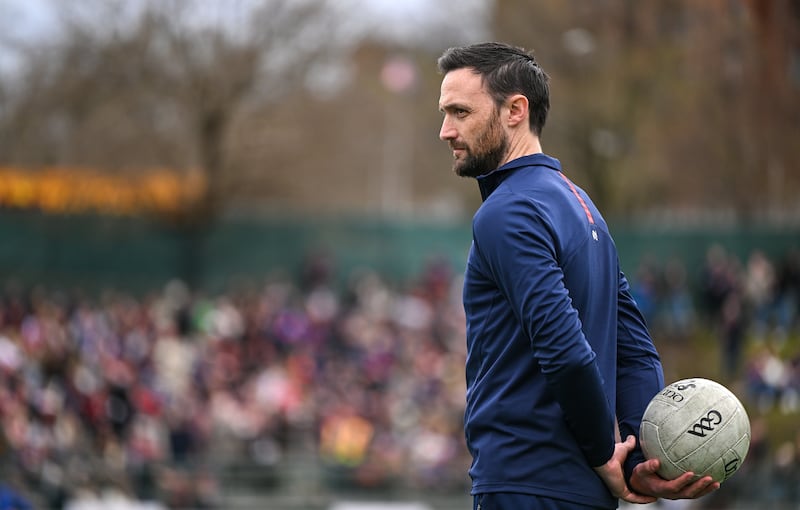 New York manager Ronan McGinley. Photograph: Shauna Clinton/Sportsfile
“The longer-term visa, the three-year one, is a tougher ask. It’s more of a lottery. It so just so happens this is the time of year the three-year lottery is selected, that’s in the background. Football is a great outlet and everything else, but it’s small potatoes to life choices they have coming up.”
McGinley is also aware of the increasing challenges on the playing front. New York held their own against Galway last year for about 40 minutes, before losing 3-28 to 0-20; they then lost to Offaly 2-25 to 1-12.
Over a year on from the introduction of the new playing rules, New York are still miles off the learning of other counties, and McGinley – a brother of Enda McGinley, Tyrone’s three-time All-Ireland winner – is expecting no favours from Roscommon on Sunday week.
“They’re not coming out for a weekend away, they have Mayo two weeks after us, they’ll be fully focused on putting us to the sword fairly early. Any team who has played across the four divisions at home, plus the preseason competitions, has had 10 games already.
“We don’t have that experience. We haven’t even had any challenge games. It’s very difficult.”
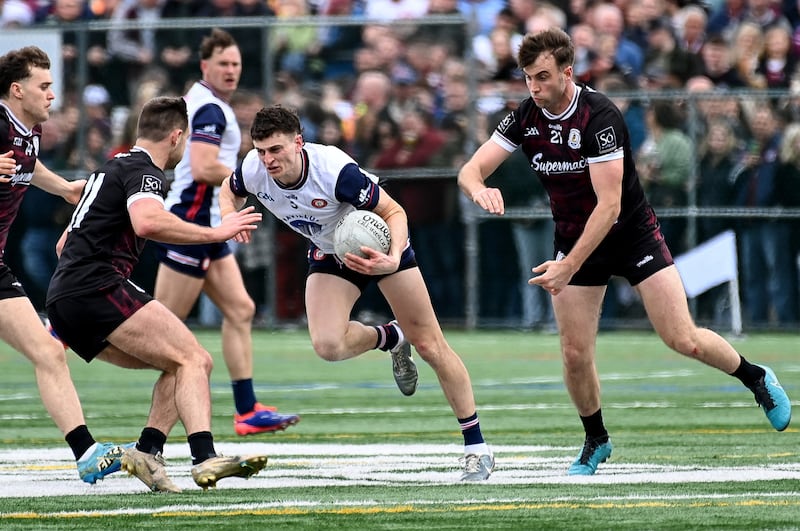 New York’s Donal Hunt is tackled by Paul Conroy of Galway. Photograph: Emily Harney/Inpho
McGinley is working off a squad of 40 players, only 23 of which were involved last year. He also understands the commitment (McGinley captained New York in 2012, playing through to 2017), but New York are also turning to more “home-grown” players, coming up through their junior championship.
“It’s more they want to get involved in the football, more so than us recruiting anybody to come out. That’s maybe a thing of the past.”
New York did pull off one upset in 2023, beating Leitrim on penalties, their only championship victory in 23 attempts. The cost to the travelling teams each year is estimated at €250,000, aided by a €50,000 grant from the Connacht Council, and McGinley knows that’s only going to rise.
“For New York to be competitive long-term, we need more games. And that’s a thorny issue with rising costs across the board, particularly with county preparations at home.
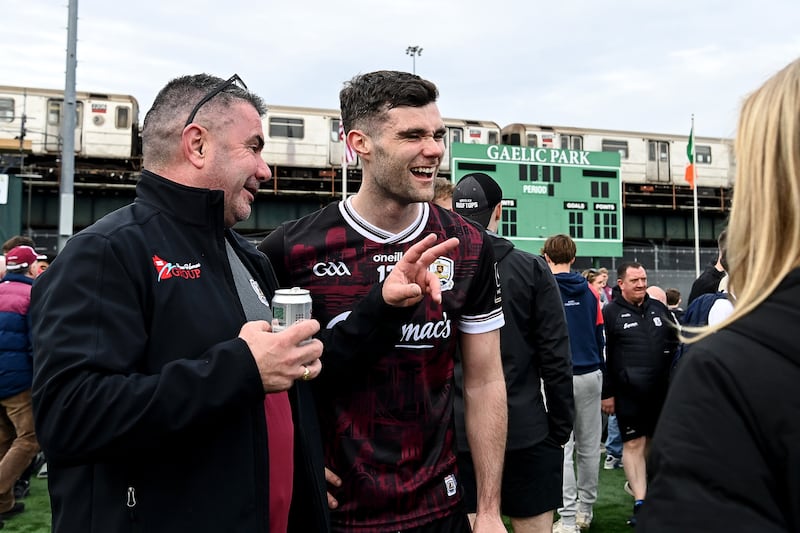 Galway’s Seán Ó Maoilchiaráin with fans after the match. Photograph: Emily Harney/Inpho
“There’s pride in what we do, but one good year doesn’t make up for three or four bad years. The reality is, if the Connacht fixture doesn’t go ahead, it’s very difficult to see how New York would maintain a presence in the championship.”
If in the past some New York footballers may also have been unwilling to travel back to Ireland for fear of being unable to get back into the US, McGinley is confident none of his current squad would even take that chance.
“I would say there has been a fairly significant transition away from the undocumented player, that may have been representing New York in years gone by.
“I would be certain 100 per cent of the players, that we have here, have status. It’s just whether they’re in the process of renewing a visa, extending a visa, or getting another one. And that’s where the trickiness comes in.
“It’s more technicalities than anything. It’s not a case that we have players who are here, and have no intention of being able to go home. That’s changed a lot over the last 10 years or so.”