
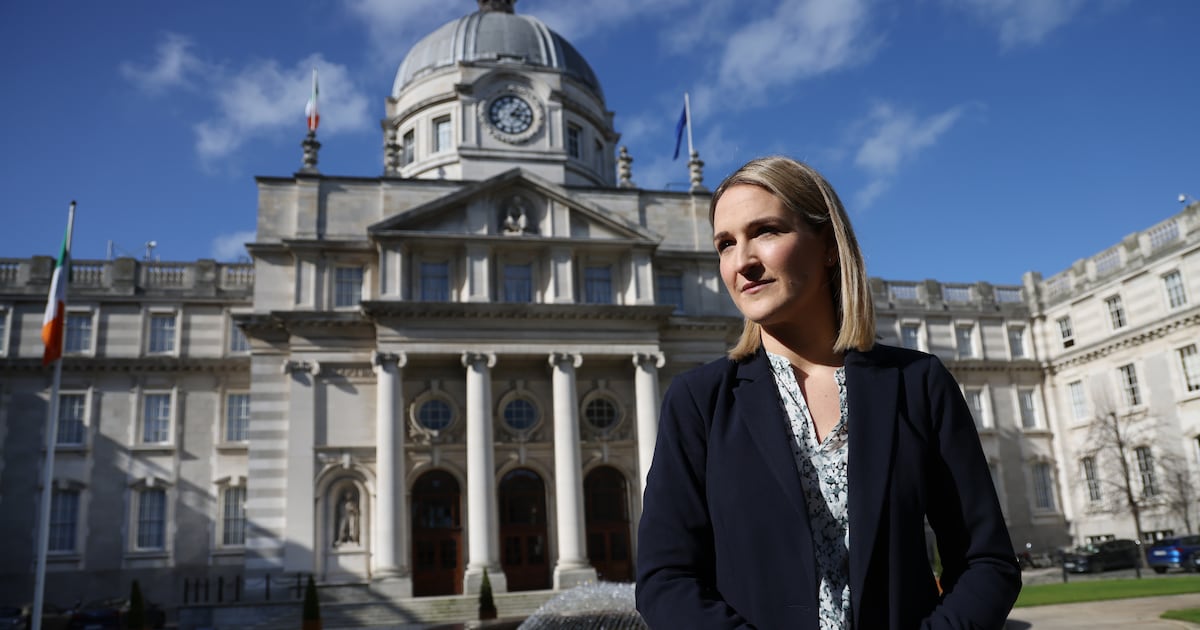
Minister for Defence Helen McEntee was forced to cancel a visit to Lebanon this week after the Defence Forces advised it would be too dangerous to travel.
The plan was for McEntee to depart on the new Government jet on Wednesday and return on Friday, but the security risk was assessed as being too high.
The Air Corps’ new Airbus C-295 was flown into Beirut, Lebanon, last week – the first time the organisation had ever flown troops into a conflict zone, but spent just 30 minutes on the ground.
The “Ryanair turnaround”, as one security source described it, aimed to protect the Defence Forces personnel on board the aircraft, including a leadership team, and lessen the potential for the €70 million aircraft to be damaged.
Beirut has been hit by a barrage of Israeli air strikes since the US-Israel attacks on Iran began last month. Some strikes occurred just hours before the Air Corps flight arrived into the city.
The Middle East conflict is continuing to strangle shipments of oil and gas from the Gulf region, with dozens of nations on Thursday discussing a means to resume safe transit through the Strait of Hormuz. Tehran said it was drafting a protocol with Oman on monitoring the passage of ships in the strait, through which about a fifth of the world’s oil travels in normal times.
US president Donald Trump told countries that rely on fuel shipments through the waterway to “just grab it”. However, European and other states have said they will help to secure it only if there is a ceasefire.
In a televised address late on Wednesday, Trump vowed to carry out more aggressive strikes on Iran and gave no timeline for ending hostilities. The comments pushed oil prices upwards and share prices down.
“When this conflict is over, the strait will open up naturally,” he said.
Trump said Iran would be hit “extremely hard over the next two to three weeks” and repeated a threat to “bring them back to the Stone Age where they belong”. In response, Iran’s armed forces warned that “more crushing, broader and more destructive” attacks were in store.
There are fears the conflict may leave Iran with a stranglehold over Middle East energy supplies given it has shown it can block the strait by targeting oil tankers and attacking Gulf countries hosting US troops.
Britain on Thursday chaired a virtual meeting of some 40 countries to explore ways to restore freedom of navigation, saying the focus was on diplomatic and economic tools. A follow-up meeting of military planners will be held next week to examine what more can be done.
“It can only be done in consultation with Iran,” French president Emmanuel Macron said afterwards.
[ UN peacekeepers in Lebanon were killed by roadside bombOpens in new window ]
Meanwhile, security sources said McEntee was “very keen” to visit Irish Defence Forces personnel serving with the United Nations Interim Force in Lebanon (Unifil) during the three-day trip, which had been planned for weeks. However, the Defence Forces assessed the plan and advised it was “not tenable” given the unpredictable security situation on the ground.
The visit would have involved the Minister travelling by road from Beirut to Camp Shamrock, the base for Irish troops in Lebanon which is near the border with Israel. The drive could take four hours and though McEntee would have been under the watch of heavily armed Irish troops and moved in convoy, the risks were deemed too great.
She instead went to Kyiv on Wednesday, meeting Ukrainian foreign minister Andrii Sybiha and officially opening a new Irish Embassy in the city. Senior politicians from around the world have frequently visited Kyiv since Russia began its war on Ukraine, and McEntee travelling there was deemed a safer option than going to Lebanon.