
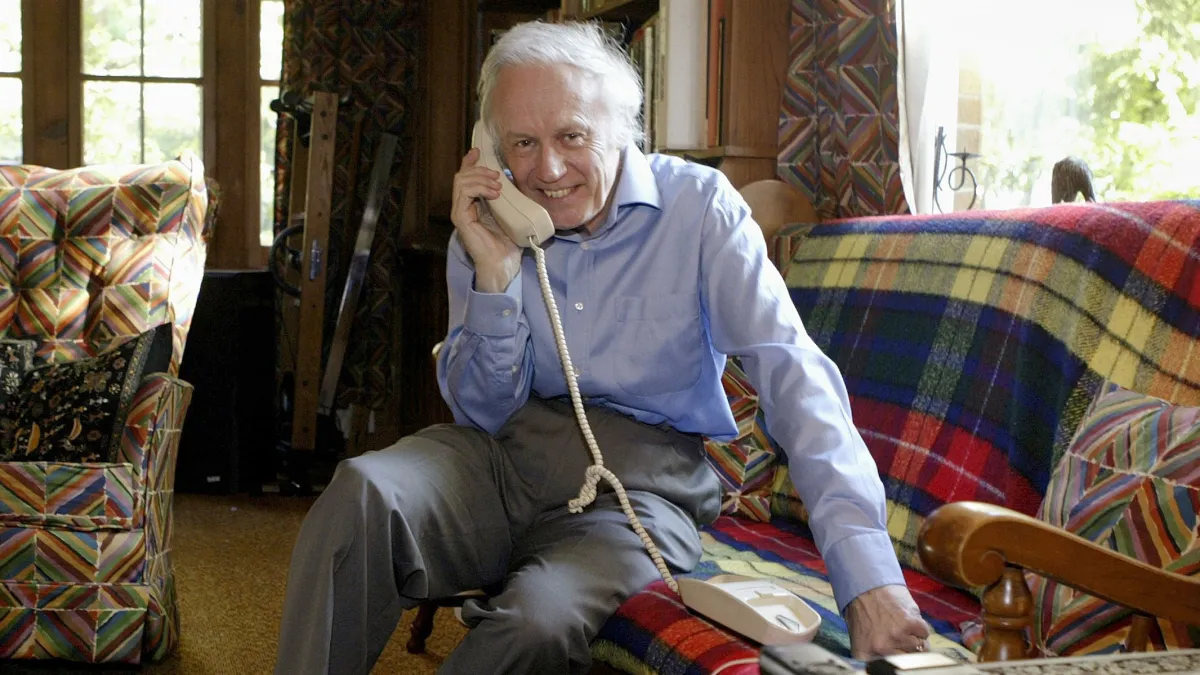
Anthony Leggett not only carved out a reputation as a pioneering theoretical physicist but in 2003 shared the Nobel prize for physics for his research into superfluids and the theory of superfluidity. And yet, he had given up science at school as “incomprehensible” — particularly physics lessons, which “went in one ear and out the other’’ — and instead had taken an arts degree.
Superfluids, which were first observed in the early 1930s, may be incomprehensible to many but scientists find them endlessly fascinating because they behave in a similar way to superconductors — materials that lose all resistance to electricity when cooled below certain temperatures.
Atoms with the same number of protons but different numbers of neutrons are called isotopes. Helium has nine known isotopes but only helium-3 and helium-4 are stable, which means they do not undergo radioactive decay. Superfluidity describes the ability of these two isotopes of liquid helium (the same gas used to fill party balloons, but in its liquid state) to flow with zero viscosity at very low temperatures, meaning it can move without friction. Close to absolute zero (minus 273.15C) liquid helium can flow through extremely tiny channels and creep up the walls of a container as a thin film, sometimes spilling over the edge. This occurs because the liquid has virtually no internal resistance to motion. It seems as if the fluid is defying gravity.
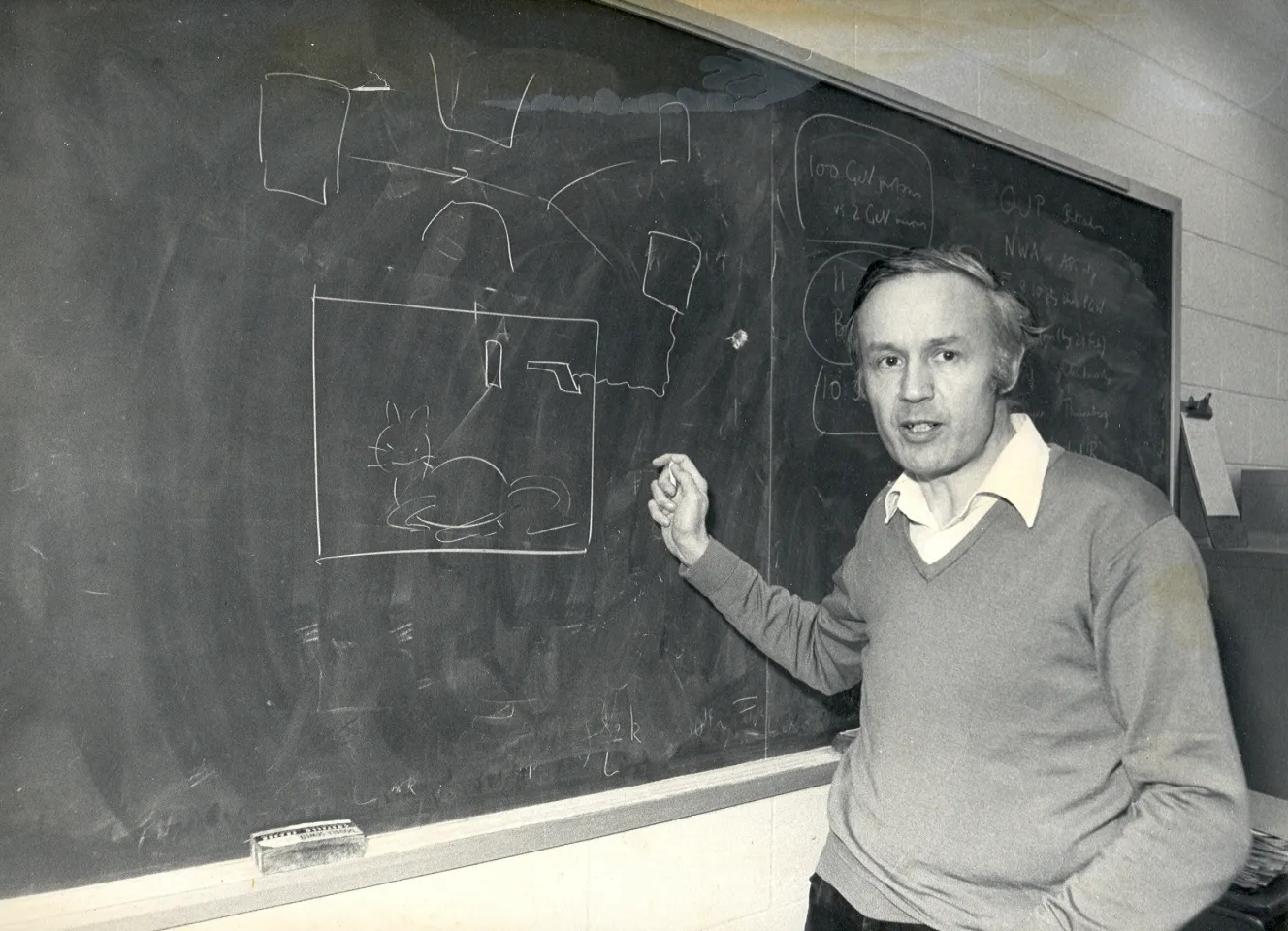 Lecturing about Schrödinger’s cat at the University of Illinois Urbana-Champaign in the 1980s courtesy of Emilio Segrè visual archives of the American Institute of Physics
Before Leggett’s seminal research, earlier work had shown how helium-4 became a superfluid but an explanation for how the much rarer isotope helium-3 did the same was a harder challenge and had, for a long while, eluded physicists. Leggett solved the mystery, explaining how helium-3 atoms interact to create this phenomenon. It had been believed that only atoms, such as helium-4, which contained an even number of protons, neutrons and electrons could become superfluid. Leggett explained how in helium-3 the atoms paired up, behaving collectively like a single particle and so become a superfluid, like helium-4. It was a significant breakthrough in low-temperature physics.
He said in an interview with the University of Illinois in 2018 that although the practical uses of superfluid helium were still very few, breakthroughs would, he argued, eventually arrive. Today physicists believe that superfluids will help us to understand lubricants, their lack of viscosity enabling them to penetrate the smallest gaps, especially if we can make them operate at room temperature. Similarly, they could be used in machine parts to reduce friction. More exotic uses may come in the fields of supercomputing and medical research.
Leggett’s work has proved beneficial in other areas, including the physics of fundamental particles — the basic, indivisible building blocks of the universe — and cosmology, possibly helping to explain the behaviour of objects such as neutron stars. “Superfluidity is funny,” Leggett said after his Nobel citation. “At first you can’t believe what you’re seeing. And then, when you actually discover what’s happening, it seems stranger still.”
He shared the Nobel prize with two Russian-born physicists, Alexei Abrikosov and Vitaly Ginzburg. They were studying the related phenomenon of superconductivity, which describes how at low temperatures certain metals allow electric current to pass through them without resistance. Although their work was conducted separately to Leggett’s, the judges deemed it of similar context and so the 2003 Nobel was shared.
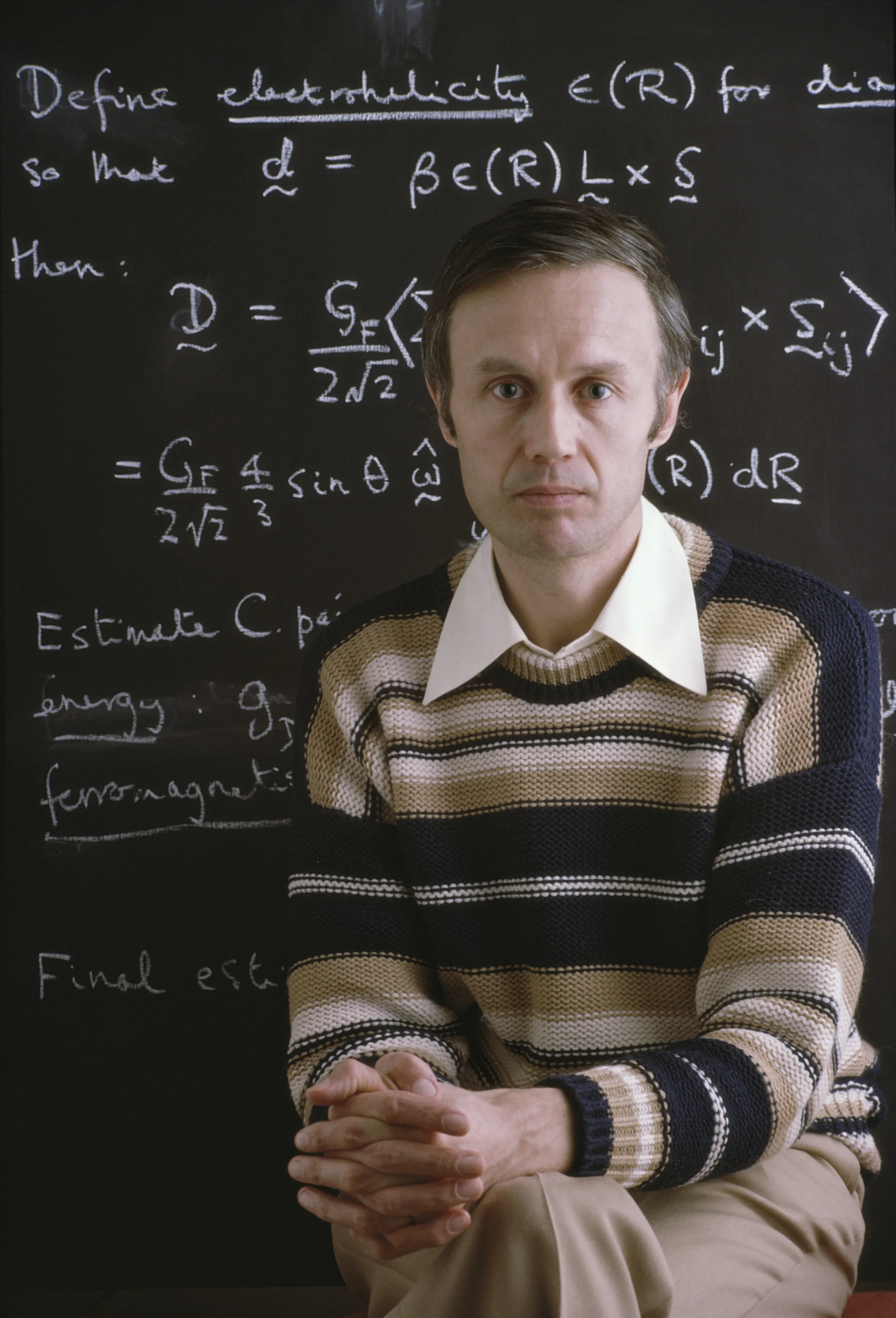 Leggett in 1978 Tony Evans/Timelapse Library Ltd./Getty Images
Anthony James Leggett was born in Camberwell, south London, in 1938, the eldest of five children, preceding sisters Clare and Judith, and brothers Terence and Paul. His parents were schoolteachers; his mother, Winifred (née Regan), taught mathematics, as did his father, Richard, who also taught physics and chemistry. Shortly after his birth the family moved a little further south, to Upper Norwood, where they lived until 1950, save for a period during the Second World War when they were evacuated to Surrey.
Leggett attended the local Catholic elementary school (he lost his Catholic faith in his mid-twenties) and then, after passing the 11-plus, College of the Sacred Heart in Wimbledon, a grammar school where he excelled at chess, representing England at under-16s level.
In 1951, when he was 13, his father took a teaching job at Beaumont College, a public school run by Jesuit priests near Windsor, Berkshire. The family moved to nearby Staines and as part of his father’s contract his three sons attended the school free of charge.
In 1954 he won a scholarship to Balliol College, Oxford, taking his place in October 1955. Despite his parents’ interest in science, at school Leggett specialised in classical subjects and at Balliol he read greats, a combination of Greek, Latin, philosophy and literature. He graduated with first-class honours in 1959 but had become disillusioned with his subject, especially philosophy, and decided he wanted to work in a field where “in some sense nature could tell you if you are right or wrong”.
It was around the dawn of the space age — the Soviet satellite Sputnik I had launched in 1957 and the USSR was on the verge of putting humans into orbit. The United States and its western allies were struggling to keep pace and the brightest minds were being encouraged to study science and engineering, particularly physics. Consequently, Leggett moved from arts to science and was accepted by Merton College, Oxford, to take a physics degree. After again achieving first-class honours, he moved into postgraduate research on the properties of solids at Magdalen College.
He received his doctorate in 1964 and worked for a year at the University of Illinois at Urbana-Champaign (UIUC). It was there he became interested in the superfluidity of helium-3. A year at Kyoto University in Japan was followed by a year at Harvard University in Massachusetts before, in 1967, he was offered a lectureship at the University of Sussex where he spent the next 15 years.
While at Sussex Leggett carried out the work that led to his Nobel nomination. One colleague recalled him working prodigious hours: “We returned after one weekend, saw the sink full of coffee cups and realised he hadn’t been home. When we asked him where he’d slept, he said he didn’t actually recall sleeping.”
He left Sussex in 1982, accepting the offer of the MacArthur professorship from UIUC where he spent the rest of his career. There he changed research focus, exploring how quantum mechanics — used to explain physics at its smallest scale — could shed light on the macroscopic, physical world as it intersects with everyday human lives. He also studied Bose-Einstein condensates — a state of matter where atoms or subatomic particles are cooled to near absolute zero — as well as the properties of glasses at low temperatures, and high-temperature superconductivity.
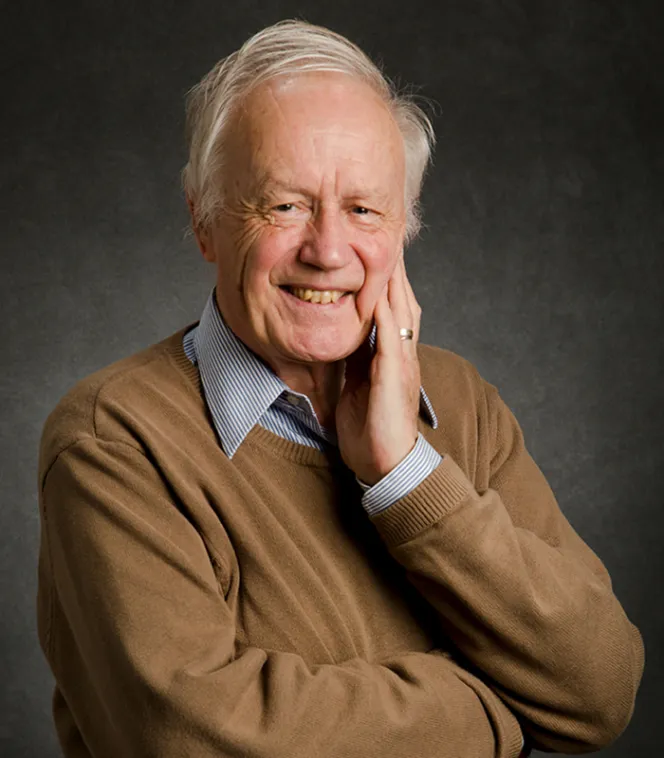 Leggett spent much of his career in the US L Brian Stauffer
Despite his intellect, Leggett was modest, unassuming and approachable. Of his helium-3 discovery he said: “If I hadn’t done it, somebody else would.” At his Nobel presentation he stated that “no piece of honestly conducted research is ever wasted, even if it seems so at the time. Put it in a drawer, and 10, 20 or 30 years down the road, it will return to help you in ways you never anticipated.”
In addition to the Nobel, he received many honours and awards: he was elected a fellow of the Royal Society in 1980 and, in 2004, awarded a knighthood for services to physics. He held joint British and American citizenship. After retirement in 2019 Leggett became professor emeritus at UIUC.
He married Haruko (née Kinase), an anthropologist who also worked at UIUC, and whom he had met at Sussex, in 1973. Five years later they had a daughter, Elizabeth Asako. His wife, his daughter and his two sisters survive him.
Those taught by Leggett discovered he was invariably able to describe complex subjects with brevity and clarity. Moreover, as an intuitive thinker, he could approach any matter of physics with a philosopher’s mind. One former student, James Sauls, now a physicist at Louisiana State University, said: “His presentation was unique in its lucidity and originality.”
Professor Sir Anthony Leggett FRS, theoretical physicist, was born on March 26, 1938. He died on March 8, 2026, aged 87