
“We’ve had one shock after the other in recent years,” Taoiseach Micheál Martin said this week, listing off Brexit, Covid, the Russian invasion of Ukraine and Trump’s tariffs.
“And now we have this war, and it’s been endless,” he continued, echoing the thoughts of everyone forced – for the fifth time in a decade – to deal with a once-in-a-generation crisis.
The war in the Middle East threatens so many aspects of our lives, from food prices and fertiliser to home heating and holidays, that it’s hard to keep up.
What is clear is the manner in which prices are soaring and supply lines are threatened is starting to make the earlier crises, referred to by Martin, seem like a macabre warm-up act.
Fuel
The most immediate consequence of the conflict has been felt on fuel forecourts, which have been quietly documenting the severity of the global energy crisis since the start of March.
And although the price displays have made for grim reading, things are only likely to get worse.
On March 3rd – four days after the US and Israel launched their attacks on Iran – one Circle K fuel station in the midlands was selling petrol and diesel for €1.80 a litre – eight cent higher than in February. The price of petrol jumped by 3 cent to €1.83 by March 6th, with diesel climbing 6 cent to €1.86.
Just over two weeks later – and hours before cuts in excise duty of between 15 and 20 cent took effect – the price of petrol on that midlands forecourt jumped to €1.90, while diesel cost €2.19.
[ Jet fuel disruption could hit summer travel plansOpens in new window ]
Prices fell back after the excise cut: 14 cent for diesel and 5 cent for petrol.
But by this week, the world’s energy markets had caused the diesel to climb again to €2.10, while petrol returned to its previous high of €1.90.
“It’s tough to know,” says Daragh Cassidy of price comparison and switching website bonkers.ie when asked what happens next.
“Price remains so volatile. And of course, Trump could simply seek to end the war tomorrow, which would cause prices to plummet, or he could escalate things even further, in which case, you could see oil reach a high of $150 a barrel or more.”
And what would happen if oil climbed from its current levels of between $100 (€86.7) and $115 (€99.6) a barrel?
Carzone.ie’s motoring analyst Conor Faughnan says if oil reaches $150 a barrel “then petrol will cost Irish motorists €2.38 and diesel will be €2.56 and if crude goes to $200, petrol would be €2.74 and diesel would be €2.92”.
Those figures include the emergency excise duty reduction, he says. “And if that were to go back on, it would see a litre of diesel costing more than €3.”
He stresses he is not suggesting such worst-case scenarios will happen but notes that even best-case scenarios are not great for Irish consumers.
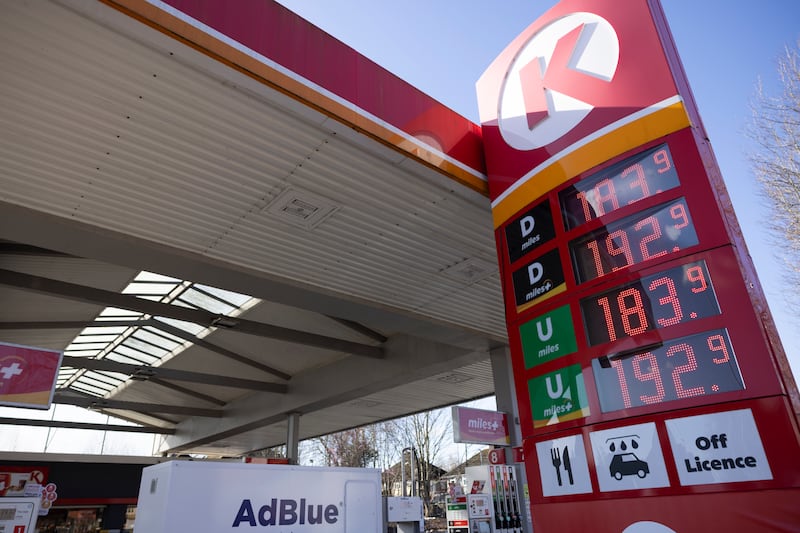 Petrol priced at €1.839 per litre and diesel €1.839 per litre at the Circle K in Cabra, Dublin on March 6th. Photograph: Chris Maddaloni/The Irish Times
“We are faced with a rather grim prospect of completely normalising fuel costing what it does now with all the ripple effects through the economy.”
He notes that the oil crisis of the 1970s led to queues on Irish forecourts and spiralling prices becoming a new normal, causing “a decade and a half of crisis of one sort or another”.
Home heating
Faughnan doesn’t have to look to the 1970s for an example of a new normal, as there’s evidence of it happening right now.
At the start of the crisis five weeks ago, there was an intense focus on the spike in home-heating oil prices and the shock at how quickly an average price of €498 for 500 litres climbed to more than €700. Today, 500 litres costs an average of €868, an increase of 75 per cent in just five weeks.
Domestic energy Irish households could be worse off by at least €600 annually if wholesale gas prices remain at current levels. Photograph: Getty Images
We have yet to see any price increases from the State’s domestic energy suppliers but price shocks look inevitable, though the scale of the price rises depend on what happens next in the Middle East.
“There is also the possibility that gas bills will rise in the second half of the year,” Cassidy says.
“Although wholesale gas prices have fallen from their recent highs, they’re still up by around 30 to 40 per cent compared to this time last year.
“If this remains the case, you could be looking at a hike in bills of maybe 10 to 20 per cent later in the year.”
Such hikes will leave households worse off by at least €600 annually.
Air travel
The latest wave of worry is what impact the crisis will have on summer travel plans, with Ryanair chief executive Michael O’Leary issuing a stark warning on Wednesday: “The fuel companies are happy there won’t be any disruption until early May, but if the war continues, we do run the risk of supply disruptions in Europe in May and June.”
O’Leary is not alone in echoing concerns.
 Ryanair chief executive Michael O’Leary issued a stark warning about the impact of fuel supply on air travel. Photograph: Will Meakin-Durrant/PA Wire
Kevin McPartlan, of Fuels for Ireland, says : “Supplies into Ireland are looking okay up to the end of May, which is as far as the outlook extends.”
“Even 10 days ago, jet fuel was a key concern because global refining has a preponderance of manufacturing in the Middle East and jet fuel is the canary in the coal mine,” he says.
“But in response a lot of refineries around the world have tweaked their operations to produce more jet fuel and less diesel.”
Eoghan Corry, travel writer and owner of the TravelExtra trade magazine, says “shortages are already happening in Asia” but Europe is well supplied – for now.
If supply becomes an issue, there could be, he says, a percentage of the overall flights on an itinerary cancelled, with “the fat routes” – routes served by multiple flights every day – targeted first.
“That means if they start cutting flights from certain routes, like Malaga for example, they would just stop taking bookings once five flights are full whereas in the past they might have had eight flights a day,” says Corry.
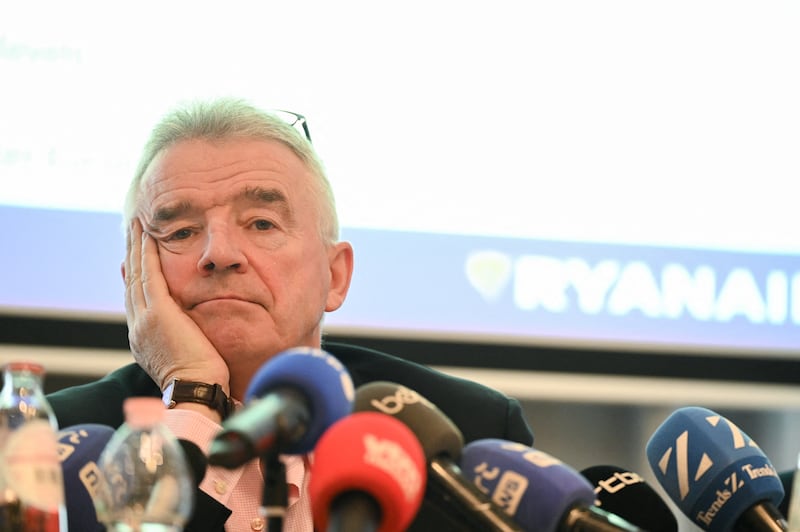 Michael O’Leary: ‘If the war continues, we do run the risk of supply disruptions in Europe in May and June.’ Photograph: Elias Rom/ Belga Mag/ / AFP via Getty Images
He says fuel price spikes in the past have led to fuel surcharges being applied after bookings and this might happen again in the current crisis.
“We have never seen Ryanair do that but it happened with tour operators and some legacy carriers, with €20 per person or thereabouts added to the price of holidays and flights already booked. That might be a worst-case scenario,” says Corry.
He does not believe there will be a huge amount of upheaval in the months ahead, with the markets pricing in a degree of stability by the summer.
“Asian countries and their airlines will be impacted first and the impact for Europe is way down the line,” he says.
He says people with flights booked have no choice but to “sit tight”, while those waiting to book should do so sooner rather than later as multiple pressure points could potentially drive up prices in the weeks ahead.
[ Irish consumers face rising costs as war in Iran threatens to escalateOpens in new window ]
The good news?
The future markets are pricing in some stability by the summer and the European Commission has played down energy supply concerns.
As of the middle of this week, Irish suppliers were confident about the flow covering the next two months not least because Ireland sources about 50 per cent of its refined fuel from Valero, which has the US as its main refining base.
The next largest supplier to Ireland is Trafigua, a huge European player followed by Circle K which also has a big influence in the marketplace.