
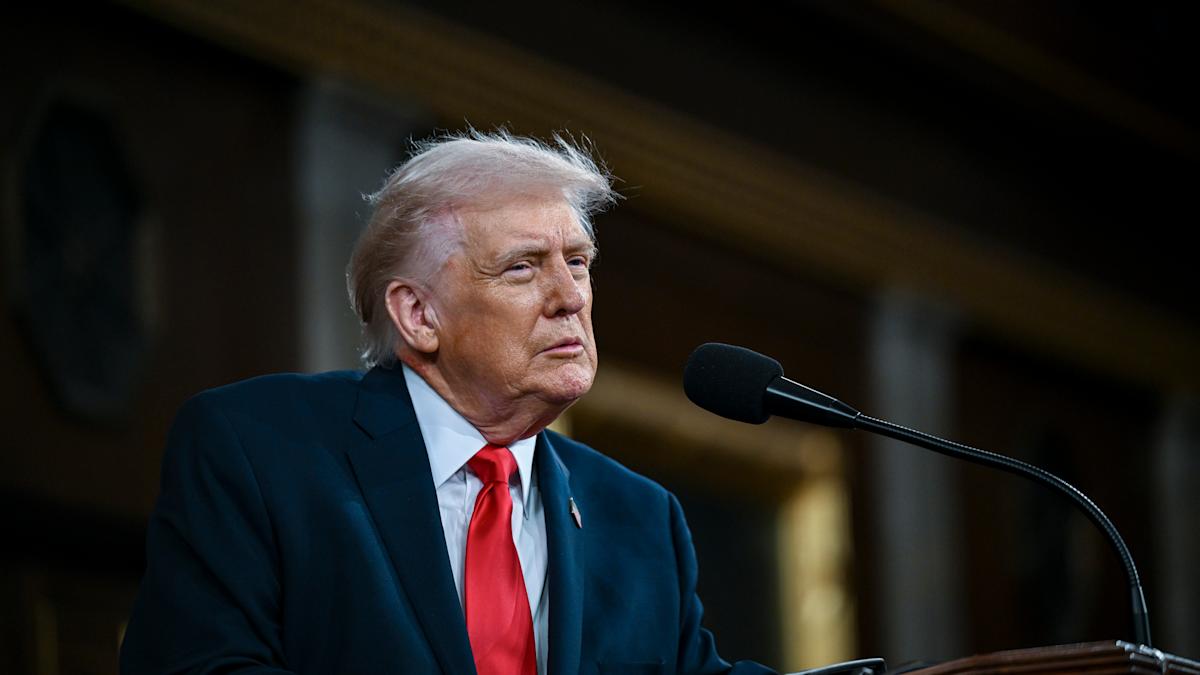
President Donald Trump recently proposed federal retirement accounts for American workers who don’t have access to an employer-sponsored 401(k) plan.
Participants in the federal plan, which Trump announced during his February State of the Union Address, could receive $1,000 in matching contributions each year. The match would give today’s working seniors incentive to save and help them accumulate savings faster, but its real impact on any one individual depends on their ability to save.
Learn More: Would Trump’s Australian-Style Retirement Be Better or Worse Than the U.S. Plan?
Read Next: How Middle-Class Earners Are Quietly Becoming Millionaires — and How You Can, Too
Federal Reserve data shows that 70% of American adults ages 55 to 64 already have some type of tax-preferred retirement savings account. For the segment of that group who only have individual retirement accounts, the Trump plan would provide an additional way to save. The matching funds would accelerate those savings.
For the 30% of 55-to-64-year-olds who have no retirement savings, the account might not have much benefit.
“He’s going after an issue that is a big problem,” said Nicholas St. George, certified financial planner and chartered retirement planning counselor at St. George Wealth Management in Denver, North Carolina. “Social Security alone isn’t enough to retire on.”
However, a $1,000 match is a “drop in the bucket” for folks who already struggle to save.
Trump suggested the new retirement account would resemble the Thrift Savings Plan (TSP) federal employees receive.
The TSP is a defined contribution plan, similar to a 401(k) plan. Participants make contributions through automated payroll deductions, called deferrals, and can invest their money in any of the investment options offered. Participants may use some of their balances to trade mutual funds of their own choosing.
Check Out: Trump’s Budget — What It Means for Your Retirement, by Age
If Trump’s retirement plan follows the same rules as the TSP, you’ll be able to contribute pre-tax funds to get a tax break in the year you contribute, or make Roth contributions with after-tax funds and withdraw the money tax-free in retirement.
Federal workers can contribute up to $24,500 to their TSPs in 2026. However, seniors ages 50 and up can make additional catch-up contributions of $8,000 to $11,250, depending on their ages.
The administration hasn’t yet explained how the match would work. For example, it might match 100% of the first $1,000 saved. Or it might match a smaller percentage, such as 50%, in which case the worker would have to save $2,000 to get the full $1,000 match, similar to the saver’s tax credit.