
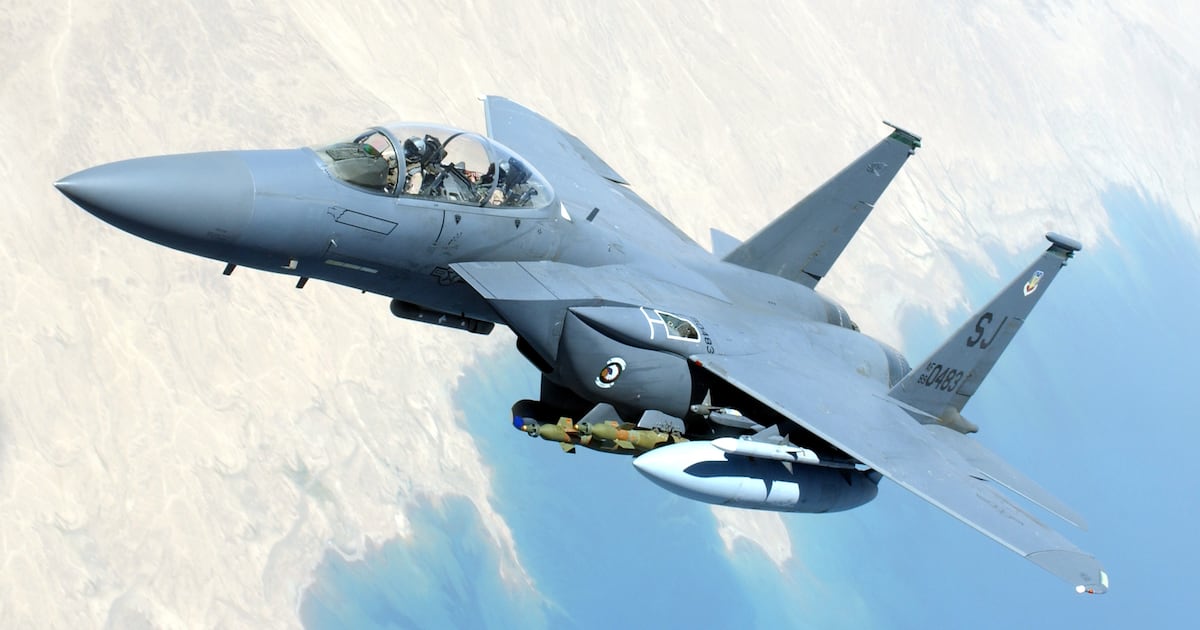
A major search and rescue operation was under way on Friday night for a crew member of a United States F-15E fighter which was shot down over Iran, after the second crew member was rescued by US forces, in the first such incident since the start of the war.
US helicopters, planes and reconnaissance drones took part in the search. Iranian state media released images of a tail fin and other debris allegedly from the downed plane, claiming that it had been hit by a new air defence system over central Iran and the pilot probably killed.
Separately, Iranian state media said that a US A-10 attack aircraft had crashed into Persian Gulf after being struck by Iranian defence forces.
An Iranian official called for a widespread chase to locate the F-15E fighter crew as the local governor offered a reward for anyone who captured or killed them.
The prospect of a US pilot being alive and on the run inside Iran raises the stakes for the Trump administration in a conflict that has struggled to win popular support among Americans, according to opinion polls.
In a brief interview with The Independent, US president Donald Trump declined to say what the United States would do if the missing F-15 crew member forced to eject after being shot down over Iran were harmed.
Asked what he would do if the pilot were captured or harmed by Iranians, Trump replied: “Well, I can’t comment on it because – we hope that’s not going to happen.” He apparently ended the call shortly thereafter, the Guardian reported.
Concerning the A-10 aircraft, a US official, who spoke on condition of anonymity to discuss a sensitive military situation, said it was not clear if the aircraft crashed or was shot down or whether Iran was involved.
Neither the status of that aircraft’s crew, nor exactly where the aircraft went down, was immediately known.
Trump has reiterated his vows to increase the ferocity of attacks on its infrastructure, as dozens of countries sought ways to restart vital energy shipments through the Strait of Hormuz.
Nearly five weeks after it started with a joint US-Israeli aerial assault, the war in Iran continues to spread chaos across the region and raise oil prices, raising the pressure on Trump to find a quick resolution to the conflict.
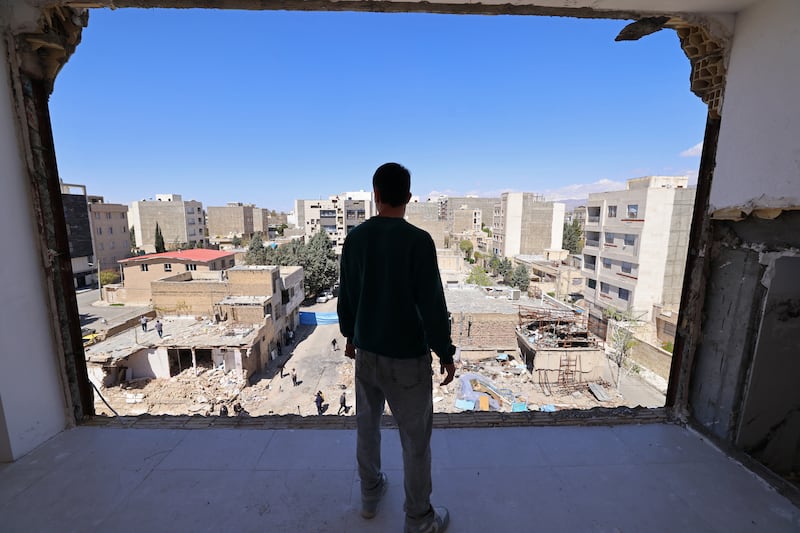 A man looks at residential buildings damaged by recent strikes at Vahdat town in Karaj, southwest of Tehran. Photograph: Atta Kenare/Getty
Trump has stepped up his rhetoric in recent days as negotiations conducted via intermediaries with new leaders in Iran show limited signs of progress.
Trump posted video of the US bombing a newly constructed bridge between Tehran and the major northwest suburb of Karaj. According to Iran’s state media, eight people were killed and 95 others were wounded in the attack.
“Striking civilian structures, including unfinished bridges, will not compel Iranians to surrender,” Iran’s foreign minister Abbas Araqchi said in a statement.
Air strikes also destroyed the Pasteur Institute in Tehran, one of Iran’s leading public health institutions which has produced and distributed vaccines.
More than 100 US international law experts have said the conduct of US forces and statements by senior US officials “raise serious concerns about violations of international human rights law and international humanitarian law, including potential war crimes.”
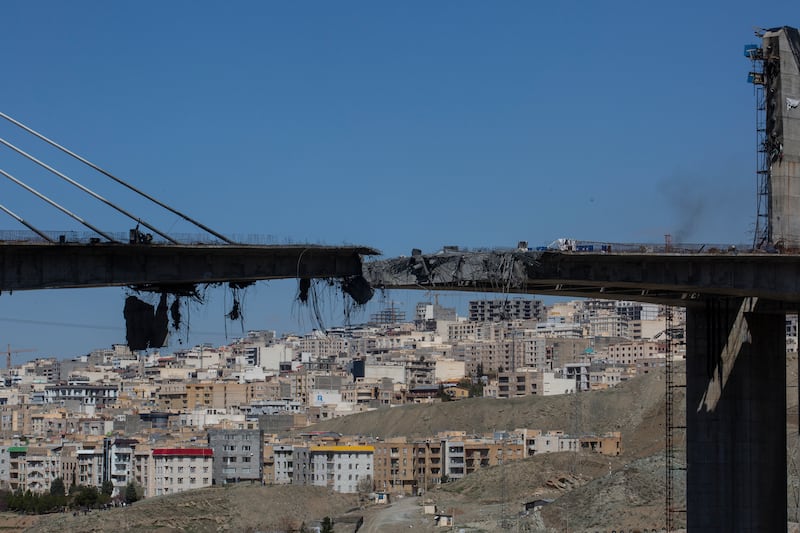 The B1 highway bridge near Tehran on Friday. Photograph: Arash Khamooshi/The New York Times
A letter signed by the experts particularly noted a mid-March comment from Trump where he said the US may conduct strikes on Iran “just for fun”.
It also cited comments from Pentagon chief Pete Hegseth from early March in which he said the US does not fight with “stupid rules of engagement”.
Israel’s prime minister Binyamin Netanyahu said on Friday that it had significantly damaged Iran’s industrial base, claiming that the Israeli air force had destroyed roughly 70 per cent of the country’s steel production capacity in recent days.
“This is a tremendous achievement that deprives the Revolutionary Guards of both financial resources and the ability to produce many weapons,” he said.
The ultimatum Trump issued to Tehran to open the Strait of Hormuz expires on Monday.
He has threatened to destroy Iran’s power plants and energy infrastructure if the strategic waterway is still closed to most international shipping.
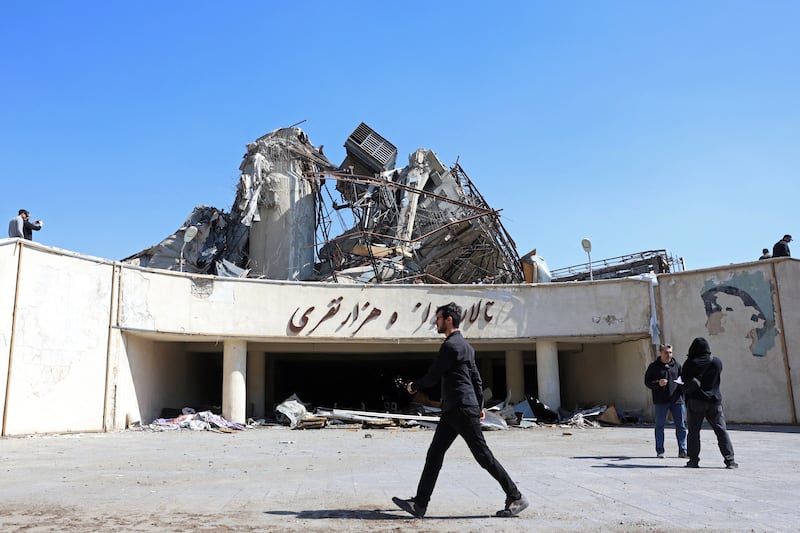 The Azadi Sport Complex in Tehran. Photograph: Getty
If no compromise is reached, the US president is weighing a significant escalation, including, for the first time, the deployment of US forces on the ground: either on islands in the Gulf, in the Strait of Hormuz or possibly along Iran’s coastline.
On Friday, day 35 of the war, US and Israeli air strikes targeted regime targets and key infrastructure and industrial facilities in Tehran and elsewhere.
Iran continued launching rockets and drones at Israel and Gulf states. The worst hit area was northern Israel, which was targeted by Iran and Hizbullah in Lebanon. An Israeli drone factory in central Israel suffered significant damage.
Three more United Nations peacekeepers from the Unifil force were wounded in an explosion in south Lebanon – two of them sustained serious injuries. Unifil was examining the source of the fire.