
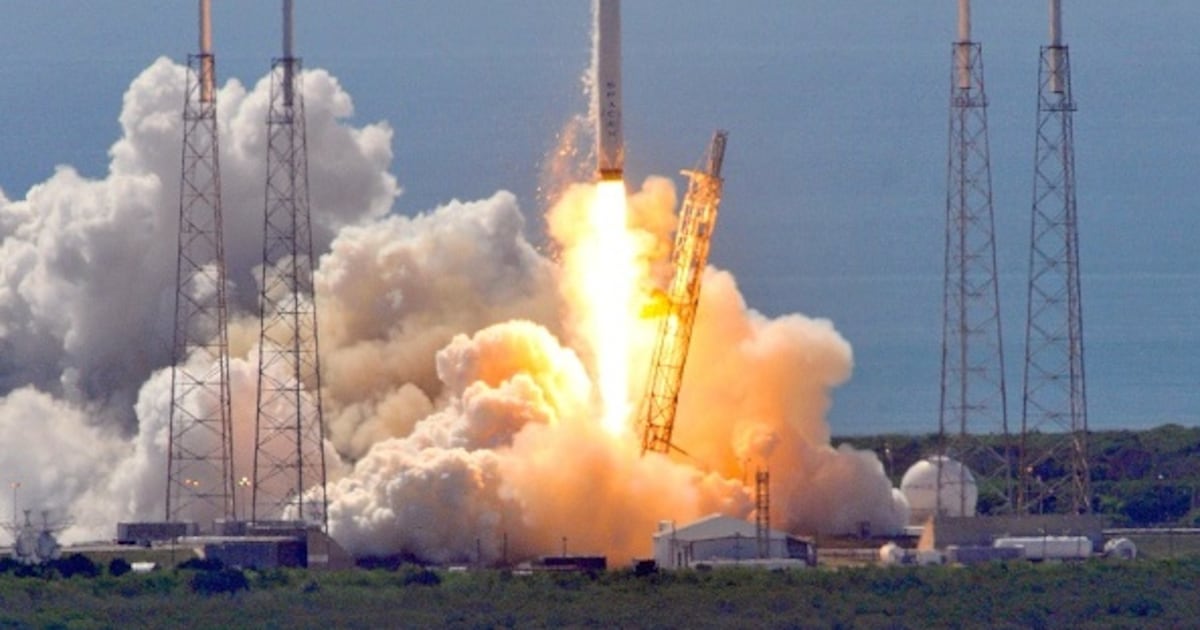
Elon Musk’s SpaceX is reportedly eyeing a June initial public offering (IPO), one that would value the company at $1.75 trillion (€1.52 trillion).
SpaceX is part rocket company, part satellite internet provider (Starlink), alongside Musk’s AI venture xAI, and the social network X.
It’s an eclectic mix, to put it mildly. The rocket business, once a cash sink, is now solidly profitable, but it is Starlink that carries the burden of a $1.75 trillion valuation, “the only reason this valuation is defensible”, as one analyst told Reuters.
But is it really defensible?
Media reports suggest SpaceX made about $8 billion in profit on $15 billion to $16 billion in revenues last year. By what alchemy does that translate into $1.75 trillion?
There have been some heroic attempts at justification, most noticeably from PitchBook analyst Franco Granda, who last month described a price-sales ratio of “nearly 95” as “rich but not irrational”.
Since when was a price-sales ratio of 95 merely “rich but not irrational”?
In fact, even that understates things. Granda was talking about a $1.5 trillion valuation although at these altitudes, another $250 billion barely registers.
Some perspective. The S&P 500 trades on about three times sales, the Nasdaq six. Meta, Apple, Alphabet, and Microsoft all trade for between seven and nine times sales. Musk’s other trillion-dollar company, Tesla, is richer (14), as is Nvidia (19.5).
 Elon Musk. Photograph: Kirsty Wigglesworth/PA
However, the only large-cap company with a price-sales ratio even resembling SpaceX’s is the famously expensive AI and defence technology stock Palantir (84), which until now had been in a league of its own.
You have to do a lot of mental work to make the sums work. PitchBook sees $150 billion in revenue by 2040. Even under that heroic scenario where SpaceX grows its revenues tenfold, the company would still be valued at more than 10 times its 2040 sales – which is to say, still very, very rich.
Of course, all this valuation talk will seem terribly old-fashioned to Elon Musk’s devoted retail followers. They will be an important constituency, given Musk reportedly hopes to allocate up to 30 per cent of SpaceX’s IPO to retail investors.
For Musk devotees, valuation is a detail best ignored. More valuation‑minded observers, meanwhile, will surely squint at the maths and wonder what they’re missing.
[ Tesla posts one of its worst sales quarters in yearsOpens in new window ]