

When OpenAI commercially released ChatGPT in late 2022, Nvidia (NVDA +0.93%) was primarily seen as a graphics chip designer marketing its products toward computer gaming and secondarily as a chip provider for cryptocurrency mining operations. What most investors didn’t realize was that the company’s hardware was even more versatile than people had given it credit for. From 2023 to 2025, its chipsets became the backbone of generative artificial intelligence (AI), and the incredible demand for its products and software helped Nvidia become the most valuable company in the world.
Big tech has somewhat fallen out of favor with growth investors throughout 2026. As of this writing (April 2), Nvidia’s stock was trading down 5.2% on the year. But not all AI chip stocks have been perceived negatively in recent months. Shares of Micron Technology (MU 0.49%) are up 27% so far this year and nearly 309% over the last 12 months.
Let’s look into the tailwinds fueling the rise in Micron stock right now. Could it be on its way to becoming the new Nvidia?
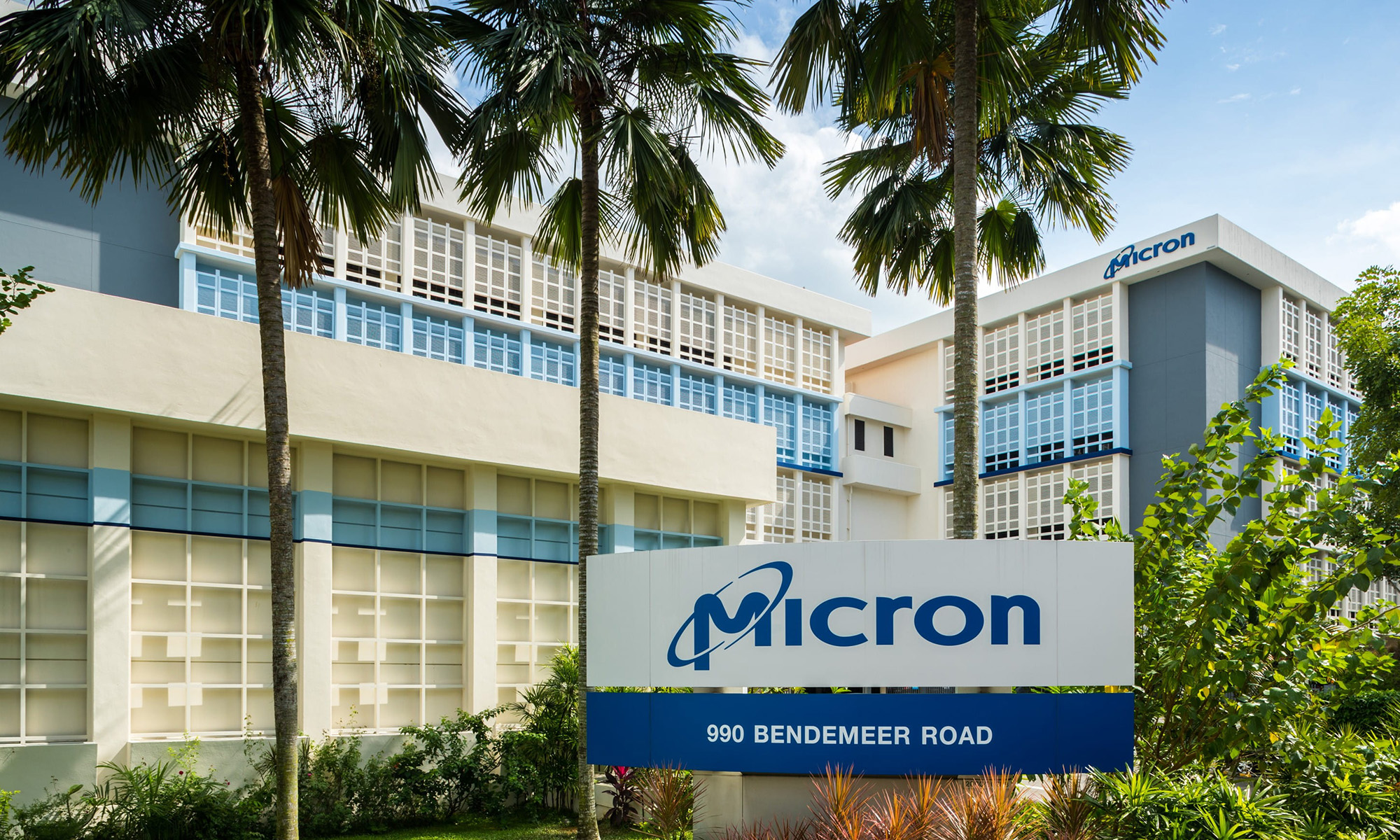
Image source: Micron Technology.
What does Micron do and why is it important?
What investors might not fully understand is that different types of chips play unique roles in AI. GPUs and accelerators designed by Nvidia and Advanced Micro Devices are purpose-built for training and inferencing AI models. Application-specific integrated circuits (ASICs) designed by Broadcom and its hyperscaler partners are tailored for more customized workloads.
Whether you’re using more-prevalent architectures or custom silicon, the general takeaway is that the data flow into AI models is becoming increasingly vast as more sophisticated uses appear.
Given these dynamics, acquiring enough capacity to process rising computational needs becomes just one pain point. As models expand, big tech has become hard-pressed to complement its capacity with sufficient high-bandwidth memory (HBM).
Micron’s position in the AI chip realm comes in supplying dynamic random access memory (DRAM) and NAND flash memory, just as storage and memory become AI’s latest bottleneck.
Why is Micron stock going parabolic?
Throughout the AI revolution, big tech has collectively poured hundreds of billions of dollars into capital expenditures (capex). For the most part, Nvidia, AMD, Broadcom, and Taiwan Semiconductor Manufacturing were seen as the primary beneficiaries of rising infrastructure budgets.
However, this narrative is beginning to shift as the memory and storage supercycle comes into focus. This year alone, the big five hyperscalers — Microsoft, Amazon, Alphabet, Meta Platforms, and Oracle — are forecast to spend $700 billion on AI infrastructure.
Considering Micron is already sold out of its 2026 HBM inventory and is actively investing in more manufacturing capacity to meet demand, I am confident the company’s memory and storage chips have emerged as a cornerstone of AI infrastructure.
As Micron becomes increasingly viewed as a key pillar supporting AI building projects, its share price should continue riding secular tailwinds, fueling accelerating capex budgets from big tech.

Today’s Change
(-0.49%) $-1.82
Current Price
$366.03
Key Data Points
Market Cap
$413B
Day’s Range
$340.50 – $366.90
52wk Range
$61.54 – $471.34
Volume
2M
Avg Vol
41M
Gross Margin
58.54%
Dividend Yield
0.14%
Could Micron become the new Nvidia?
In my view, the memory and storage chapter of the AI storyline will be a multiyear wave supported by ongoing development from big tech. With that said, DRAM and NAND are not as pervasive as general-purpose GPUs. In other words, Micron’s application in AI is more specialized compared to Nvidia’s.
With this in mind, I think it’s a stretch to call Micron the “new Nvidia.” Rather, I see it as enjoying an “Nvidia moment” right now — one that could still carry considerable valuation expansion in coming years. Smart investors should take a measured approach when considering a position in Micron versus a more multifaceted operation such as Nvidia.
Adam Spatacco has positions in Alphabet, Amazon, Meta Platforms, Microsoft, and Nvidia. The Motley Fool has positions in and recommends Advanced Micro Devices, Alphabet, Amazon, Meta Platforms, Micron Technology, Microsoft, Nvidia, Oracle, and Taiwan Semiconductor Manufacturing. The Motley Fool recommends Broadcom. The Motley Fool has a disclosure policy.