
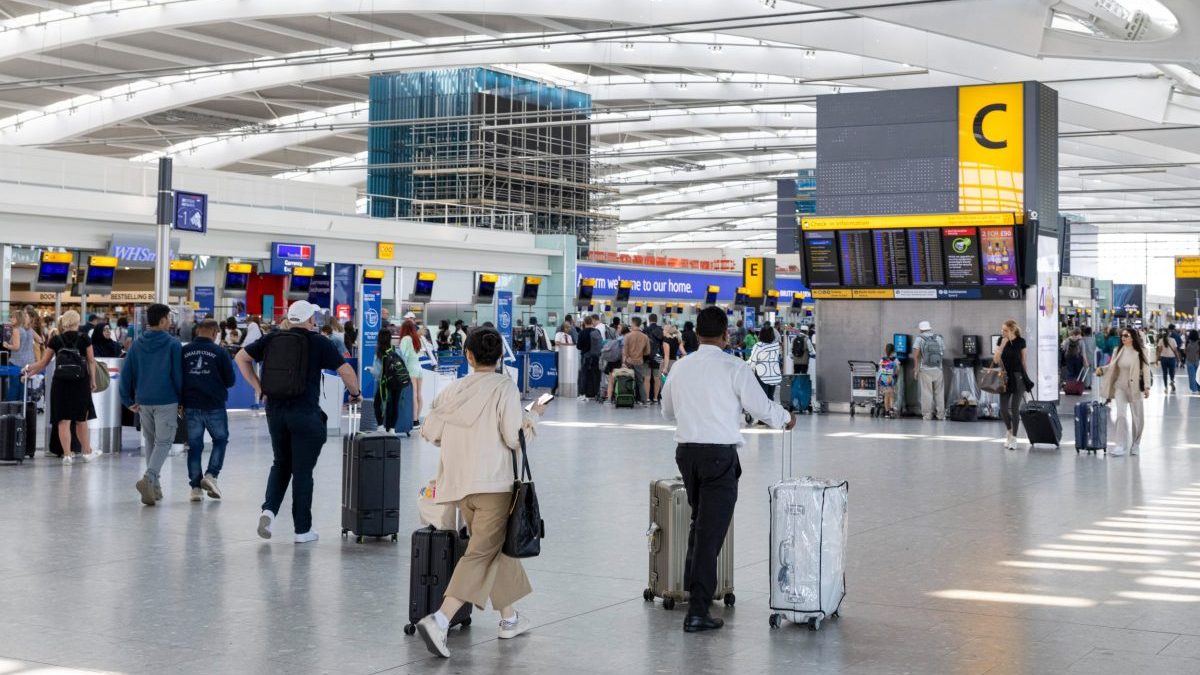
Summer flights to European holiday destinations like Spain, Italy or Portugal are at risk of cancellation or price hikes due to soaring jet fuel costs and dwindling supplies due to the Gulf war.
The price of north-west European jet fuel hit a record high on Thursday at $1,900 a tonne, according to price reporting agency Argus Media, as the first flights in the UK were axed as a result of the Iran conflict.
Announcing cancellations to and from London City, Guernsey airline Aurigny said it was also adding a temporary fuel adjustment surcharge of £2 per sector on all bookings made from 20 March onwards.
New FeatureIn ShortQuick Stories. Same trusted journalism.
But experts warned passengers on larger carriers heading abroad could face similar hikes as a result of the jet fuel crisis upending global airline travel.
Ryanair boss Michael O’Leary warned up to 10 per cent of the airline’s flights in May, June and July could be axed if the Iran war doesn’t stop by the end of April.
Carriers wouldn’t have the flexibility to choose which routes to cut, said O’Leary, with cancellations depending on which airports suffer fuel shortages.
But with the airline’s most popular destinations from the UK including Barcelona, Lisbon and Rome, it raises the prospect of British tourists seeing bookings to holiday hotspots axed at short notice.
Energy analysts Argus Media have also warned if the Gulf supply can’t be replaced, and the impact spreads proportionally across importers, the UK could exhaust its jet fuel stocks in three months.
Summer holidays might be in trouble
James Noel-Beswick, head of commodities at the market intelligence firm Sparta Commodities, told The i Paper an “impending crisis” was looming for European jet fuel supplies, with an escalation in ticket prices likely.
He warned that surging prices were likely in “weeks rather than months” – and that if demand for fuel remains high some flights could be cancelled, with the summer holidays “a real problem”.
“We saw that the last Middle Eastern jet cargo is arriving this week into Europe. I’m just not really sure where Europe gets jet supply from now,” he said.
“I wouldn’t be surprised if we start seeing maybe emergency fuel surpluses added to already booked tickets.”
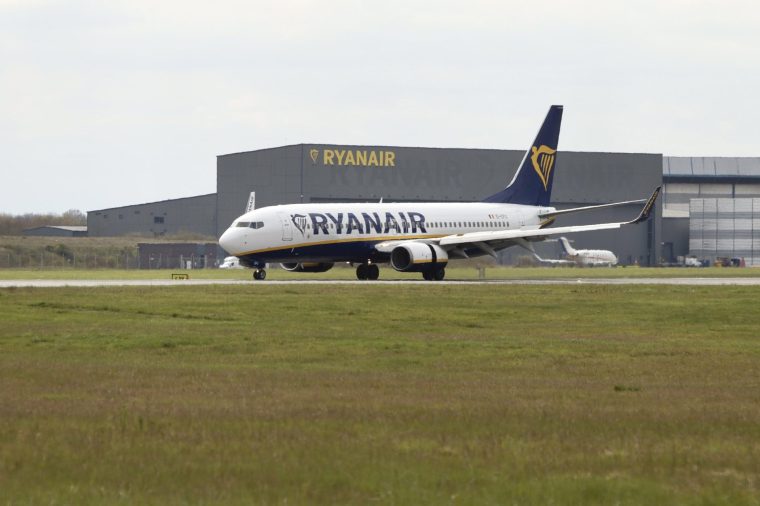 Ryanair’s Michael O’Leary has warned the carrier may have to cancel 10 per cent of its flights due to the jet fuel crisis sparked by the war in Iran (Photo: Will Meakin-Durrant/PA Wire)
Barclays European transportation analyst, Andrew Loddenberg said fuel shortages are currently more prevalent in Asia than Europe, leading to some service cuts already, such as at Air New Zealand.
But he added: “If fuel shortages become more acute globally, and spread potentially to Europe, there will be some flight cancellations and fares for available seats will rise.”
In 2025, the UK imported 89 per cent of its jet fuel, with 60 per cent of imports arriving from the Middle East, but the effective closure of the Straits of Hormuz, where about 20 per cent of the world’s oil passes through, has halted tanker supplies.
Things are going to get pretty bad pretty soon
Prior to the Gulf energy crisis sparked by US and Israeli strikes on Iran, Britain had one of the lowest levels of jet fuel supplies of any developed economy, with domestic production plummeting since the late 1990s as refineries like Coryton and Grangemouth closed.
The Government insists there is no current disruption to the supply of jet fuel and points to the UK still receiving imports from India, USA and the Netherlands.
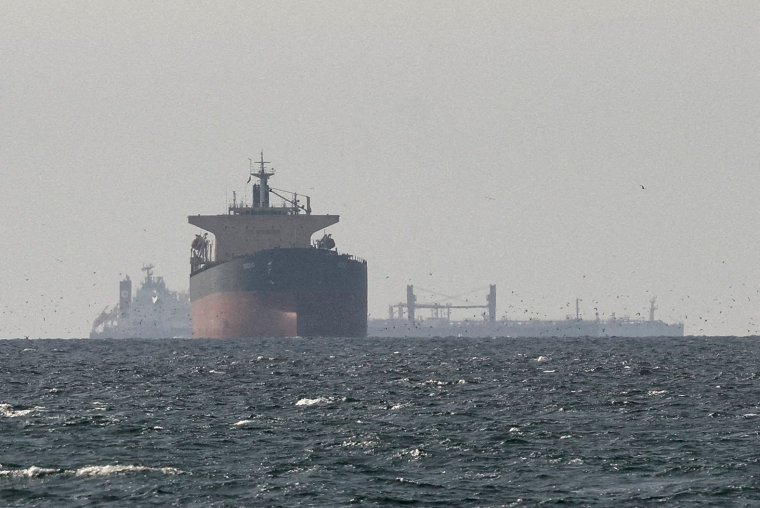 Cargo ships near the Strait of Hormuz, which has been effectively blockaded by Iranian forces (Photo: Stringer/File/Reuters)
But with countries scrambling to find alternative sellers as the crisis deepens, Britain, as Europe’s largest importer of jet fuel, is most exposed, pointing to “an issue for Heathrow”, said Noel-Beswick.
“They’ll be having their own issues in the US West Coast for jet supply, because they can’t get it from Asia anymore,” he added.
“We just haven’t got a lot of stock around in Europe to compensate for this.
“If you look at the biggest net differences in Europe between its own refinery supply and demand, the UK is really a bit of an outlier. I think things are going to get pretty bad pretty soon.”
As well as the UK, Germany, France, Italy, Switzerland and Ireland all have “pretty serious issues” coming up in May, Noel-Beswick added, with EasyJet, British Airways and Ryanair in particular heavily dependent on jet fuel imports.
“The key point is that none of these carriers can easily escape import-linked pricing when the countries they operate from are this structurally short on domestic jet fuel supply,” he said.
And if jet supplies from the Gulf continue to be blocked it raises the prospect of suppliers having to issue force majeures if contracts can’t be fulfilled.
Facing an unknown scenario
Ryanair, EasyJet and Wizzair insist they are well hedged against skyrocketing fuel price changes after buying aviation fuel in advance.
But this week, Ryanair chief executive O’Leary said: “The Strait of Hormuz has been closed for 30 days. If it remains closed for 60 or 90 days, then we’re all facing an unknown scenario, and we are certainly looking at maybe having to cancel 5-10 per cent of flights through May, June and July.”
O’Leary told ITV News he only expects a few days’ notice from suppliers, making disruption a challenge to handle.
“We have aircraft that are based at 95 airports across Europe, and we’ll have to cancel routes at whichever airport the fuel companies advise us we’re short jet A-1 at, say, Malaga airport, or we’re short of jet A-1 at Athens airport,” he said.
EasyJet chief executive Kenton Jarvis has previously warned European consumers should expect higher ticket prices towards the end of summer, when existing fuel hedges come to an end.
Rachel Mumford, UK Travel Expert at KAYAK, says while UK travellers were not seeing consistent flight price increases across the board, with overall European fares slightly lower compared to last year, there were signs of rises on some routes.
In the first three weeks of March, average return flights to the Maldives had soared by 32 per cent, year on year, to £1,218 while bookings to New Zealand climbed 20 per cent to £1,651.
Julia Lo Bue-Said, chief executive of Advantage Travel Partnership, which represents UK travel agencies, said they were seeing demand for bookings to western Mediterranean destinations and the Caribbean.
“That’s really seen an increase, and therefore the pricing becomes under pressure,” she said.
“And I think as we get into post-Easter, into summer months, we’ll start to see that play out more inevitably.”
While there was a slight uptick in enquiries for UK staycations, there was no sign of a definite trend, she said, but advised holidaymakers planning summer trips abroad to “tie in as quickly as you can”.
“One, because availability will be under pressure. And secondly what we don’t know is how fuel is going to impact any pricing moving forward,” she added.