
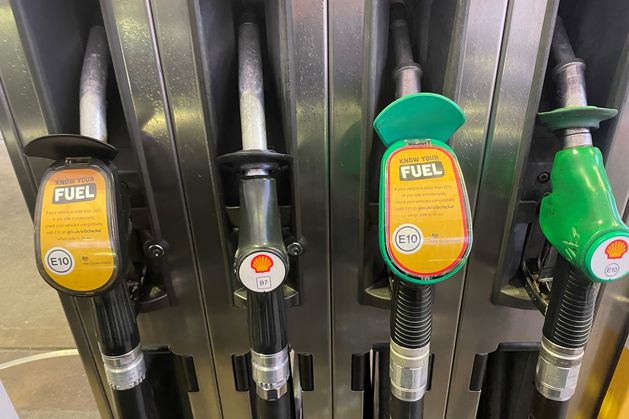
New Exchequer figures show that €0.5bn in excise duty receipts was collected in March, up 1.2pc on the same month last year.
Critics will seize on the increase as proof that the Government has essentially profited from the higher prices at the country’s forecourts. However, ministers will point out that, so far this year, excise receipts are down. They were €1.5bn for the first quarter, €18m or 1.2pc less than in the same period last year.
From midnight on March 25, the excise rate on diesel came down by 20c per litre and on petrol by 15c per litre, after the Cabinet decided to ease the price pressure on motorists. The Government stressed that these reductions are not reflected in today’s Exchequer figures.
It can be expected the amount collected in excise duty by the Exchequer will decline in April, when the cuts are in place for the full month.
The Exchequer returns show that Vat receipts were by over 7pc in March, to €3.3bn. In the year to date they stand at €8bn, up over 5pc on last year, an indication of strong consumer confidence despite the cost-of-living pressures.
Overall, tax receipts of €22.6bn were collected in the first quarter, up by €0.7bn or 3.4pc on last year, when the one-off Apple back-payment of tax is excluded.
The corporation tax take in March was €2.1bn, up by €0.1bn on the same month last year. Corporation tax receipts of €2.9bn so far this year are down slightly on 2025, an indication that the record haul under that tax bracket may be flatlining.
Income tax receipts are still buoyant, reflecting an economy close to full employment. Some €2.8bn was collected in March, €0.2bn or 7.8pc ahead of the same month last year.
For the first quarter of the year, income tax receipts stand at €8.7bn, which is €0.5bn or 6.1pc ahead of the first three months of last year.
The overall picture is that an Exchequer deficit of €0.2bn was recorded in the first quarter of the year, compared to a surplus of €4.1bn last year. The Department of Finance says this was for two reasons. Last year’s figures were boosted by the one-off Apple payment, and there has been an earlier transfer this year into the long-term State savings funds.
Total expenditure in the first quarter amounted to €29.6bn. Gross voted expenditure was €26.4bn, 6.4pc ahead of last year.
The Irish Fiscal Advisory Council pointed out that spending is growing at a fast pace, while underlying tax revenue is performing well. At the end of March, health spending was up 7.2pc, compared to a Budget 2026 forecast of growth of 4.8pc, it said.
The Tánaiste and Minister for Finance Simon Harris said these figures came at a “grave moment for the world”.
He said: “Decisions that will be made in the coming hours will have profound global economic impact in one direction or the other.”
However, he said, Ireland is approaching “this moment of challenge better prepared than we have perhaps been in the past”.
Mr Harris warned: “If this escalation continues, particularly involving critical energy infrastructure or key maritime routes the global economic consequences will be significant.
“And we will face an economic challenge of varying scale, substance and severity, depending on the course of action that others decide in the hours ahead.
“No government can fully shield its people from a shock of that magnitude.”
He said the Government is acting in a way that “seeks to protect the most vulnerable and sustain our economic stability at this moment of challenge”.
Mr Harris said that the increased Vat and excise being taken in as a result of increased fuel prices were in the “singular millions” and were outweighed by the overall €250m package of support brought in by the Government.
“It is true, of course, that the Vat take is slightly up, but it’s also true that that increase is well offset by the €250 million package of measures that the Government has put in place.”
He said that the Government’s package of support “far outstrips” the tax revenue being created.
Public Expenditure Minister Jack Chambers said the figures are presented “at a time of profound global economic instability”.
“The need for sensible, sustainable management of our public finances has never been greater,” he added.The Tánaiste and Finance Minister Simon Harris
Minister Chambers confirmed there was a “challenge” with the Department of Education spending due to an “element of additional demand in the special education area in particular.”
He added: “We’ve been clear if a new priority or a new expenditure pressure emerges that will have implications for other government departments, and that’s what we’re engaging with the Department of Education on presently.”