
More selective than Sundance and so much closer to home (at least for those of us who live in Zohran Mamdani’s New York), New Directors/New Films has become a spring institution at Lincoln Center and MoMA, as its immaculate best-of-the-fests programming collects the most promising early career work from Cannes, Rotterdam, Locarno, and beyond for an annual celebration of cinema’s next chapter.
Now in its 55th year, ND/NF returns with a vintage lineup that spans from super buzzy Neon releases to singular experiments that may never get the distribution they deserve. Come for the local premieres of “Maddie’s Secret” and Pete Ohs’ Charli XCX-starring “Erupcja,” stay for Jack Auen and Kevin Walker’s hypnotic research thriller “Chronovisor,” Viv Li’s beautifully titled “Two Mountains Weighing Down My Chest,” and Alexe Poukine’s radically compassionate femdom character study “Kika.”
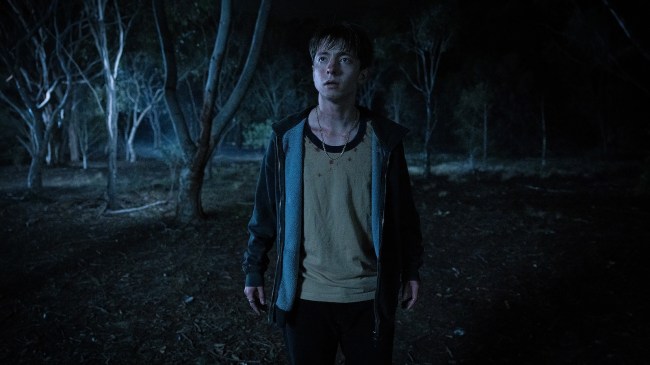
As per usual, ND/NF is slated to kick off with its most-hyped title. This year, that distinction belongs to Adrian Chiarella’s Sundance breakout “Leviticus,” a queer horror movie about a demon that assumes the form of your crush — diabolical, as the kids would say. But some not-at-all biased parties would argue that the only absolutely must-see event at ND/NF 2026 is the live episode of IndieWire’s Screen Talk podcast, which Ryan Lattanzio and Anne Thompson will be co-hosting with “Erupcja” star Jeremy O. Harris at 4 p.m. on April 13. The festival will close five days later with Rosanne Pel’s “Donkey Days,” and will be chock-full of highlights along the way.
Here are 10 standouts from a lineup without any skips. New Directors/New Films runs April 8-19.
This article includes contributions from Sam Bodrojan, Ryan Lattanzio, Vadim Rizov, and Josh Slater-Williams.
“Agon” (dir. Giulio Bertelli)
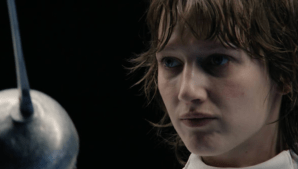
Image Credit: MUBI
The son of Prada Group chiefs Miuccia Prada and Patrizio Bertelli, first-time filmmaker and former America’s Cup sailor Giulio Bertelli makes righteous use of his nepo powers with a visceral, unsettling, and highly conceptual meditation on the martial subtext of modern sport — specifically on the way that technology has weaponized young athletes into cyborg-like machines of nationalist pride. Its title referring to the Greek word for conflict, “Agon” follows three female competitors as they gear up, and break down, in advance of the 2024 Ludoj Olympics. But don’t expect any bombastic training montages here: Bertelli’s film is a violent multimedia swirl of web articles, medical images, and video game footage (among other sources) that churns the training process into something that more closely resembles the disembodied mind-fuck of “World on a Wire” than the flag-waving euphoria of “Miracle.”
An early scene that observes a knee surgery at length — and in all of its gory detail — accurately sets the stage for the dehumanizing hostility of what’s to come, but the action only grows more abstracted as the Olympics grow closer, and the film’s characters more disembodied in turn. Bertelli’s hyper-clinical docudrama approach is so rigorous that you soon forget the 2024 Olympics actually took place in Paris, and that two of the story’s three subjects (a rifle shooter and fencer played by Sofija Zobina and Yile Vianello, respectively) aren’t pro athletes but actors who recently appeared in Alice Rohrwacher’s “La Chimera” (the third is embodied by legit judo champion Alice Bellandi). These young women insist that their combat sports are practiced in a way that couldn’t be more removed from violence; this strange and mesmeric film suggests that what they do with their bodies is far less violent than what is done to them in return. —DE
“Brand New Landscape” (dir. Yuiga Danzuka)
Image Credit: “Brand New Landscape” (dir. Yuiga Danzuka)
A drama about an absentee father returning home in order to begin work on an urban-renewal project, Yuiga Danzuka’s “Brand New Landscape” is broadly about how spaces and places can mean so many different things to different people, and how our memories of an environment can be reshaped with new perspectives or distance (in all that word’s meanings). The youngest Japanese director ever to be featured in Directors’ Fortnight at Cannes, Danzuka dedicates the film “in the memory of my mother and the city.”
That city is Tokyo, the ever-changing landscape of which is used as a mirror to explore whether meaningful transformation is also possible for a fractured family — and whether the public benefits of reshaping a city outweigh the damage that can be inflicted on individuals directly affected by such projects. Danzuka spends a good deal of his delicate drama’s running time recontextualizing and reshaping his key locations to explore emotional connection via urban landscapes as a means for spiritual improvement, building towards an utterly spellbinding disruption of the film’s world that’s truly best left unspoiled but is absolutely magical stuff. If an only-20-something director can so deftly pull off some of the swings that Danzuka does with aplomb in his debut feature, the cinematic landscape of Japan has a very promising future. —JSW
“Chronovisor” (dirs. Jack Auen & Kevin Walker)
Image Credit: “Chronovisor” (dirs. Jack Auen & Kevin Walker)
Another Béatrice takes center stage in this debut feature film, which credits Roberto Bolaño and Umberto Eco as reference points. Those slyly self-reflexive bibliophiles are both accurate comps in multiple senses: Kevin Walker and Jack Auen have made a narrative about narratives, false trails, and the pleasures of the archive, and also very much a movie documenting the extended act of reading. Anne Laure Sellier, an actual academic at NYU, makes her film debut as Béatrice, a professor delving deep into the (fictional) history of a monk who may have discovered a device that could detect and render history in a TV-like format — essentially, a passive time travel device for literally watching the past.
As with any good time-travel narrative, there are unexpected, sinister ramifications to this discovery: Vatican secrecy and ominous disappearances swirl around a narrative that, for much of the film, simply consists of Sellier sitting and reading esoteric texts in multiple languages. All of these texts have been printed and laid-out in shots that showcase the variety of fonts and paper stocks used. It’s a work of rigorous textual fetishism, shot on 16mm and appropriately devoted to analog pleasures, all the way to an ending that takes the film out of the library and into a mysterious realm of video art. —VR
“Erupcja” (dir. Pete Ohs)

Image Credit: 1-2 Special
A 71-minute wisp of a film that moves and sounds like a cartoon wind curlicue, Pete Ohs’ “Erupcja” — the Polish word for “eruption” — was hot with half an outline and scripted on the fly, to the point that all four of its main actors are credited as co-writers as well. The elevated mumblecore energy that results from that approach suits the unformed and searching nature of a wherever you go, there you are story about the ways that people try to make sense of the world around them in real-time.
People like Bethany (Charli xcx, a sly and natural screen presence), a British girl who’s convinced that a volcano explodes whenever she blows up her life for a biannual fling with flower shop owner Nel (Lena Góra) in Warsaw. Her puppy dog-like boyfriend Rob (Will Madden) wanted to propose to her in Paris, but Bethany suggested they go to Poland instead — some part of her was expecting the planet to crack open when they got there, as if the Earth itself were responding to her fears of heteronormative complacency. And in a way, it does.
While Ohs might point to “Celine and Julie Go Boating” and “Alice in the Cities” as his main sources of inspiration for this project, there’s something very “‘Lost in Translation’ by way of Hong Sang-soo” about how Bethany — subsumed into a waking dreamstate that still feels like real life to all of the people buzzing around her — starts to understand herself more legibly now that she’s in another country where she’s forced read the subtitles (figuratively for her, literally for us). To that end, Charli xcx’s casting adds a metatextual richness to this light and winsome movie, and vice-versa, as the friction between her pop star persona and Bethany’s somnambulant everywoman deepens the sense of a woman divided between the superreal and the literal, the spectacular and the mundane. —DE
“Kika” (dir. Alexe Poukine)
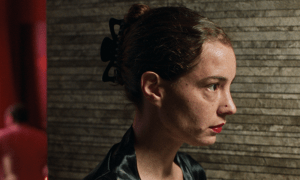
Image Credit: Totem Films
A femdom rom-dram that delicately avoids just about every cliché that its premise might bring to mind, Alexe Poukine’s Cannes-minted “Kika” offers a sober and compassionate take on modern sex work that reconsiders age-old moral judgments for a world in which anyone with a Tryst account and some bills to pay can moonlight as a provider — and for an economy in which people might feel as if they don’t have any other choice. But this isn’t a story about a young Belgian mother’s “downward slide” into selling her body, even if it’s true that Kika (a terrific Manon Clavel) never imagined selling her used panties to make ends meet. She also never imagined leaving her long-time partner for a random man that she meets at a bike shop, or that said man would then leave her five weeks pregnant, but life makes fools of us all, and a concrete vision of the future is a luxury that precious few can afford.
As an experienced social worker, however, Kika begins the film with a deep understanding of precarity and desperation, and — though it will take some time for her to recognize it — the extraordinary courage required to seek the kindness of strangers. Which isn’t to say that all of Kika’s subs are misunderstood sweeties (one client demands that she shit in a bag for him, and then refuses to pay for it), only that society’s dehumanizing view of sex work reflects a system in which tenderness is more taboo than cruelty. Always sensitive, never sensationalized, and sometimes unexpectedly funny, Poulkine’s rewarding film cherishes compassion wherever its characters can find it. —DE
“Leviticus” (dir. Adrian Chiarella)
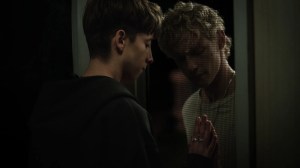
Image Credit: NEON
Australian writer/director Adrian Chiarella makes a major debut with the queer horror movie “Leviticus.” It stars Joe Bird, Stacy Clausen, and oh-how-we-missed-her Mia Wasikowska in a story about closeted teens who are haunted by the thing they desire the most: each other. Naim (Bird) and Ryan (Clausen) steal away for a furtive romance that becomes the only thing worth living for in their small town, but it’s also presided over by a conversion therapy cult into which Wasikowska, who plays Naim’s mother, has brought her son. The “It Follows” comparisons are apt as the boys are stalked by phantom versions of one another who feed into their secret desires, but Chiarella’s vision is wholly original. The emotions it delivers on — especially ending with Frank Ocean’s track “Self Control” — become almost overwhelming for anyone who’s gone through the early queer experience. This is a sad, scary debut from a filmmaker we can’t wait to see more from. —RL
“Maddie’s Secret” (dir. John Early)
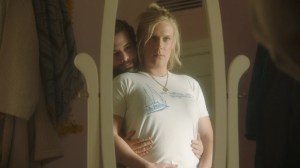
Image Credit: NEON
“Maddie’s Secret” is probably not what you are expecting. Comedian John Early’s directorial debut, ostensibly a pastiche of basic-cable TV movies, is not a parody, or a satire, or even a comedy. Instead, it turns out to be a devastatingly sincere high melodrama with a studied queer sensibility.
Early plays the eponymous Maddie Ralph, a dishwasher at Gourmaybe, a food content production company. She’s sweet, hard-working, and a brilliant chef in her own right. Everyone in the film sees it; Her lesbian best friend (played by Kate Berlant) and her boyfriend (Eric Rahill of the magnificent “Rap World”) can’t help but dote on her, and who could blame them? One day, she finds herself the new face of Gourmaybe after one of her signature vegetarian recipes goes viral. But between the stress of her new job, a big opportunity to impress the executive producers of “The Boar” (not a typo) and the words of her mother banging around in her head, she regresses into bulimia. In attempting to hide her eating disorder, Maddie begins to unravel.
There is no world, really, in which “Maddie’s Secret” would not have turned out very funny. If you were to make a list of the most exciting people in comedy from the past decade, everybody in the movie would be on it (the cast includes Kate Berlant, Vanessa Bayer, and Connor O’Malley). Even when it is not strictly funny, however, the dialogue is written and perfomed with the kind of hyper-expressive broadness that defines the after-school specials which inspired it. But what is most immediately striking about the film is its straight-forward sincerity. Early never makes fun of Maddie, never lets the audience snicker at the screen. There is a mean version of this project, the one I imagined walking in — a satire of wellness culture and feminine self-image that is brutal and shocking, with a higher joke density. But “Maddie’s Secret” is a different and more tender thing. —SB
“Strange River” (dir. Jaume Clare Muxart)

Image Credit: “Strange River” (dir. Jaume Clare Muxart)
The gay coming-of-age movie genre is becoming about as shopworn as the gay coming-of-age movie set during a fateful European summer genre, but Catalan filmmaker Jaume Claret Muxart’s “Strange River” reinvigorates what’s basically now a trope with a sexy, shimmery edge. While his family is on vacation on the Danube river, introspective teenage boy Didac (Jan Monter) appears to be experiencing visions of another (and in this case mysterious) twink slithering under the glassy surfaces of the water, or moving through the dense wood the camping trip leads the family through. Is this other boy an actual living presence or a spectral embodiment of Didac’s desires
Anyone who’s been sexually repressed (and, well, horny) while confined to shared living quarters with your siblings or parents while on a family trip will find much to identify with in “Strange River,” a seductive sexual awakening drama of texture and temperature. It’s one that deserves an attentive queer arthouse audience, and hopefully, New Directors/New Films can help launch this intimate, Spanish-language mood piece toward distribution. —RL
“Trial of Hein” (dir. Kai Stänicke)
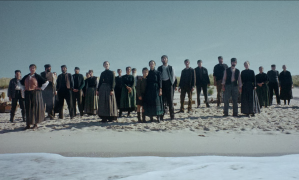
Image Credit: “Trial of Hein” (dir. Kai Stänicke)
Directed in the walls-down, Brechtian style of “Dogville,” Kai Stänicke’s rustically situated but bracingly contemporary debut is similarly about one individual’s journey to a village where they have become or are a stranger — to themselves, to the townspeople around them. The ashen, tenuous Heinrich (a quietly watchful Paul Boche) here returns to his hometown fishing community somewhere on an isolated island where the members have shut themselves off from the rest of the world. Heinrich’s reasons for having left the town at all appear to have something to do with a childhood best friend (Philip Froissant) and otherwise sinuously unfold through a trial the town holds to confirm Heinrich’s identity. Everyone’s recollections of Heinrich clash with his own, occasioning the audience, too, to ultimately question whether he is an impostor.
Tucked in the spare but quietly powerful LGBTQ drama “Trial of Hein” is a sneaky metaphor for coming out itself, making this film a fascinating double bill with either fellow New Directors/New Films entry “Strange River” or “Leviticus.” The film also potently captures that disenchanted feeling of coming back to your hometown and feeling like it, and you, have changed so much that both are now strangers to each other after too many years gone. —RL
“Two Seasons, Two Strangers” (dir. Sho Miyake)
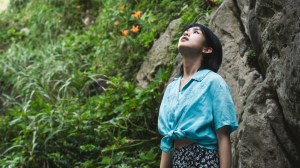
Image Credit: “Two Seasons, Two Strangers” (dir. Sho Miyake)
Sho Miyake (“Small, Slow but Steady”) is one of the finest, most soulful Japanese filmmakers of his generation. His patient dramas favor characters who struggle with loneliness, often withdrawing from engaging with people much at all due to factors that make human connection harder for them. In his latest tender, beautifully textured feature (which won Locarno’s highest honor, the Golden Leopard), “Two Seasons, Two Strangers,” the main character’s tendency to say very little is rooted in a creative slump, intertwined with cultural isolation. Li (Shim Eun-kyung, “Train to Busan”) is a Korean screenwriter who’s experiencing writer’s block and struggling to still connect to her surroundings in Japan, where she’s been based for years. At a Q&A session, she seems scared to answer the first question, suggesting that her main takeaway from watching her own work is that she doesn’t have much talent. Within her own mind, she’s a little more articulate. Japanese is the only language that leaves Li’s mouth, but her occasional inner monologues are in her mother tongue, the most crucial example expressing her growing conflict with the very act of writing itself.
Loosely adapting two specific manga short stories by Yoshiharu Tsuge, “Two Seasons, Two Strangers” is a finely wrought film about the process of getting out of our own heads to more properly appreciate the possibilities before us — instead of vocalizing our worries and doubts to the point of blocking our progress. To nod to a famous song that, like Miyake’s filmmaking, suggests enjoying the silence where possible, sometimes words are very unnecessary. —JSW