
The Cabinet will not sit today but a meeting will take place this morning to discuss the worsening fuel crisis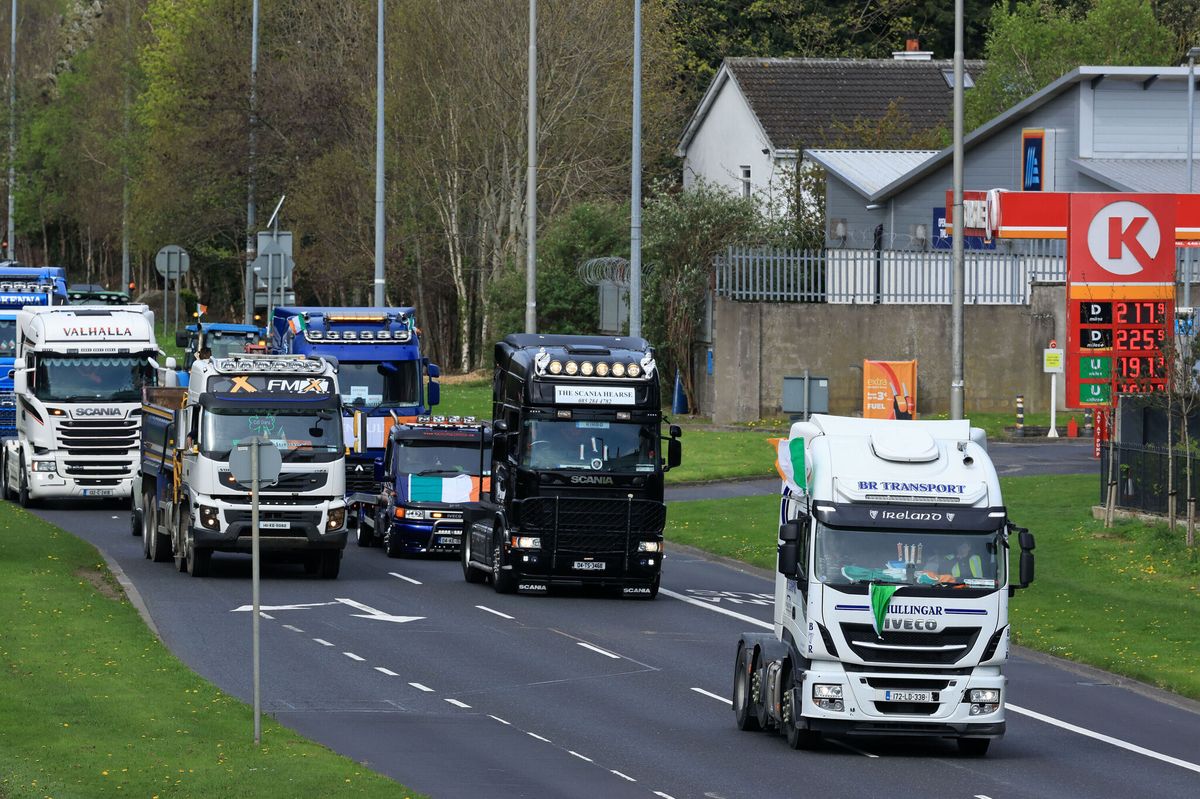
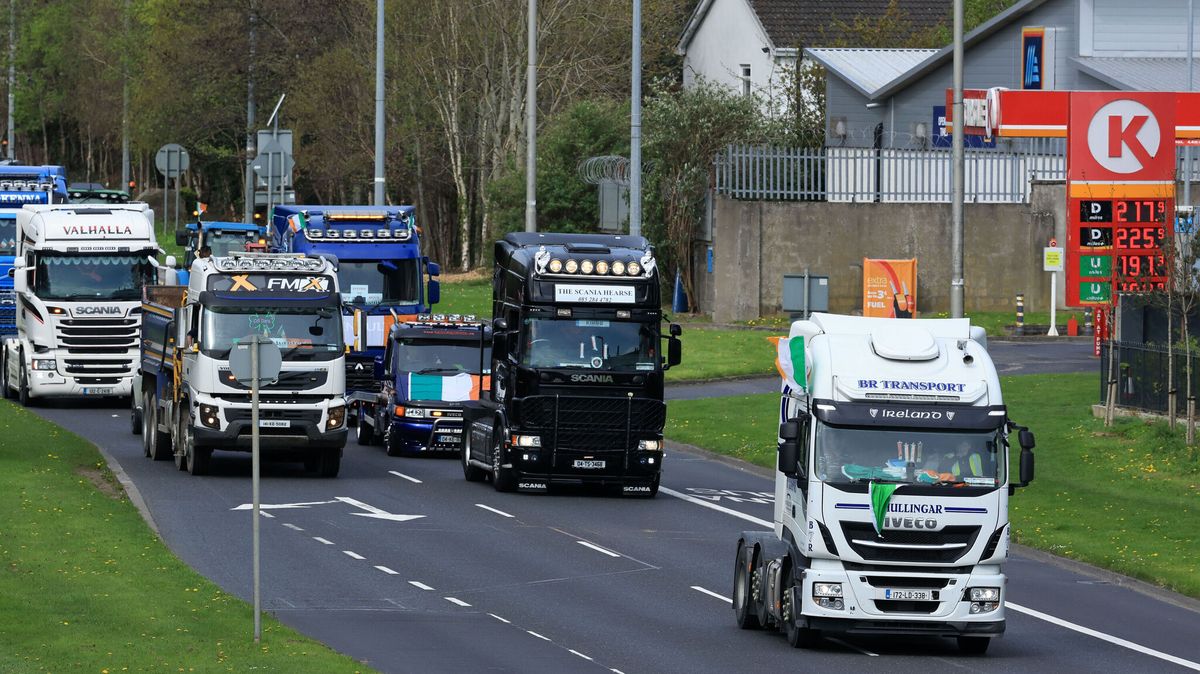
A convoy of trucks, vans and tractors pictured on the N4 eastbound at Palmerstown(Image: Collins )
Ministers will meet today to discuss the energy crisis after chaos was caused throughout the country yesterday as hauliers and farmers protested about the skyrocketing cost of fuel.
This comes as the Government said it is “firmly committed” to supporting households and businesses with rising fuel and energy costs. Slow moving convoys on major motorways across the island caused frustration among motorists yesterday, with some driving on the hard shoulder to bypass protestors.
Tractors, lorries and trucks converged on Dublin’s O’Connell Street in the afternoon as one protestor said up to 500 vehicles were expected to protest in the city. The Cabinet will not sit today but a meeting will take place this morning to discuss the worsening fuel crisis.
Ministers including Taoiseach Micheál Martin, Tánaiste Simon Harris, Transport Minister Darragh O’Brien, Public Expenditure Minister Jack Chambers and Minister of State at the Department of Transport Sean Canney will be in attendance. Speaking on Sunday, the Tánaiste said they will be looking at the current situation “in terms of energy supply and energy security”.
It’s understood that ministers will receive a briefing from the National Oil Reserves Agency (NORA) and there will be discussions about what other countries are doing. O’Connell Street was brought to a standstill by noon yesterday with coaches, cars, lorries and tractors parked on the capital’s main thoroughfare.
Agricultural contractor Gary Leonard said he had travelled with a convoy of around 80 from Navan in County Meath to O’Connell Street. He said he believes carbon tax and excise duty should be removed from diesel.
He said this time last year, it cost €250 to fill an “ordinary middle-sized tractor”, but it now costs €450. Mr Leonard said it took the convoy around four hours to reach Dublin and the reaction on the way was “unbelievable”, adding: “The solidarity is really, really showing today.”
The 26-year-old said prices mean it is “getting hard to make a living”, despite working full time, adding it is “nearly impossible” to “get on in life” in Ireland. John Dallon travelled with a convoy from County Kildare, and said: “We’re calling on the Government to save our economy.
“If the Government does not take us seriously, the economy will come to a halt, it’ll just stop running, because the people just will not be able to afford fuel. I can see this being a bigger collapse than back in the Celtic Tiger.”
The farmer said it is not just the agriculture industry that is affected, haulage and construction sectors are also under “serious pressure”. The demonstration is “not just for the people in business”, he added, “but for the whole community of Ireland”.
He outlined a number of measures the protesters want to see put in place, including a cap on white diesel at 165 or 175 cents per litre and a cap on green diesel at 90 cents, and the abolition of the carbon tax and excise duty. In a statement released ahead of a planned rally on O’Connell Street, Aontu leader Peadar Toibin called for a carbon tax cut.
He said the Government is “the key driver” of high prices for fuel in Ireland and it is “charging a tax on a staple product that people simply do not have the ability to pay”. Ger Hyland, president of the Irish Road Haulage Association, said the organisation is not involved in the protest.
When pressed, Mr Hyland refused to say whether he supports the protest and said while the association is at the table trying to negotiate a deal with the Government he would not give an answer. He said he “empathised” with demonstrators, adding members of his organisation were “probably” involved and that “it’s up to every individual haulier himself to do as he sees fit for his company”.
The IRHA met with Minister O’Brien and Minister Canney last Friday. A spokesperson for the Transport Minister said further work is being undertaken between the department and the IRHA, and they remain in regular contact.
They added: “Recognising energy affordability is currently the most pressing issue facing the country, the Government is firmly committed to supporting households and businesses with rising fuel and energy costs.
“So far, we have allocated €250 million in targeted supports to assist those experiencing real and immediate financial pressure – one of the most substantial measures introduced anywhere in the EU – including excise reductions on diesel and petrol, and an enhancement of the Diesel Rebate Scheme for licenced hauliers.”
Subscribe to our newsletter for the latest news from the Irish Mirror direct to your inbox: Sign up here.