
There is a conversation happening this week that deserves more light and less heat. The question of where the Investec Champions Cup semi-finals will be played is generating genuine frustration in certain corners of the rugby world, and some of it is entirely understandable.
But the full picture is more complicated than the complaints suggest, and a few things need setting straight.
Let us start with what we know. The quarter-finals take place this weekend, with Bath hosting Northampton Saints at The Rec on Friday night before Glasgow Warriors face RC Toulon at Scotstoun, Leinster Rugby welcome Sale Sharks at the Aviva and the all-French heavyweight Union Bordeaux Bègles against Stade Toulousain at Stade Chaban-Delmas on Sunday. Whoever progresses with the highest pool-stage rankings will earn home country advantage for the semi-finals on the weekend of 1 to 3 May, and venues will be designated by EPCR following the conclusion of the last eight.
Here is where the noise starts. EPCR has confirmed to sources that the process for selecting those venues is far from a unilateral decision handed down from on high. Venues are chosen in close consultation with the domestic leagues, and Premiership Rugby specifically has an approval role throughout. The clubs, in other words, are represented in this process. That matters because the narrative that EPCR simply imposes unsuitable grounds on teams and fans is a simplification that doesn’t hold up.
The criteria applied are straightforward and sensible once you understand them. Stadium availability is the first hurdle, and it eliminates more options than people realise. Capacity is a companion requirement, because a competition of this profile cannot credibly stage a semi-final in a ground that will look half-empty or fail to meet minimum commercial standards. Accessibility is weighted heavily, both for fans travelling to support their team and for the practical logistics of clubs preparing for a match. Television scheduling adds another layer of constraint. And crucially, EPCR needs to plan potential venues before the quarter-finals are played, which means preparing for multiple different semi-final combinations simultaneously. That planning process begins at the start of the season, with a longlist of options held and assessed well before the Round of 16 is even reached.
Months of evaluation
By the time the quarter-finals get underway, the shortlist has been through months of evaluation. There simply is not a world in which a bespoke venue can be ready and waiting for every possible outcome.
What EPCR sources have confirmed is that the list of venues considered is genuinely extensive. An enormous number of grounds are evaluated each season. The reality is that the majority of large-capacity stadia in England are football grounds, and football clubs are not always in a position to make their facilities available during a season that for them is still live.
Cardiff was considered as a potential venue this season and was unavailable. Bristol’s Ashton Gate was assessed but would have created a direct conflict had Bath progressed to a home semi-final, which is an obvious non-starter. Twickenham, the most obvious English solution, was considered and is unavailable because the Army v Navy match is scheduled that weekend, one of the most important fixtures in the military sporting calendar and a commitment that cannot be moved.
These are not failures of ambition on EPCR’s part. They are the practical constraints of operating a knockout competition across multiple countries within a window that was locked down months earlier.
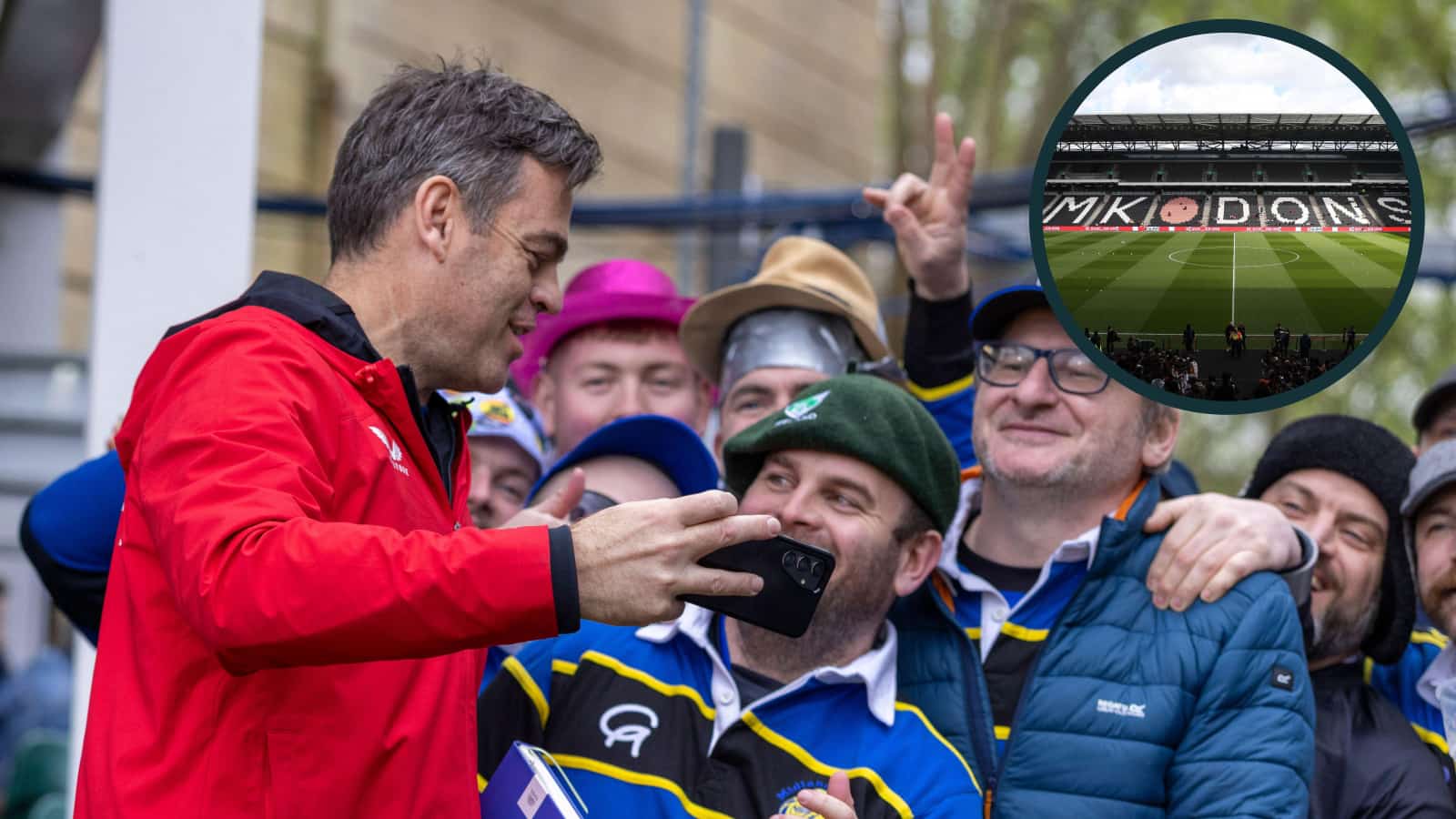
Which brings us to the decision that is causing the most anger on the English side of this debate. Should Bath progress through The Rec on Friday and earn a home semi-final, that match will be played at Stadium MK in Milton Keynes. Bath fans are furious, and it is difficult to argue they are wrong to be. This is a club whose supporters are overwhelmingly based in the south-west, and Milton Keynes represents a significant and frankly awkward journey for them.
The train connections from Bath to Milton Keynes Central are not straightforward, involving changes and the kind of travel time that turns a day out into an ordeal. For families, for older supporters, for anyone not prepared to treat it as an expedition, Stadium MK is a hard sell. The atmosphere that has made The Rec and its sold-out surroundings so formidable this season will not travel north up the M4 and M1 without considerable effort.
The ground itself has a legitimate pedigree at the highest level of the sport, having hosted matches during the 2015 Rugby World Cup, so the stage is not without precedent for occasions of scale. But precedent and suitability for Bath’s particular fanbase are two different things, and the geography of this decision will rankle for as long as south-west England lacks a large-capacity alternative ground that is actually available when EPCR needs it.
Law discussion: Were the Stormers really hard done by with a ‘dreadful’ referee decision?
The system isn’t perfect
The Glasgow situation adds a different wrinkle this season. Scotstoun is committed as an athletics venue for the 2026 Commonwealth Games and will be unavailable for rugby by the time the semi-finals arrive. Should Glasgow beat Toulon on Saturday and earn a home semi-final, Murrayfield in Edinburgh becomes the natural alternative within the Scottish Rugby family. Whether Warriors fans feel Edinburgh as a proper surrogate for their own city is a fair debate, but it is one aimed at circumstances rather than governance.
One charge that the evidence does not support is that EPCR’s pricing approach fails fans. Every post-Covid semi-final has sold out, the majority within 24 hours of going on general sale. Croke Park last season, with a capacity of 82,500, sold out on that timescale and set a record attendance for the competition at that stage. The concern that neutral venues produce hollow atmospheres and half-filled stands is not borne out by the data. When the occasion is right and the pricing reflects the fanbase being served, the demand is demonstrably there.
None of this is to say the system is perfect. The Bath situation in particular is one where the gap between what supporters have earned through a magnificent season and what they are being offered logistically is wide enough to warrant an honest look at whether the venue selection criteria need revisiting for future seasons. Stadium MK is a workable answer arrived at through a rigorous process that began in August.
Want more from Planet Rugby? Add us as a preferred source on Google to your favourites list for world-class coverage you can trust.
That does not make it feel right to a Bath supporter working out how to get their family to Milton Keynes on a May Saturday. EPCR and the leagues have to grapple with that gap, and keep grappling with it, because the competition deserves better than workable.
The quarter-finals this weekend will clarify everything. By Sunday evening, we will know whether the Bilbao final is being shaped in Milton Keynes, Edinburgh, Dublin, or Bordeaux.
Quarter-final fixtures
Friday 10 April
QF 4: Bath Rugby (4) – Northampton Saints (5), The Rec (20:00)
Premier Sports / beIN Sports / SuperSport / FloRugby / EPCR TV
Saturday 11 April
QF 2: Glasgow Warriors (2) – RC Toulon (7), Scotstoun Stadium (15:00)
Premier Sports / France TV / beIN SPORTS / SuperSport / FloRugby / EPCRTV
QF 3: Leinster Rugby (3) – Sale Sharks (11), Aviva Stadium (17:30)
Premier Sports / beIN Sports / SuperSport / FloRugby / EPCR TV
Sunday 12 April
QF 1: Union Bordeaux-Bègles (1) – Stade Toulousain (8), Stade Chaban-Delmas (16:00)
France TV / beIN Sports / Premier Sports / SuperSport / FloRugby / EPCR TV