
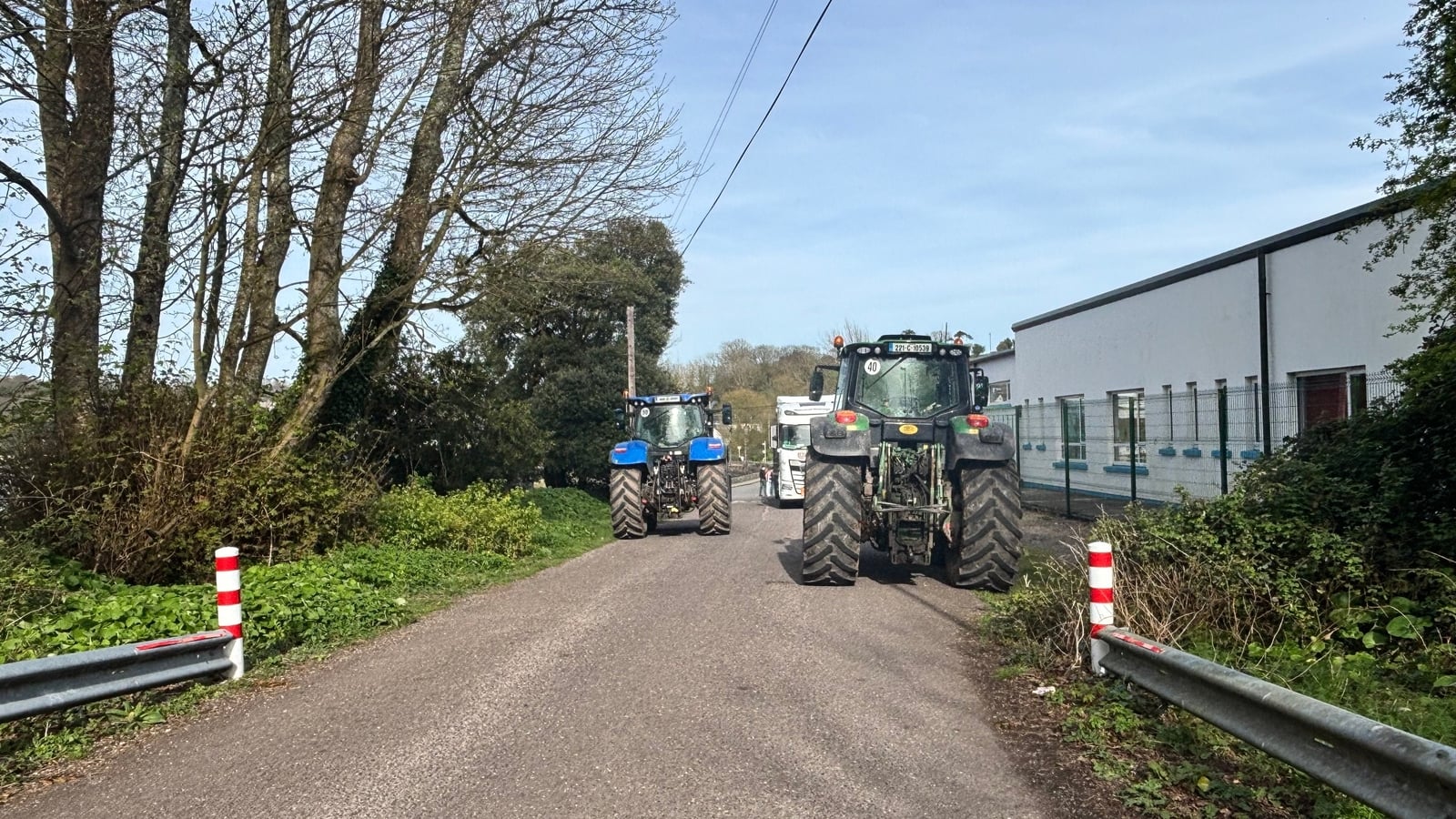
As fuel protests enter their third day, Agriculture and Consumer Affairs Correspondent Aengus Cox looks at the impact on Ireland’s fuel supply.
How significant are the sites being blockaded in terms of Ireland’s fuel supply?
Very significant.
Around a third of the country’s fuel supplies come in through the Whitegate refinery in Cork, which is the only refinery in Ireland where we make our own diesel and petrol from oil.
The terminals in Foynes in Limerick and in Galway store finished petrol and diesel entering the country.
With protests at these three sites, that’s around half of Ireland’s fuel supplies locked up, which can’t get out to service stations.
It’s also worth noting that much of the State’s strategic emergency fuel supply is stored in the locations currently being blockaded.
How long before these blockages start to impact fuel supply on forecourts?
This is already happening, according to the industry representative body Fuels for Ireland.
It says the blocking of tankers in Galway led to some busy service stations around the city running dry yesterday.
And this is likely to happen on a lot more forecourts today, so long as the blockades continue.
There has been no change to the situation overnight in Galway or at Whitegate in terms of fuel being prevented from leaving, despite a garda presence at these locations.
For now it’s mainly a regional issue, given it’s Cork, Limerick, and Galway where fuel isn’t being allowed to leave terminals.
There are no reported issues at Dublin port in terms of supply leaving, but if that were to happen things would get very serious very quickly in terms of shortages at pumps.
This is because around half of Ireland’s petrol and diesel enters through Dublin port.
If that flow is disrupted, we could quickly see more shortages at pumps in all areas.
A small amount of fuel enters the State via the North, but the levels would be only a fraction of supplies entering via the other locations.
Will it likely have any effect on price?
We’re not expecting forecourts to up their prices because of this.
There’s no shortage of fuel in the country, it’s simply a supply problem right now.
That fuel has been paid for at a certain price by retailers, it just can’t get to its destination.
If and when the fuel does make its way to pumps, the price for the motorist should be based how much the retailer paid for it.
What’s happening with pump prices?
Diesel is costing around €2.17 a litre on many forecourts right now, with petrol in and around €1.95 a litre.
This is around eight or nine cent higher than when the Government’s excise cuts (20c for a litre of diesel, 15c for a litre of petrol) kicked in last month.
Prices peaked at around €2.30 a litre for diesel, and €2 for petrol a few weeks back before those measures were introduced.
We saw oil prices fall back yesterday with the talk of a ceasefire between Iran and the US, but that drop will take a few weeks to be seen at the pumps.
But it’s a volatile market, and with doubts over the Middle-East ceasefire oil future prices have already begun to rebound.