
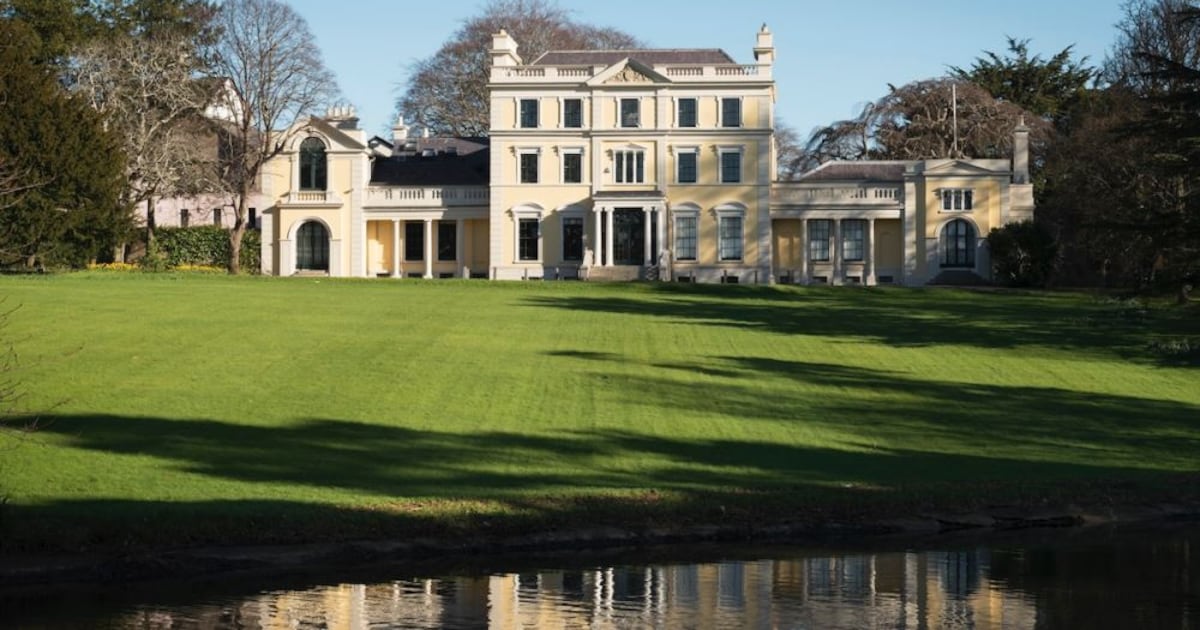
Plans to rezone land at Woodbrook House, a 200-year-old stately home in south Dublin, for housing are set to be dropped following the intervention of its owner and the Department of Housing.
Dún Laoghaire-Rathdown County Council planned to rezone the greenbelt lands between Shankill and Bray to fulfil a direction from Minister for Housing James Browne to provide significant additional lands for development.
However, Marc Cochrane, also known as Sir Henry Marc Sursock Cochrane, fourth baronet of Woodbrook and former honorary Irish consul to Lebanon, opposed the move.
Cochrane, whose family was part of the Cantrell & Cochrane Group – famous for producing Club Orange – benefited at the height of the property boom from one of the most lucrative rezoning decisions ever recorded.
In 2004, the council rezoned part of his estate, beside Woodbrook Golf Course, for housing. Cochrane sold the lands in 2007 to a company associated with developer Joe O’Reilly for more than €150 million. They remained undeveloped when the property crash hit, but the first of several hundred homes has recently been completed.
Submissions to the council by planning consultants John Spain Associates, acting for Cochrane, said that although the 2007 sale resulted in a reduction in Woodbrook Estate, the development was “not considered to have an undue negative impact on the setting of the estate, distinct from the current proposed” rezoning.
The council’s new plans would have “a significant, permanent negative impact on Woodbrook House and Estate, including the numerous protected structures and historic features located thereon”, they said.
Conservation architects Sheehan & Barry, representing Cochrane, said: “To sever the connection between not only Woodbrook House and its gate lodges and entrance gates, but also the magnificent ‘borrowed’ views which are integral to its design and setting would be an act of architectural vandalism in our view.”
In a personal statement accompanying the submissions, Cochrane said the proposed rezoning “would represent an unnecessary and damaging land-use change, undermining the ecological, heritage and landscape values that define the estate”.
He urged the council to reverse its plans, saying he had “no intention to develop this land for residential purposes in the foreseeable future”.
In its submission, the Department of Housing said it had a “number of concerns in respect of this rezoning proposal”. Woodbrook House was, it said, a “very significant Palladian country house with planned views and vistas from the front elevation of the property encompassing the demesne parkland which is now proposed for residential development”.
This development “would result in loss of the parkland itself, sever the relationship between the house and parkland and adversely impact on the planned vista arrangement”.
Mitigations proposed by the council as part of the rezoning were “wholly inadequate to the challenge of mitigating a profound and permanent impact”, it said.
Council chief executive Frank Curran, in his report to councillors in advance of a vote on the proposed changes next week, recommended scrapping the rezoning. The lands are “readily serviced and are located in close proximity to the new Woodbrook Dart station” and many areas within the curtilage of protected structures have previously been “successfully and sensitively developed,” noted his report on the submissions.
However, he acknowledged “a number of submissions have been received which raise serious concerns” regarding the rezoning.
“As the landowner has indicated that they do not wish to develop the lands in the foreseeable future, it is recommended that alternative lands should also be zoned that can be developed to meet the new housing growth requirements in the short term.”
Separately, the owner of a golf facility in Stepaside had asked for her lands to be excluded from future housing plans.
However, Curran has recommended the councillors uphold that proposed change.