
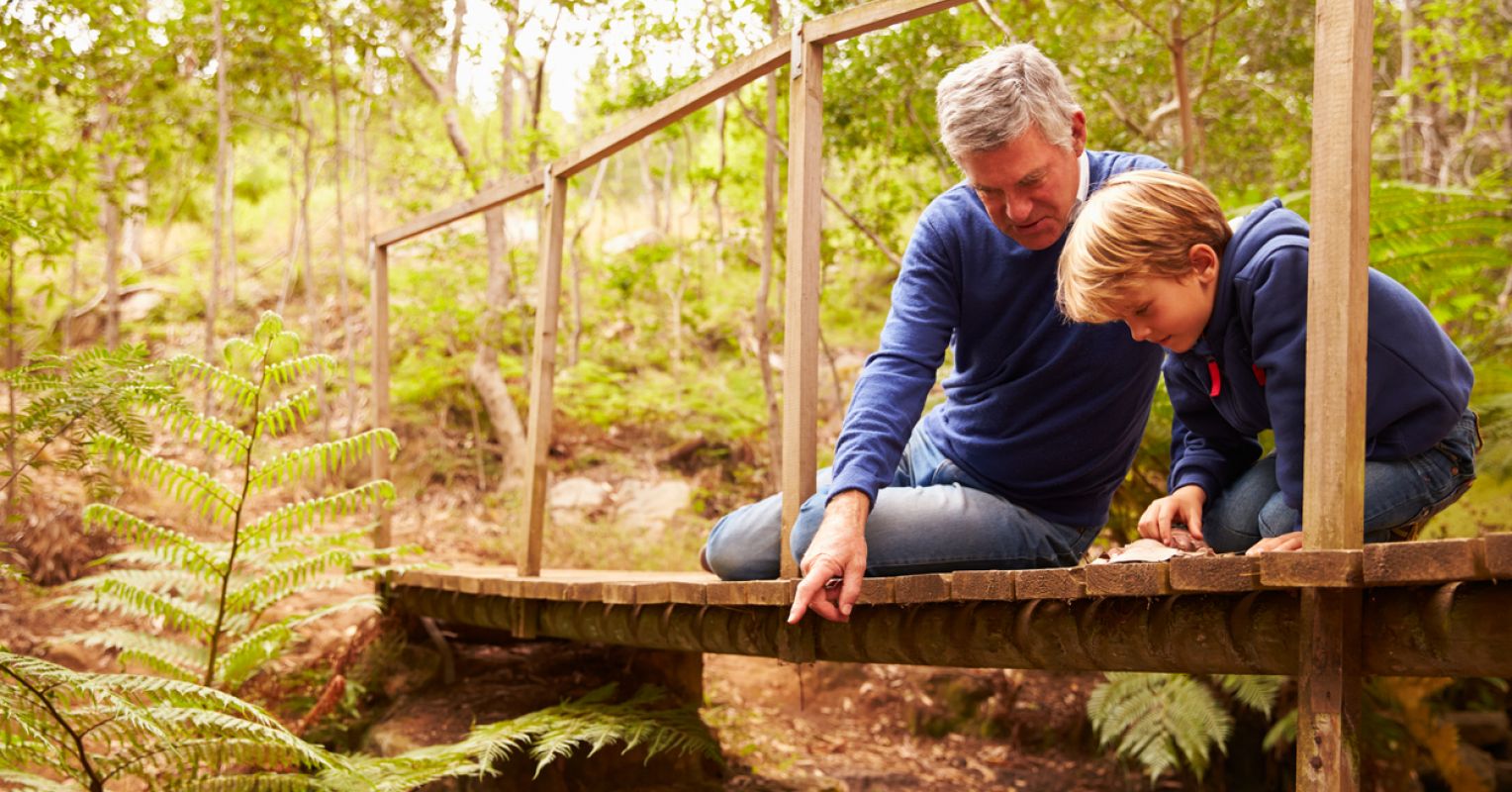
My 2 ½-year-old grandson is now at the developmental stage of asking “What’s that?” and “Why?” His curiosity about the world is exploding, and it’s so enjoyable looking at the world through his eyes. Every question answered is followed by a “But why?”
As a psychologist, I know it reflects a normative developmental stage in which curiosity drives learning. As a grandfather, it brings such joy and excitement to watch him figure out and understand the world around him.
This got me thinking about the importance of grandparents themselves remaining curious—not only about their grandchild’s thoughts and experiences, but also about their own world.
Curiosity is not only a developmental task for children but may also be one of the healthiest emotional tasks for grandparents. Curious grandparents tend to be less judgmental, more adaptable, and more connected to the people they love.
From a psychological perspective, curiosity communicates:
Your ideas matter.
The world is interesting and safe to explore.
Learning is something we can do together.
In my clinical practice working with multigenerational families, I often encourage grandparents—especially new grandparents—to be curious about the new ways of parenting rather than being critical of what their adult children are doing. Many of the grandparents with whom I work enter therapy struggling to understand how to best connect with their adult children. As I have discussed in previous blog posts, many current childcare practices may be at odds with recommendations for the previous generation. A helpful way of better understanding these changes is to remain curious about new parenting styles.
Curiosity benefits both grandchildren and grandparents alike. Curiosity is contagious, and when grandparents remain curious—not only about the world their grandchild is experiencing but also for the grandparents themselves—it allows us to pause and re-examine things we stopped noticing years ago: a caterpillar on a leaf, a broken tree, a huge tree trunk, to name just a few.
Recently, my wife and I went on a hike with our adult children and grandson. My son pointed out that it took my grandson an hour to walk a mile—but what a wonderful hour it was! I noticed that I was looking at the huge redwoods through my grandson’s eyes, all the sticks on the ground, and the different bugs crawling on the forest floor and the leaves. Often throughout the walk, my grandson would exclaim, “What’s that?” and my son and daughter-in-law would lovingly explain whatever he was looking at and would follow up on many of his “But why?” questions, too.
To help nurture your grandchild’s curiosity, here are some practical suggestions.
Answer with wonder, not just the facts. Sometimes the best response is “Let’s look at this together.”
Ask the child what they think. This encourages imagination and confidence.
Slow the moment down. Curiosity often dies when adults rush past it.
Let questions lead the interaction. A toddler’s “Why?” can turn an ordinary walk into an exploration.
Stay curious about the child. Not just their questions, but their feelings, interpretations, and ideas.
How Children’s Curiosity Helps Grandparents
Often, as we age, many adults slowly lose everyday curiosity as routines, responsibilities, and certainty replace wonder. Toddlers do the opposite: They live in a state of continuous discovery.
Our grandchildren’s curiosity invites us to pause and re-examine things we might have stopped noticing years ago: the smell of flowers, the different types of leaves on the ground, the sound of birds chirping. Slowing down and pausing allow us to be more present, take a deep breath, and be in the moment—something that toddlers naturally do!
Also, engaging with grandchildren and answering their “What” and “Why” questions—a role that involves learning new things and managing novel situations—enhances your own brain plasticity, enabling your “aging” mind to adapt and grow. Curious, inquisitive children provide constant mental stimulation through questions and play, which encourages grandparents to remain engaged, active, and mentally alert.
As we age, our brains need exercise just as our muscles do. According to Henry Ford Health Staff (2023), “engaging with your grandchildren allows grandparents to stay mentally alert as they engage their grandchildren in activities and provide care. These interactions improve the grandparents’ memory, language, reasoning, and critical thinking skills.”
Closing Thoughts
My 2 ½-year-old grandsons’ questions of “What’s that?” and “Why?” are reminders that, even as grandparents, curiosity is not something we should outgrow. Curiosity is not only a developmental task for children, but it may also be one of the healthiest emotional tasks for grandparents. Curious grandparents tend to be less judgmental, more flexible, and more connected to the people they care most about. For grandparents, the real opportunity may not be answering every question but rediscovering their own sense of wonder right alongside their grandchildren.