
A once-overlooked corridor at the V&A Museum has been transformed into a much larger, more engaging gallery – one that finally gives the Gilbert Collection the space and attention it deserves.
Assembled over decades by Sir Arthur and Rosalinde Gilbert, the collection was previously shown at Somerset House before moving to the V&A on permanent loan. Until recently, it sat in what was essentially a long passageway — easy to pass through, and just as easy to overlook.
It wasn’t even a named gallery – just a space on the V&A map for “Gold, Silver and Mosaics”.
That’s changed.
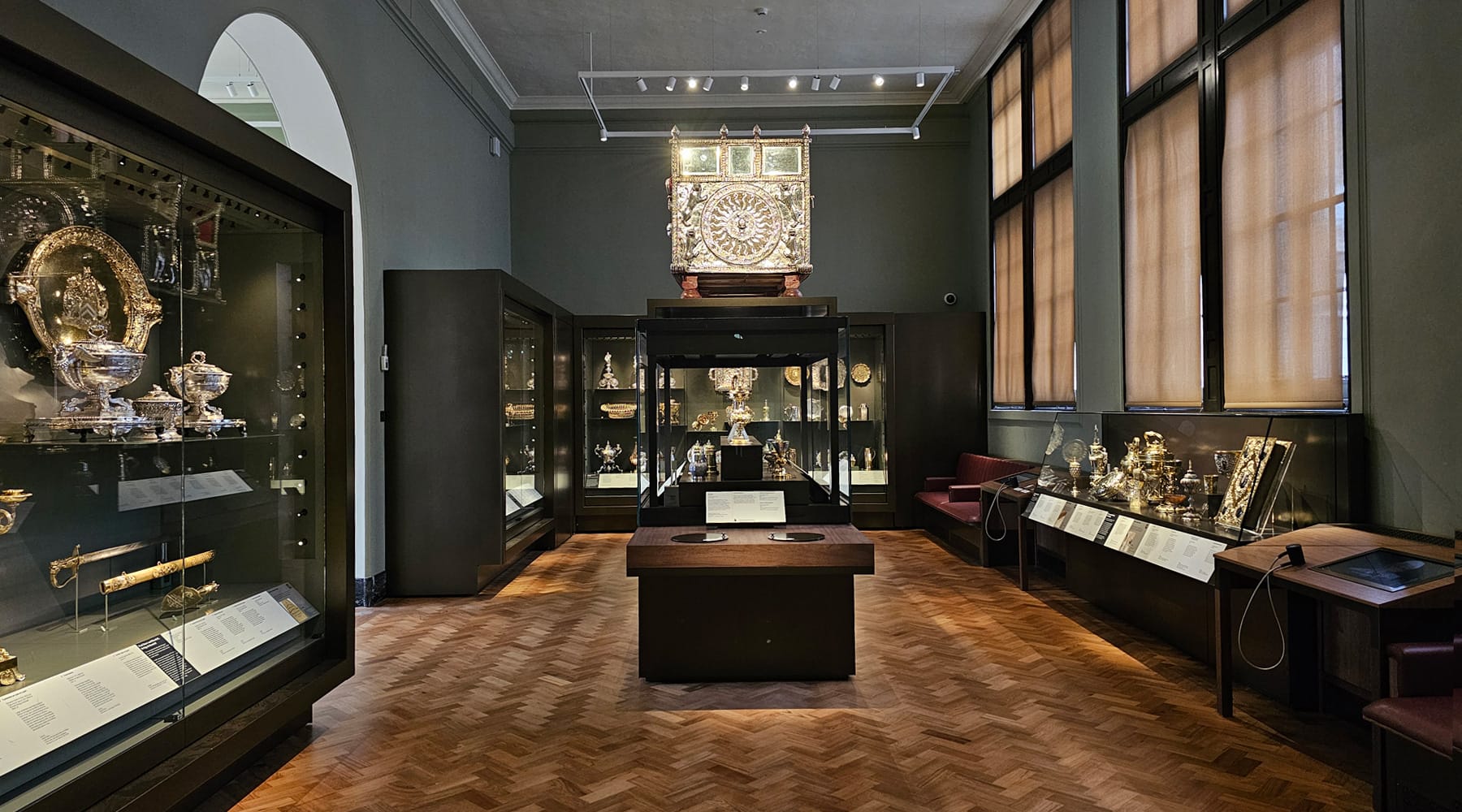
By absorbing some former offices — the East Asia Offices that once ran alongside the corridor — the museum has nearly doubled the gallery’s size. What was once a linear route is now broken up with side rooms and alcoves that invite you to pause, explore and double back, turning it into a destination rather than a thoroughfare.
After a two-year refurbishment, and without any announcement, the V&A quietly reopened the galleries a few weeks ago.
At first glance, the collection can feel eclectic, even a little random. But as you spend time with it, a pattern emerges. The Gilberts were drawn to objects with stories – often linked to notable former owners – and to pieces that play visual tricks.
So what looks like a painting might turn out to be a mosaic. A decorative bird is actually a cup. A seemingly painted table reveals itself, on closer inspection, to be covered in glass micro-mosaic. An antique cabinet is “painted” not with pigment, but with intricate stone commesso.

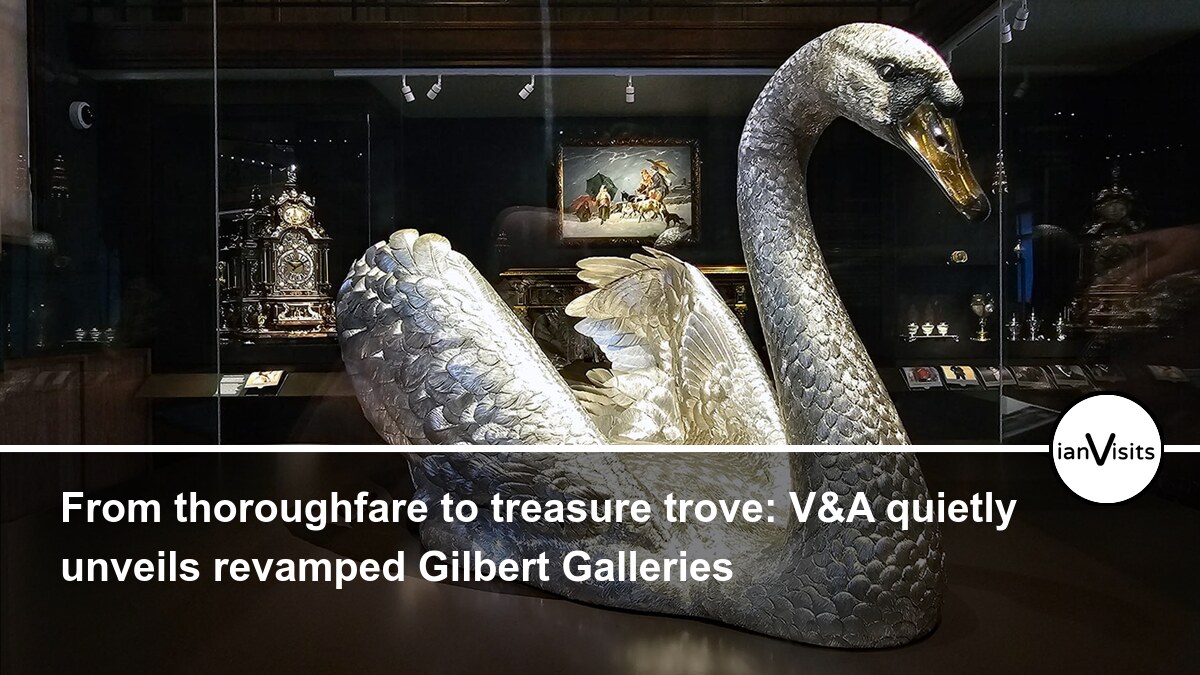
This fascination with miniature craftsmanship runs throughout the displays, often paired with a touch of social history through illustrious – and at times very dodgy – provenance. And while many objects are small, the collection isn’t exclusively so – the gleaming silver swan, made in 1985 for Gilbert’s Los Angeles home, is an unmistakable centrepiece, requiring four British craftsmen to create.

The reworked gallery is now arranged into themed zones — including Silver and Gold, Collecting Stories, Object Stories, Micro Mosaics, Small Boxes and Stone Commesso — helping to give structure to what might otherwise feel like a cabinet of curiosities.
There are quieter highlights too.
Enamel portraits of Scottish monarchs line one display, while Frederick the Great’s snuffboxes are given pride of place in specially designed cases. Elsewhere, the tiniest objects often prove the most compelling — intricate boxes and miniature artworks so finely detailed that you find yourself leaning in, trying to work out how they were even made.
Magnifying glasses at some of the cases helps. A lot.

Not everything in the collection has an easy history.
In 2019, it emerged that a 4,500-year-old gold ewer had been illegally exported before being acquired by the Gilberts. It has since been returned to Turkey, with a modern commission now standing in its place — a reminder that museum collections are not fixed, but evolve as new information comes to light.
More darkly, there are also stories here of Nazi and Soviet looting and how many mid-century collectors were often unaware of the background of the objects they bought.
There is though also a sense of playfulness woven through the displays.
A micro-mosaic landscape doubles as a hidden human profile, while a necklace depicting views of Rome turns the idea of a souvenir into wearable art. Alongside the objects, the gallery also explains the painstaking techniques behind them, adding another layer of appreciation.

It’s a thoughtful reinvention.
What was once a space to hurry through while seeking more interesting exhibitions has become a place to linger — and a collection that might previously have been overlooked now rewards time, curiosity and a closer look.
The Gilbert Galleries are in rooms 70 to 72 on the second floor of the V&A Museum and are on the Exhibition Road side of the building. It’s free to visit.