
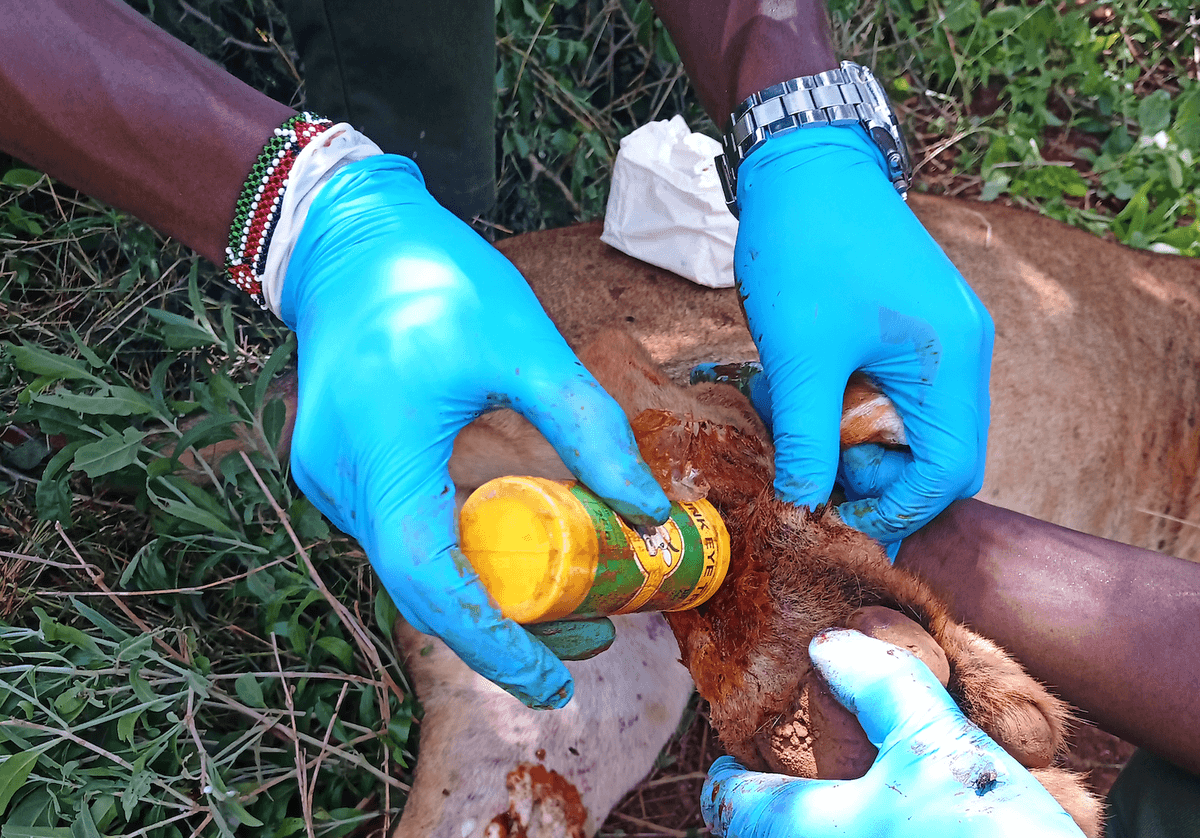
On 2 December 2022, we discovered Sahara – then just a large lion cub, with a terrible injury. She was found with an arrow piercing through her right hind leg.
Sadly, the injury was clearly caused by a person. We knew we needed to intervene and provide medical care immediately. Whenever a wild animal is discovered with an injury, we urgently contact our colleagues from the Kenya Wildlife Service veterinary team to come and help.
Thanks to their swift response, Sahara was gently sedated, and the deadly arrow carefully removed. She was given vital medications to manage her pain and prevent infection.
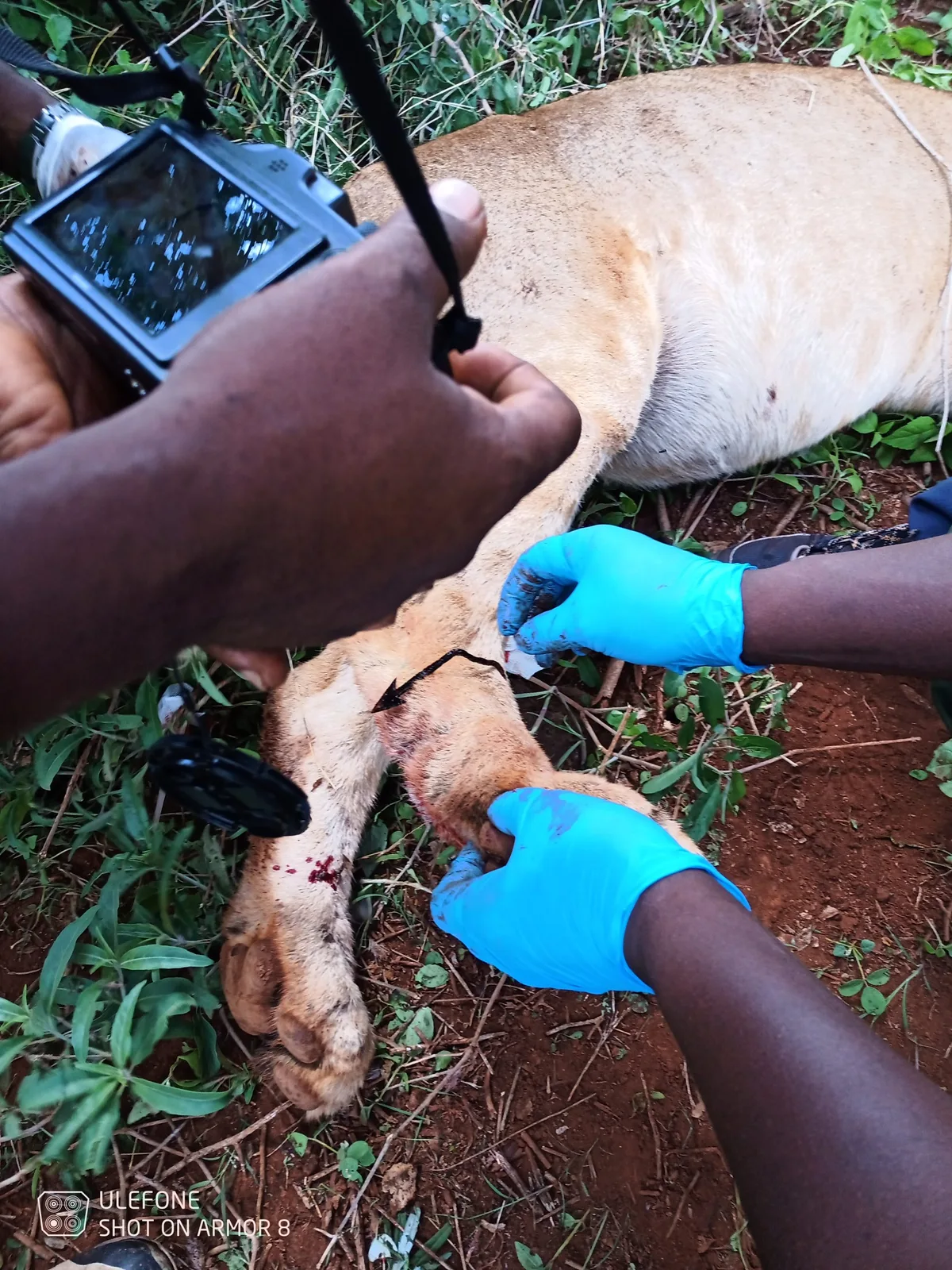 The Kenya Wildlife Service veterinary team work to help Sahara – Born Free
The best-case scenario with any intervention like this is that the animal is released quickly after treatment. Thankfully, this was the case for Sahara. Following this life-saving care, the young lioness was released to live freely. Along with the team, I kept a careful eye on her recovery.
The arrow is believed to be a result of a poaching attempt. Sadly, lions can be targeted in retaliation for attacks on livestock or in self-defence when they charge at poachers within the park.
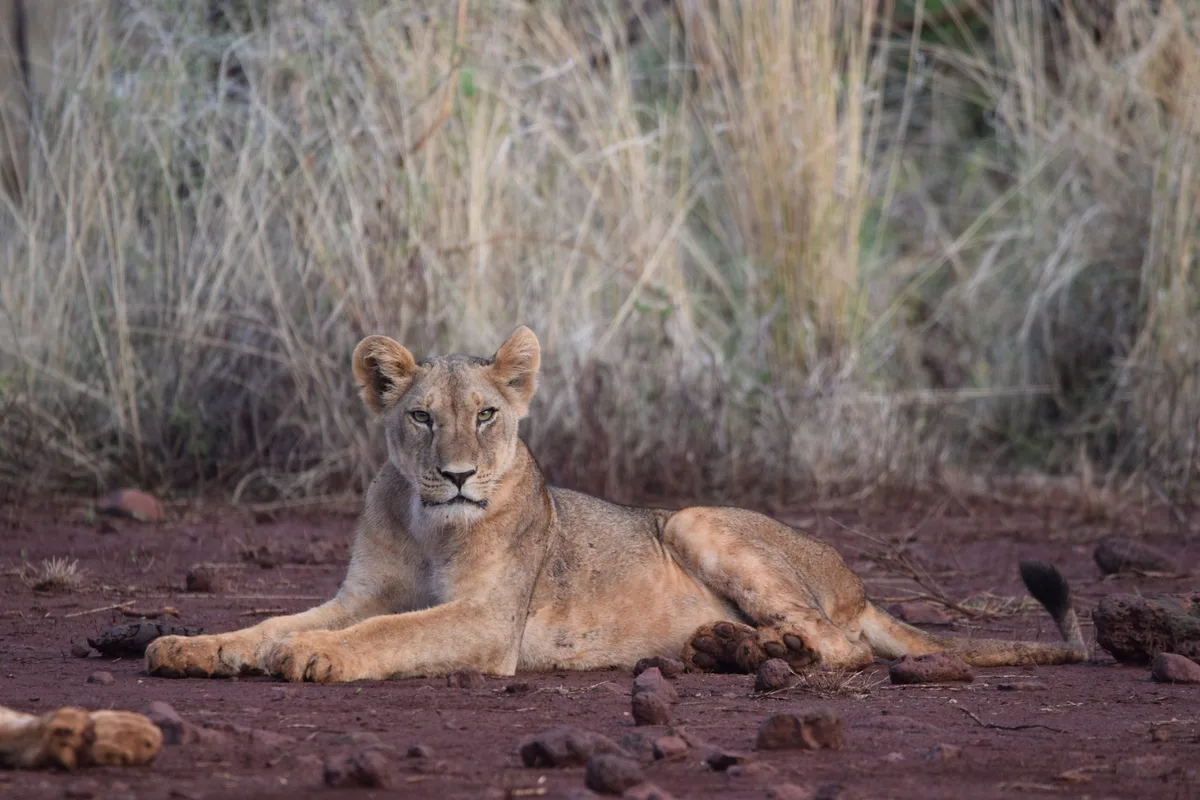 Sahara at one year old – Born Free
Despite the odds, Sahara adapted quickly back to life in the wild. Over the following months, I watched as she grew into a powerful and agile lioness, integrating with other pride members and displaying signs of strong social bonding. It was especially delightful when I saw her playing, an important sign of emotional maturity and trust within the group, but also a sign of full recovery.
Last July, when we spotted Sahara on one of our routine monitoring patrols, we noticed that something about her looked different. This time, it was a positive change: her belly was protruding more than previously and her teats enlarged, signs she’d likely recently given birth.
Sahara has always held a special place in my heart since her rescue. I was delighted at the prospect of her having cubs after an attack which could’ve been deadly without intervention. We didn’t have to wait long and in September, we spotted Sahara, alongside another lioness Rori, with five cubs between them.
We watched the pride from a distance and saw a rare behaviour: the cubs suckled freely from both lionesses. The two lionesses, likely bonded by kinship of pride dynamics, appeared to be jointly nursing and caring for the cubs.
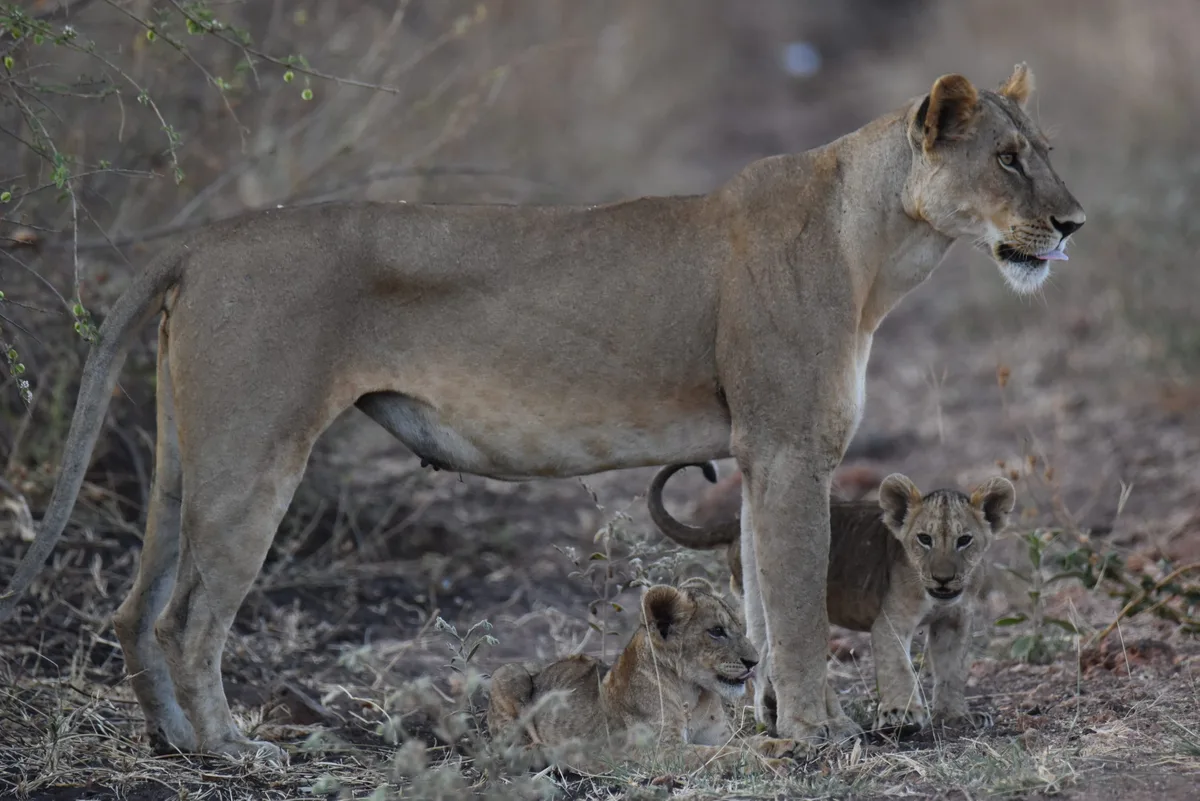 Sahara with cubs in September 2025 – Born Free
Such behaviour, though uncommon, is not unheard of in lion societies. It suggests a level of social flexibility and cooperation that enhances cubs’ survival. By pooling their resources such as milk, protection and warmth, Sahara and Rori were giving their young the best possible start in life.
In later observations, we determined Sahara was the mother of three cubs, who are still thriving. Once they reach a year old, the cubs will be named, and we’ll keep monitoring them in the years to come.
Sahara’s story is more than a simple victory. It’s a living testament to the power of wildlife conservation, veterinary expertise, and the adaptability of wildlife.
Moses Nyagah is a Field Supervisor in Born Free’s Pride of Meru team. A key part of his role is monitoring the lion prides of Meru National Park, where he knows the individuals well, having followed the prides for nine years.