
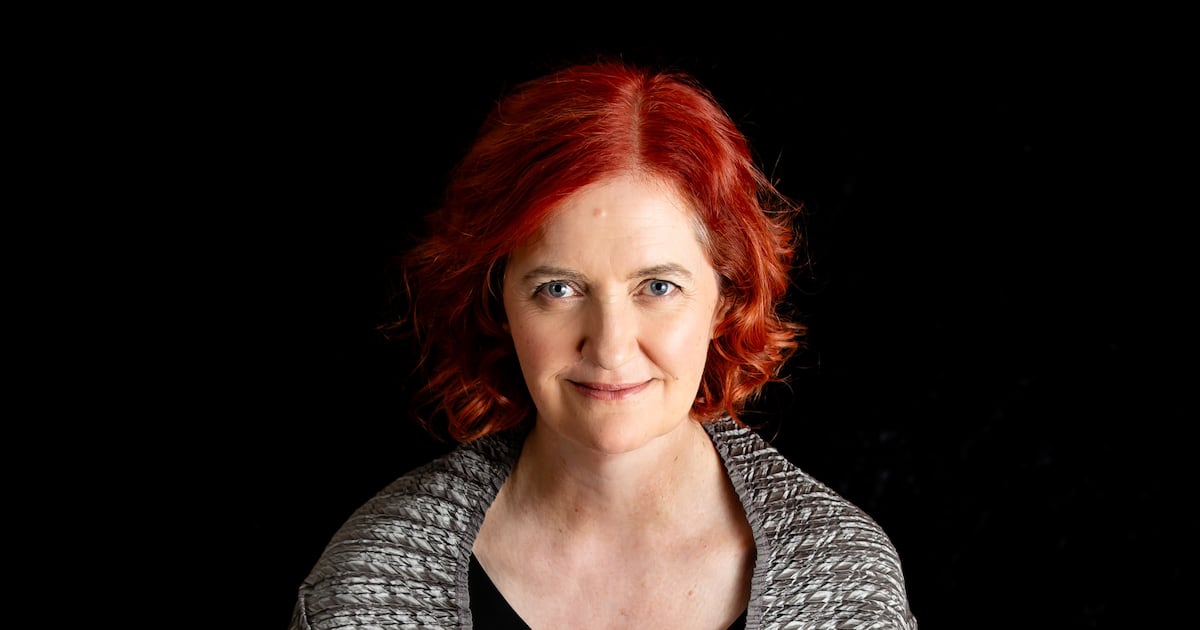
If you read Emma Donoghue’s latest novel, The Paris Express, from 2025, which was inspired by the Montparnasse rail crash of 1895, followed by Haven, from 2022, based on the founding of a monastery on Skellig Michael in the seventh century, then her debut novel, Stir-Fry, a coming-out story from 1994, set in the Dublin of her youth, it is striking how dated the latter feels, while the others have a timeless quality.
Donoghue, who is a strikingly cheerful, good-humoured interviewee, agrees that Stir-Fry feels as if it is set in another world. “It’s as if Ireland changed so fast that the geological layers are compressed,” she says.
Stir-Fry’s student protagonist is so innocent and so closeted that she is almost in Narnia. She has no inkling that her flatmates are gay – or that she is herself, for that matter.
“It’s funny. Contemporary fiction dates much faster. One reviewer thought Stir-Fry was set in the 1960s. Of course, that was Ireland in the 1990s.”
Donoghue is chatting via Zoom from London, Ontario, where she set up home with her Canadian partner, whom she met while studying at Cambridge University.
“There is not such a gap between the two countries now,” she says. “I could live fine in Ireland, but in 1990, that was a good time to go. It lifted the crushing weight of being the only gay in the village – not that I was ever in a village.”
Stir-Fry was autobiographical in so far as it dealt with a student coming out, but whereas the writer was a suburban Dubliner crossing the road to University College Dublin, her protagonist was a country girl in the Edna O’Brien tradition, giving the story more of a shape by adding cultural tension in the stranger-who-comes-to-town mould.
Her second novel, Hood, was more autobiographical, based on her convent school, Muckross Park College. “Like many writers, I needed to start with my own life material.”
Donoghue was 14 when she realised both that she was gay and that she wanted to be a writer.
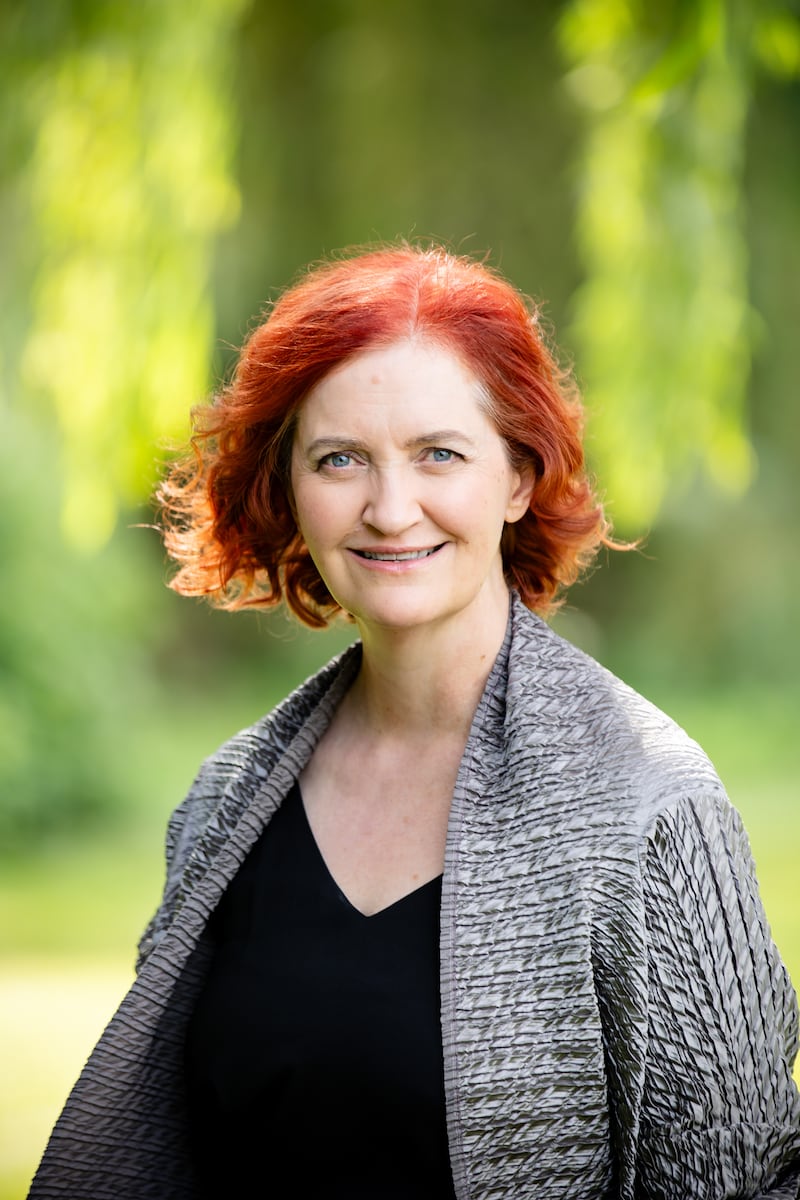 Author Emma Donoghue. Photograph: Woodgate
“Like many teenage writers, love was my great theme. Falling in love with a girl at 14 promoted a huge tsunami of poetry. So it felt as if there was a libidinal impulse in the writing and also a drive towards empathy and understanding people who weren’t myself.”
It gave her a passionate, secret subject to write about. “But, equally, being a writer helped me come out. I’d sold two books to Penguin. I didn’t want my mother to read about them in a book review in The Irish Times. That gave me a deadline to come out.”
Donoghue’s parents were “pretty liberal for Irish Catholics with eight children”. Her father, the critic and UCD academic Denis Donoghue, confronted her about it when she was 19, telling her not to stop going to Mass and fretting that she might not get her first.
“He feared that lesbianism was going to be so distracting, so potent. I assured him I would still get my first-class honours, which I did.”
Her mother had already guessed when Emma was 16 but never spoke to her or her husband about it. “We had one of those classic Irish silences about it for five years, so she had got used to the idea. She said something lovely like, ‘You’ll have to blaze your own trail, but you’re good at that.’ No matter how many fans you have, if your family have rejected you there’s no healing that wound.”
Donoghue believes that being gay taught her that bonds between human beings come in all forms and made her interested in the outsider, the scapegoat, freaks, the enslaved.
About a third of my books have a same-sex storyline, but I feel very relaxed about it.
— Emma Donoghue
“I’m fascinated by the underdog. I grew up very normal and approved of, and yet I had this secret side that I thought everyone would consider foul. Every one of us can be the nice normal person and the monster.
“For every opportunity that I missed because of someone’s homophobia, I’m sure I’ve been given others because of the novelty factor.”
She was on The Late Late Show twice in the early 1990s, talking about her work. “It did feel like instant fame.” The programme’s paternalistic host, Gay Byrne, feared she might regret it later. “I assured him I wouldn’t suffer.
“I remember some Irish journalist ringing up and asking what do Irish lesbians think about this, and I thought, I’m living in England, am I the only one you could find? Luckily there was a lesbian on Big Brother” – the Irish woman Anna Nolan – “who was quickly more famous than me, and I thought, what a relief to pass the torch.”
Moving to Cambridge and then to Canada gave Donoghue psychological freedom. “It felt like a more aerated culture, things were looser, part of a colourful palette.”
She was determined, though, not to be defined by her sexuality. “Every writer struggles with how much to represent their home community, whether that be class, ethnicity or disability, anything that marks you. About a third of my books have a same-sex storyline, but I feel very relaxed about it.”
Donoghue who is also a screenwriter, playwright and literary historian, is one of Ireland’s most versatile writers, always ready to try something new and able to switch effortlessly between genres.
“I know that I enjoy the work enough that I will always come back to it, so I’m happy to be distracted to buy a pair of flip-flops while researching something. Similarly,” she says, laughing, “if I am working on the novel and suddenly get an idea for a short story, a little adulterous weekend with the short story will just refresh me for the marital commitment of the novel.
“My process is quite lighthearted and promiscuous and open to whatever happens. If I’m on holiday and suddenly get an idea for something I start taking notes, whereas for some writers I think books come one at a time, and perhaps painfully and very intensely, so they have to give it their all.
“My parents had eight children, so that’s my mindset, a busy household with people coming and going. Projects are like that. I don’t want to get smug and repetitious, it’s good to experiment.”
Donoghue recently wrote a screenplay based on Helen Macdonald’s H Is for Hawk. “I don’t know why they asked me. I’m not known for my knowledge of the bird kingdom. I thought it could be impossible to adapt, for it’s a multigenre nonfiction book, but it was so beautifully written. I love that kind of task. I work quite fast. Also, with film writing you don’t know which one is going to make it, so it is good to intersperse it with other things.”
Her first musical, The Wind Coming over the Sea, about an Irish family emigrating to Canada in famine times, premiered in 2025. “The theme is oddly timely. There are such waves of hostility to emigration that it feels political to do a show about an immigrant who is a vulnerable, needy outsider but is also bringing all this energy, drive and hard work to the country.”
Donoghue is conscious of being part of a long tradition of Irish emigration to Canada, including the Belfast writer Brian Moore.
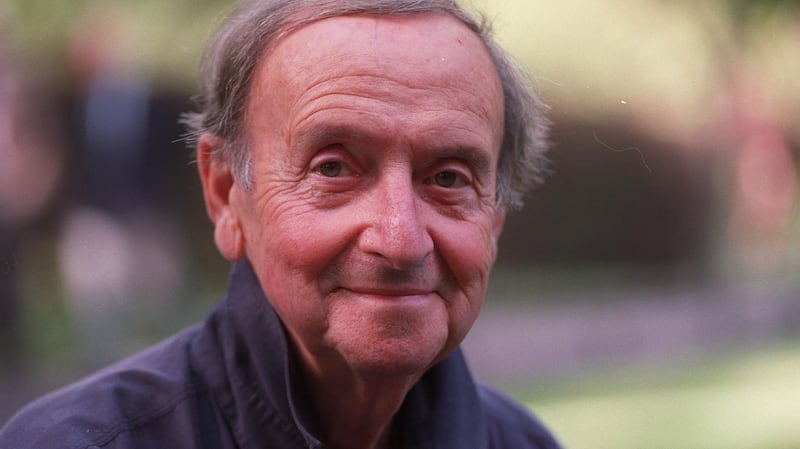 Belfast writer Brian Moore also emigrated to Canada
“I was very aware of ancestors, comfortable moving first to England then to Canada, conscious of a long tradition in both places. I could go to the pub and hear Irish music, feel connected. It softens the sting of emigration.
“I’ve been familiar with [Moore] since I was a teenager. I was at a party here in the 1990s, and some academic said to me, ‘You’ll suffer from the Brian Moore problem.’ ‘What’s that?’ I asked. I thought he was a very honourable ancestor. He said, ‘Your reputation will be fatally divided between several literary traditions. You won’t be 100 per cent Irish or Canadian.’
“I decided I wouldn’t worry about my literary reputation. That’s not something writers should be trying to shape themselves. We should just work on our projects – and, if people like them, reputation will accrue.”
[ Brian Moore’s hotels: Time to revisit this neglected author in his centenary yearOpens in new window ]
Such labelling is retrograde, anyway, she believes. “So many of us live hybrid, complex lives. I loved Gethan Dick’s novel Water in the Desert, Fire in the Night. She is Irish but lives in France. It struck me as so unbounded by the conventions of Irish fiction. What sense does it make to say to her, ‘Pick a side’?”
Donoghue shows me her treadmill desk, where she exercises while researching a topic or dealing with emails. “It is perfect for that, whereas if I want to write a brand-new scene I do like to sit down. A lot of our day is not absolutely raw creation.”
Her computer screen is balanced to an ergonomic height on The Field Day Anthology of Irish Writing – the corrected version, featuring volumes four and five, to include women writers. Donoghue contributed a lesbian section.
She credits Ailbhe Smyth with opening her eyes to the absence of women from the English syllabus at UCD, bar Jane Austen, Emily Brontë and Emily Dickinson. But didn’t her father set the curriculum? “He was a gentle patriarch; we just so enjoyed talking about books,” she says. “We had more in common than we had differences. He may only have written about canonical women authors, but he did take them very seriously.
“He was so proud that I was a writer. He sent me a lovely postcard after each book. He gave me ideas for stories, told me, ‘[John] Ruskin had a terrible wedding night when he couldn’t consummate his marriage – you should look at that.’”
The Paris Express features a sympathetically drawn anarchist would-be suicide bomber. Was it influenced by Ireland’s home-grown revolutionaries?
“It was part of the mix, but I was just as interested in the idea of the suicide bomber, a vulnerable person, rather than a cold-blooded killer. That wouldn’t interest me. My dad was Northern, and retained a certain sympathy for the 32-county ideal, but he was repelled by violence. My family was typical of Southern Catholics. I grew up thinking of the IRA as that mad shower north of the Border who were kneecapping people in our names.”
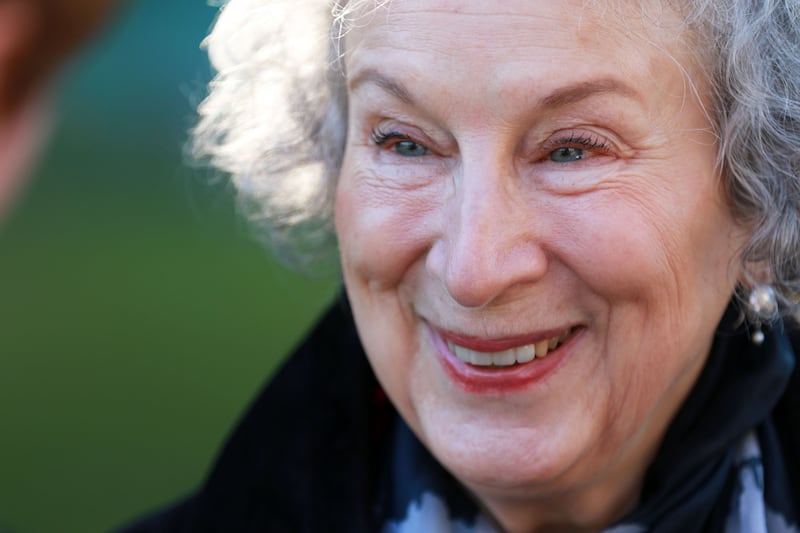 Margaret Atwood is one of Donoghue’s ‘liberating role models’ who turned to historical fiction. Photograph: Nick Bradshaw
The Paris Express reminded me of Robert Harris. “Oh, I am honoured. I’ve never been compared to him, but I have all his books. I love him. Isn’t he marvellous at wearing his historical knowledge lightly, no sense of ‘Let me share what I know’ with the readers, just relaxed enough to share tiny details?
“I remember being struck by literary writers such as Julian Barnes and Margaret Atwood turning to historical fiction, who didn’t seem to be weighed down by genre conventions. They were liberating as role models.”
Donoghue did find The Paris Express’s big cast of characters a challenge. Some weren’t earning their keep after a few scenes, so she had to go back and cut them out of every scene. It required a lot of darning.
“Yet to write about a train is to commit yourself to a large group. It’s not a car, it’s mass transit. I needed that sweep of society. I can almost picture readers walking away, ‘Oh no, another character’, or medieval monks, or vomit or smallpox pustules. That’s always a key moment where I recommit to the book. Those readers weren’t going to like it anyway, so there is no point pursuing them or watering it down to suit them.”
She is fearless at this stage. There are no subjects she wouldn’t touch, however oddly she might approach them. They would be like exotic holidays for her to tackle.
There are limits, though. One of her future novels is set during a war, “but there will be no battle scenes”. She had to consult friends for the card-game scenes in Frog Music and for anything to do with alcohol, as she is teetotal. Her next novel, Blaze, which is due in 2027, is set in the near future, “a first for me, apart from a novella. Again, I feel like a newbie.”
Haven is possibly my favourite of her works. Like Edna O’Brien and Brian Moore, whose novella Catholics similarly deals with a wayward offshoot of the church on a remote Irish island, she has moved from the personal to the political.
“Writing books set in the past is often sneered at as escape into convention, but actually, no, it’s the broader picture, historically and politically, bigger subjects. I don’t know why anyone would stay limited to the era they are living in any more than the place they are living in. If you can write about Japan, why can’t you write about the seventh century?”
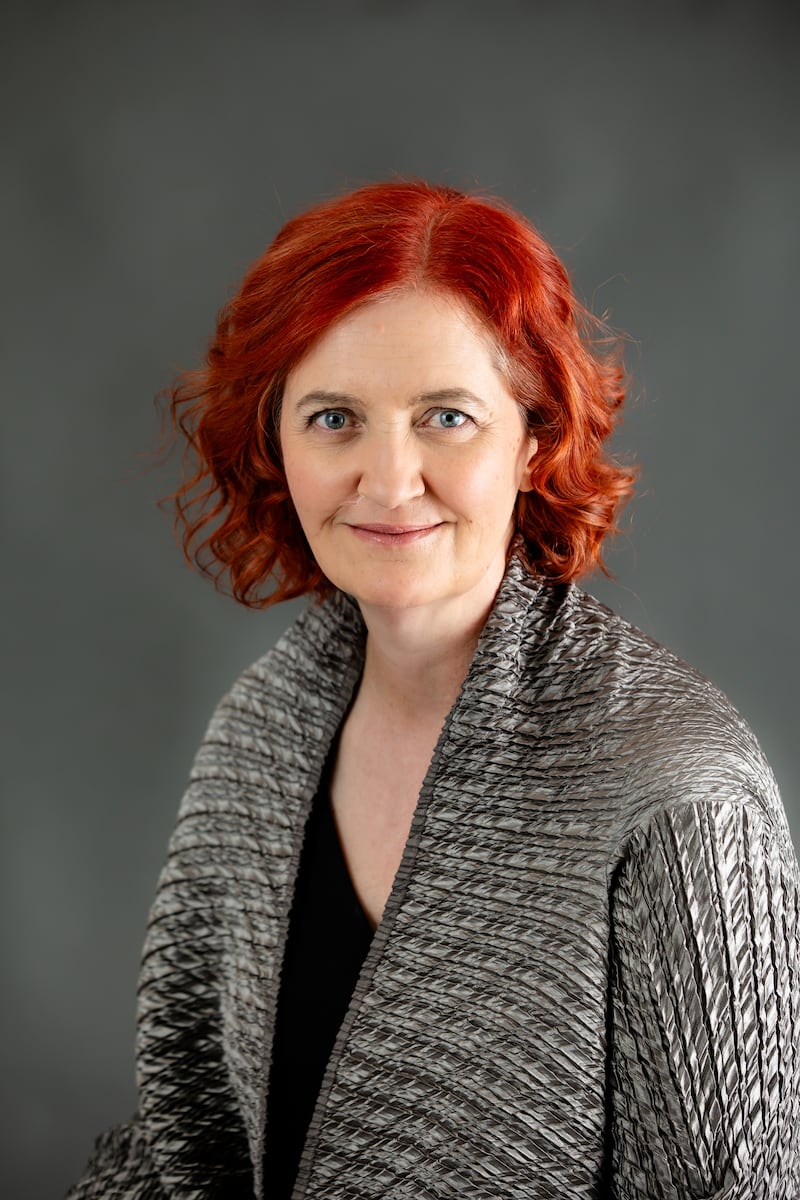 Author Emma Donoghue. Photograph: Woodgate
There is something darkly funny, an ecological parable, about these ancient monks worshipping God on an island so barren they are reduced to cooking puffins on a fire fuelled by burning puffins, a “perfectly hideous” historical fact that Donoghue found scouring records from 17th-century Newfoundland.
Haven’s dictatorial leader refuses to trade with the mainland. Is he partly inspired by Éamon de Valera? “Not consciously, but unconsciously it’s all in there. Having grown up in Ireland and felt, ‘This culture is too small,’ and having made my escape, I would have a natural nervousness about the island’s isolationism and, above all, cultural purity.
“It’s a very feminist book. Gender comes up all the time. The leader thinks that by leaving women behind he can leave all bad stuff behind. That false notion of purity gives me the willies.”
I am struck by the unlikely resurrection of the Catholic novel, from Sally Rooney’s Intermezzo to Niamh Mulvey’s The Amendments.
“It’s very interesting. In both Haven and The Wonder I had to go deep into my Catholic heritage and wanted to avoid knee jerk judgmentalism, because in both cases, whether mid-19th century or seventh century, I found a lot to treasure as well.
“Just as early Christians divided God up into Father, Son and Holy Spirit, I tried to divide up Christianity. I gave the more hateful aspects to Art, the practical, sturdy bits to Cormac” – named after Cormac Kinsella, the book’s publicist – “and made the young monk the St Francis of Assisi at one with nature. You can’t read St Patrick’s Breastplate and not be moved by it.”
When I turn to Donoghue’s most successful novel, Room, inspired by the notorious Josef Fritzl case, she congratulates me for getting an hour into the interview without mentioning it. Why does she think it was so successful?
“I think it would have worked even if it was not based on a real case. I was lucky enough to happen on a storyline that has an archetypal quality. Many people feel their lives are too small; they are imprisoned in some sense and want to escape to a bigger life.
“The highly specific and weird storyline of Ma in the locked shed does remind people of their own childhoods or bad marriages or other times their lives felt limited. People in China and Iran have written it is clearly a political allegory.
“Some people were surprised I included the second half. They thought it would just be an escape story, but the second half is crucial, all those moments when Jack is missing Room; he prefers a smaller world. A lot of people have those feelings when they leave their old country – the nostalgia of the emigrant, confused feelings about the bad part of the past.
“The Pull of the Stars got its most passionate readers from doctors and nurses. Room has a much greater range. All I can claim credit for is I knew the child’s perspective would be fresh. Kidnapped women had been written about before. The defamiliarisation device also made it bearable. Jack is not unhappy; he doesn’t feel he is in a nightmare because of his mother’s love.
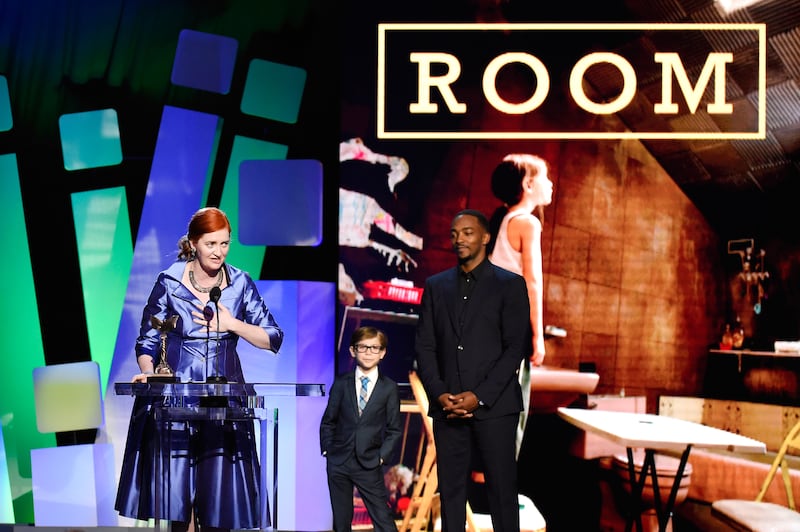 Emma Donoghue accepting the Best First Screenplay award for Room at the 2016 Film Independent Spirit Awards, in California. Photograph: Kevork Djansezian/Getty
“When I was writing Room I thought a lot about child narrators such as in Roddy Doyle’s Paddy Clarke Ha Ha Ha, a novel I not only loved but also noticed because he won the Booker with it, but also LP Hartley’s The Go-Between, and Spies, by Michael Frayn, the painful ironies of what a child knows, especially about sex, which makes no sense to kids.
“The reason I hit on the storyline is I had two small children. That sensitised me to the psychological bond between mother and child, the perfect convergence of motherhood and the storyline.”
So the pram, or double buggy, in the hall was a help, not a hindrance. “Motherhood also made me write more thoroughly, because I had less time.”
I was lucky to get published when life was really cheap, living in a housing co-op in Cambridge
— Emma Donoghue
Donoghue’s son and daughter turn up in all her books. “They find it quite amusing how they morph in different books. Both kids have a very hearty appetite. In The Wonder I remember thinking if this was 1850s Ireland, and if you were rewarded for not eating, how might all this intelligence and wit be funnelled into a weird form of mysticism?
“They end up inspiring characters who are not very like them but have something of their energy. Finn picked up Haven. ‘Am I the weird, gangly monk who’s climbing up the cliffs?’ ‘Yes, you are.’”
Donoghue is slightly embarrassed to admit what a cold-blooded Apollonian planner she is. “Pantsers” – who make it up as they go along – “get all the limelight, this myth of writing as an inspired fever dream, like taking drugs and going into the Outback, a vision quest.
“Writing may have elements of vision and mystery, like ‘How did that idea drop in my lap?’ but the doing of it, especially a full-length novel, requires a lot of planning and organisation.
“I bristle a bit that it sounds uncool, but writing requires a lot of moving the pieces around. Planning is very liberating, because if you have a half-hour free, the Scrivener creative-writing programme is a lot of boxes within boxes, so you can work on one little scene, as opposed to waiting to be completely in the zone.
“I want to be able to snatch time as it arises, so I have it all on my computer. I can see how it might help moving scenes from a longer to a shorter chapter.”
Donoghue’s English degree and PhD help, “quite apart from the chats with Dad on Dún Laoghaire pier”.
Did the success of Room free or pressurise her?
“I was lucky to get published when life was really cheap, living in a housing co-op in Cambridge. I didn’t have a mortgage and kids; I have not felt the pressure of earning to constrain my art.
“What Room did was give me many more readers, not so much the money but more people will take a punt on reading my books. I did think it could be like a gun to my head, but it was such a one-off, a freaky storyline, that I couldn’t churn out a series like that.
“I will never, ever write a sequel to that book. It doesn’t require one. Let the success of this book just be a rising tide of confidence, but I don’t have to be on the bestseller list every time.”
She loves adapting her work, collaborating with Lenny Abrahamson on a screenplay or Cora Bisset on a stage production, embracing the way the story naturally needs to change. “I’m not focused on protecting or retaining my story, just enjoying what becomes of it in a different form.”
Screenplays, Donoghue has observed, are a much more modern format than the novel yet much more rigid. The novel has no rules.
“This all has to do with the gluteal muscle,” she says. “If it’s a time-based art form, like a play or a film, people are sitting down,” she says. I think instinctively of the Seán O’Casey trilogy at the Abbey, whose seats make Ryanair’s feel like armchairs. “With novels, people can take their own time.”
This interview is extracted from A Hosting: Interviews with Irish Writers 1991-2025, which will be published by Lilliput Press on Thursday, April 16th