
Head of Belgrove Junior Boys’ School in Clontarf fears a pupil may be knocked down
Fiona Sheridan, the head of Belgrove Junior Boys’ School in Clontarf, Dublin, said the street outside the school, Seafield Road West, is “bedlam” during pick-up and drop-off times.
“I get it, parents have to drop their children off, most people are working back in the office – that’s fine, and I get that,” she said. “It’s the impatience and the lack of awareness of others.”
Belgrove Junior Boys is one of four schools on the road, with around 1,000 pupils moving about the area every morning and afternoon.
Ms Sheridan said she spends parts of every day policing the road, along with school wardens, trying to prevent accidents and dangerous behaviour.
Every day, she sees illegal parking in the school’s disabled parking bays, cars stopping in areas not designated for set-down, risky U-turns and vehicles driving on the footpath.
I actually technically shouldn’t be out on the road like a mad woman. That’s not my role, that’s not my remit
“It’s the U-turns that drive me insane,” Ms Sheridan said. “It’s the reversing and not looking behind them, and as well as that a lot of people are letting their children out on the road, so they’re not even pulling up, they’re just stopping in traffic and the child gets out the back door.
“We’ve had a few near misses outside the school. It’s actually like The Hunger Games out there. I’ve driven through it myself, and you need to have eyes in the back of your head.
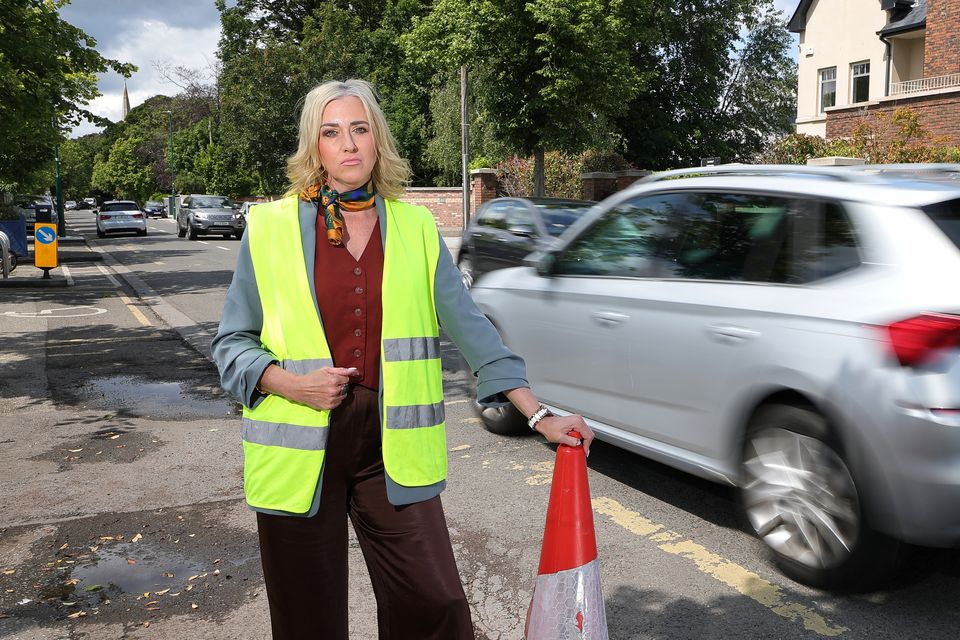
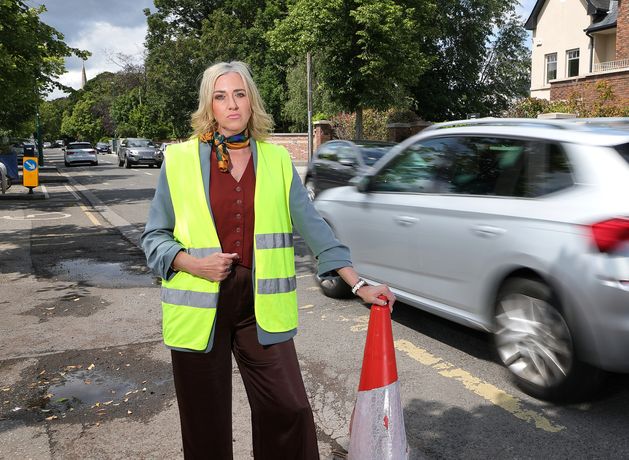
Principal Fiona Sheridan outside Belgrove Junior Boys’ School in Clontarf, Dublin. Photo: Frank McGrath
News in 90 seconds – Friday, April 10
“Also, the issue is that so many people are driving these massive Land Rovers that they don’t need to drive when you’re in a city, and they’re taking up most of the road.”
Ms Sheridan’s school caters for boys from junior infants to second-class age, meaning her pupils can be as young as four.
Most drivers are understanding, she said, but there is a significant minority who believe “the rules don’t apply to them”.
“I actually technically shouldn’t be out on the road like a mad woman. That’s not my role, that’s not my remit. That’s a public road,” Ms Sheridan said. “But God forbid a child is knocked down. It’s only a matter of time.”
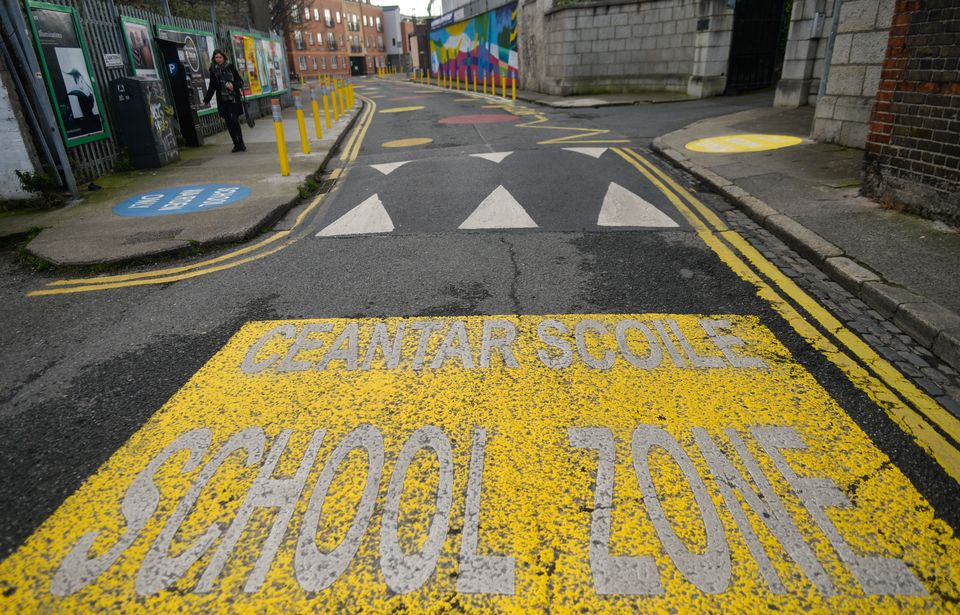
A ‘school zone’ sign on a street in Dublin. Photo: Getty
On top of the aggression of some drivers, parents without disabled children park in the disabled bays, blocking some pupils from accessing the building.
“What I get when I go out is, ‘Oh, I’m only dropping off, I’m going’,” Ms Sheridan said.
The school has been forced to call gardaí, who stationed themselves along the road for a week.
“It was fine for about a week or two afterwards, and then it was back again,” Ms Sheridan said.
Dublin City Council (DCC) re-lined the road recently, and gardaí gave the school traffic cones to keep cars in line, but these measures have been largely ignored by drivers.
“Last week, a woman dropped her child off, drove around the cones, up on to the footpath right outside my school, with young children there, and drove off,” Ms Sheridan said.
She added that the street should be included in the Safe Routes to School programme, which is funded by the National Transport Authority (NTA) in co-ordination with the local authority.
The scheme introduces school zones that aim to improve safety for students who walk and cycle. This involves erecting bollards that protect footpaths from vehicles.
Despite Belgrove Junior Boys meeting with the council about the issue in 2022, nothing has happened.
Measures that can help reduce the number of students being driven include ‘park and strides’, ‘walking buses’ and ‘cycling buses’
“We were told we’re on the list and they just kind of stalled it,” Ms Sheridan said.
When contacted by the Irish Independent, DCC said the NTA was working through rounds three and four of the programme.
“There is currently no additional capacity to deal with schools outside this programme,” a council spokesperson said. “We have a waiting list and several of the local schools are on it. We hope to be able to engage with other schools in the future.”
School zones were “only one of many solutions” to traffic challenges facing schools, the spokesperson added.
“Ultimately, there is a need to reduce the number of cars causing congestion at the school gate, which creates the unsafe environment for children.
“Other measures that can help to reduce the number of students being driven to school include ‘park and strides’, ‘walking buses’ and ‘cycling buses’.
“We encourage school communities to work with the parents and children in developing and trying out these solutions.”
The spokesperson said the council’s sustainable mobility team would be happy to support the school with getting these initiatives started.
Funded by the Local Democracy Reporting Scheme