
Summary: Levodopa is the primary weapon against Parkinson’s disease, and COMT inhibitors (COMT-Is) are designed to be its ultimate backup, preventing the body from breaking down the drug before it hits the brain. However, a “counterproductive” discovery reveals a hidden drug-drug interaction occurring in the gut.
Researchers found that COMT-Is have unintended antibacterial properties that kill off beneficial gut microbes, allowing a specific bacterium, Enterococcus faecalis—to flourish. This “bad” bacterium then proceeds to metabolize and destroy levodopa in the gut, effectively sabotaging the very treatment the COMT-Is were supposed to protect.
Key Facts
The Microbiome Middleman: While drug interactions are usually managed by the liver, this study proves the gut microbiome can mediate interactions between co-prescribed medications.The “Accidental” Antibiotic: COMT-Is were found to kill susceptible gut bacteria, which acts like “weeding a garden” to let the levodopa-eating E. faecalis take over.Treatment Sabotage: E. faecalis contains enzymes that chemically modify levodopa, preventing it from crossing the blood-brain barrier. This leaves patients with less dopamine in the brain despite taking more medication.Explaining Patient Variance: The research helps explain why the same dose of Parkinson’s medication works well for some but fails for others, depending on their unique “microbiome fingerprint.”Broader Implications: Lead author Andrew Verdegaal suggests this mechanism may be common in other diseases where multiple drugs are prescribed simultaneously, calling for a closer look at “microbiome-mediated” drug interactions.
Source: Yale
Levodopa—the gold-standard treatment for Parkinson’s disease—increases dopamine in the brain. But as the disease progresses in severity, patients often need to take additional drugs to manage their symptoms.
One class of drugs, called catechol-O-methyltransferase inhibitors (COMT-Is), can help increase the amount of levodopa that reaches the brain.
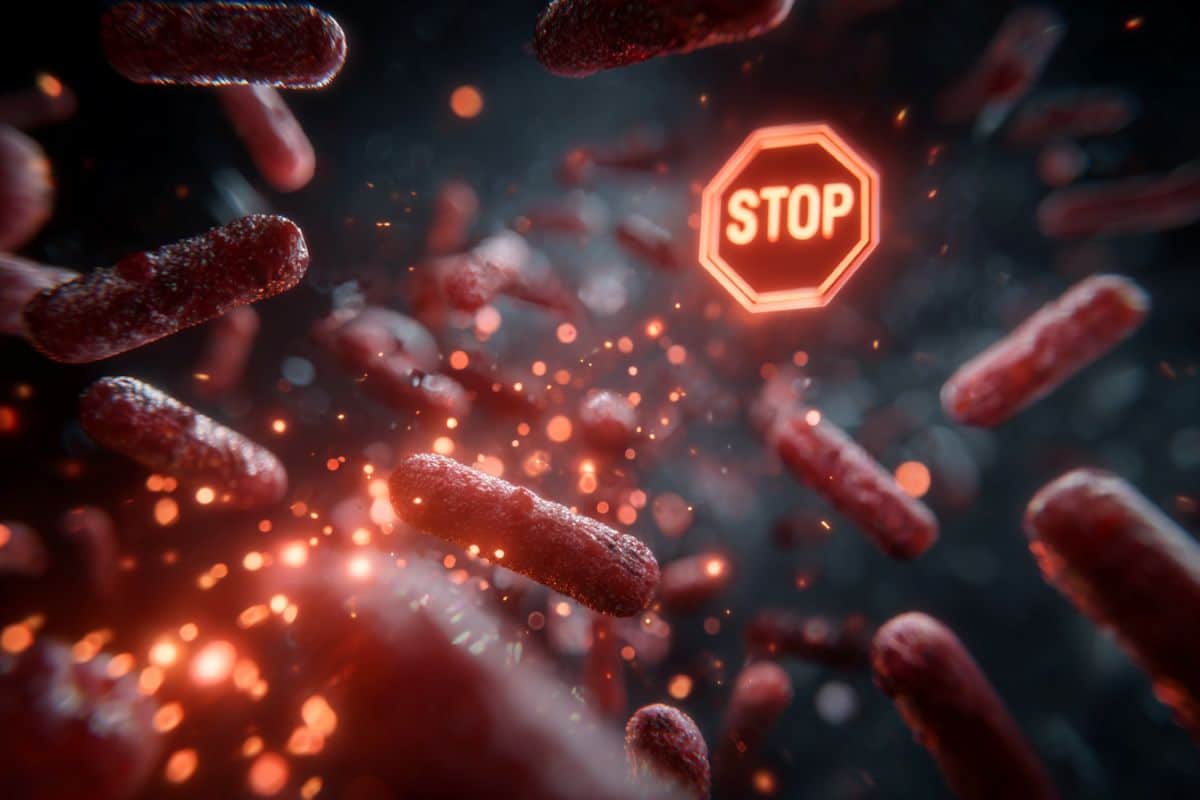 While we usually blame the liver for drug interactions, the gut microbiome is often the true mediator. Credit: Neuroscience News
But a new study finds that COMT-Is can interact with the microbiome in a way that hinders levodopa’s efficacy.
Yale School of Medicine (YSM) research, published April 6 in Nature Microbiology, has found that COMT-Is can trigger compositional changes in the gut microbiome that promote the growth of bacteria that break down levodopa before it can reach the brain.
“We found a counterproductive effect of this drug that’s meant to increase levodopa efficacy,” says lead author Andrew Verdegaal, PhD, a postdoctoral associate in the lab of senior author Andrew Goodman, PhD, chair and C.N.H. Long Professor of Microbial Pathogenesis and director of the Microbial Sciences Institute. “While we generally think of the liver as the mediator for drug-drug interactions, this interaction occurs instead through the gut microbiome.”
Bacteria disruption hinders levodopa
Parkinson’s disease is caused by a decrease in dopamine production. Levodopa is an oral medication that is absorbed and crosses the blood-brain barrier, where it is converted into dopamine.
“This drug is a way for the body to externally receive dopamine,” says Verdegaal. “But it has to get into the brain to have an effect.”
Some enzymes in the body can interact with the drug before it reaches the brain and convert it into a different compound that cannot cross the blood-brain barrier. COMT-Is work by blocking these enzymes before they can chemically modify levodopa, boosting the drug’s efficacy.
In the new study, however, the researchers discovered that COMT-Is have antibacterial properties that alter the microbiome. When COMT-Is kill off susceptible gut bacteria, other bacteria thrive, the researchers found. This includes Enterococcus faecalis, which contains an enzyme that can also metabolize levodopa and prevent it from reaching the brain.
The findings support previous research indicating that patients with higher levels of E. faecalis in their gut experience reduced benefit from levodopa.
“People often require co-prescription of multiple drugs,” says Verdegaal. “While Parkinson’s disease is one example, this study suggests that we should look more closely at the role of the microbiome in response to other co-prescribed drugs.”
The study also adds to growing evidence that differences in microbiomes can help explain why patients experience different effects from the same drug. “I hope our research is a stepping stone to understand this in a wider context,” Verdegaal says.
Key Questions Answered:Q: Why would a Parkinson’s drug act like an antibiotic?
A: Many drugs have “off-target” effects. In this case, the chemical structure of COMT-Is happens to be toxic to certain beneficial bacteria. This clears “living space” in your gut for E. faecalis, which is much hardier and has the specific enzymes needed to eat your medication for breakfast.
Q: Can I just take a probiotic to fix this?
A: It’s not that simple yet. While the study identifies E. faecalis as the culprit, simply adding more bacteria might not work if the COMT-Is are still killing them off. The goal of this research is to eventually design “smart” treatments or diets that prevent E. faecalis from blooming in the first place.
Q: Does this mean COMT inhibitors are bad for Parkinson’s patients?
A: No, they are still a “gold standard” for a reason and help many people. However, this study gives doctors a new “diagnostic lens.” If a patient isn’t responding to the drug, the issue might not be their brain or their liver, it might be their gut bacteria “stealing” the medicine.
Editorial Notes:This article was edited by a Neuroscience News editor.Journal paper reviewed in full.Additional context added by our staff.About this neuropharmacology and Parkinson’s disease research news
Author: Colleen Moriarty
Source: Yale
Contact: Colleen Moriarty – Yale
Image: The image is credited to Neuroscience News
Original Research: Open access.
“A drug–microbiome–drug interaction impacts co-prescribed medications for Parkinson’s disease” by Andrew A. Verdegaal, Joonseok Oh, Bahar Javdan, Ruojun Wang, Qihao Wu, Timothy R. W. Wang, Jaime A. González-Hernández, Mohamed S. Donia, Jason M. Crawford & Andrew L. Goodman. Nature Microbiology
DOI:10.1038/s41564-026-02299-2
Abstract
A drug–microbiome–drug interaction impacts co-prescribed medications for Parkinson’s disease
Simultaneous prescription of multiple drugs is widespread in medicine. Although the gut microbiome is implicated in drug responses, its role in mediating drug–drug interactions is unexplored.
Catechol-O-methyltransferase inhibitors (COMT-I), a class of drugs used alongside levodopa (L-DOPA) to treat Parkinson’s disease symptoms, can alter microbiome composition in patients.
Here we characterize the antibiotic properties of COMT-I drugs in vitro, ex vivo and in vivo and dissect how these interactions alter microbiome-mediated L-DOPA metabolism in vitro and ex vivo.
Notably, in vitro iron availability determines COMT-I antibiotic activity at multiple levels: extracellular iron can drive non-enzymatic inactivation of COMT-I, rescuing COMT-I-mediated bacterial iron starvation responses.
However, limitation of intracellular iron can protect sensitive bacteria from COMT-I antibiotic activity. Co-administration of COMT-I and L-DOPA to human faecal microbial communities ex vivo results in COMT-I-dependent alterations to L-DOPA metabolism in an individual-specific manner.
These studies highlight a role for the gut microbiome in mediating drug–drug interactions and identify microbial features that could predict individual responses to co-prescribed drugs.