
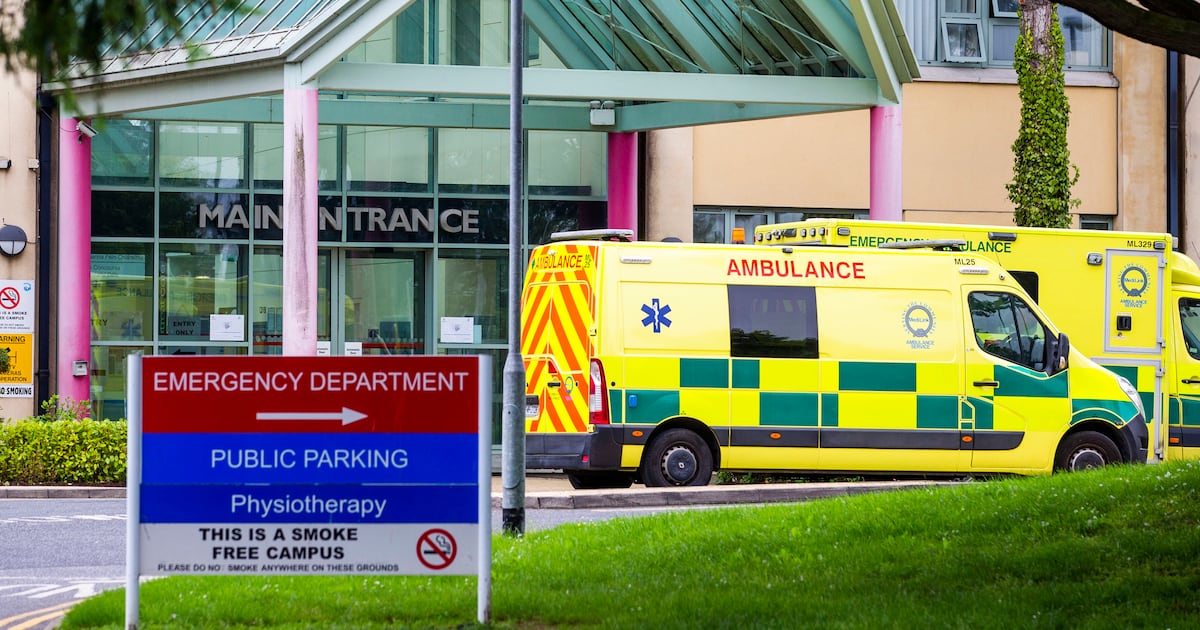
More than half of hospitals inspected over the past two years had issues with ageing buildings or poor physical environments, affecting the safety of care provided to patients, an analysis of inspection reports has found.
The Health Information and Quality Authority (Hiqa) regularly inspects health facilities to ensure its compliance with the national standards for safe healthcare.
Of the 28 hospital inspection reports published over the past two years, the watchdog identified serious issues with the physical environment in 14 cases.
A further six reports highlighted more minor concerns while eight had a physical environment that “supported the delivery of high quality, safe, reliable care”.
St Teresa’s ward in Cappagh Orthopaedic Hospital “did not fully support the delivery of high quality care”.
This, the report said, was due to “ageing, outdated infrastructure; a lack of storage areas for equipment; hand-hygiene sinks that did not conform to recommended standards; a multi-occupancy room that was a thoroughfare for access to another room”.
Two inspection reports into Naas General Hospital highlighted issues with the infrastructure.
In the first report, conducted in September and published in December last, inspectors found investment was required “to improve the infrastructure within the hospital and senior management has identified this requirement”.
“In the interim, as found at the previous inspection, the physical environment does not fully support the delivery of high-quality, safe and reliable care,” it said.
[ Patient safety risks identified at Navan HospitalOpens in new window ]
It highlighted “limited” isolation facilities, which it said “posed a risk of transmission of communicable disease”, the call-bell system was “inadequate” and the hospital did not always have adequate spacing between beds.
The previous inspection, conducted in July 2024 and published in April 2025, found there were “risks to patients as a result of the ageing infrastructure in Liffey Wards”.
The physical infrastructure of Dublin’s Rotunda Hospital has been under the microscope in recent months, when HSE chief clinical officer Dr Colm Henry described the building as “not fit for purpose”.
Hiqa acknowledged the work of staff to mitigate the risks the building posed.
“However, ongoing limitations in the physical environment continued to hinder the consistent delivery of private and confidential care,” the most recent report, published earlier this month, found.
Inspection reports also criticised University Maternity Hospital Limerick and the National Maternity Hospital, Dublin. The infrastructure and age of the Dublin building “presented ongoing challenges in relation to infection prevention and control”.
The infrastructure of Limerick’s maternity hospital “was outdated and did not meet recommended specifications and international best practice standards for maternity services”.
The watchdog was very critical of St Columcille’s Hospital, stating clinical areas visited “did not fully support the delivery of high-quality, safe and reliable care that protects the health and welfare of patients”.
“The hospital’s ageing infrastructure, and insufficient and inadequate isolation facilities were issues identified on previous inspections of the service in 2022 and 2024,” the report said.
“Infrastructural challenges observed on this inspection included multi-occupancy rooms in St Joseph’s ward that did not have doors. Single rooms used as isolation facilities did not have en suite toilet or shower facilities. Inspectors observed that there was not enough space for patient belongings, which were observed on the floor beside patient beds.”
An inspection into Sligo University Hospital found the overall layout and design of the emergency department “did not support the patient flow resulting in increased traffic by staff”.
“The major area was very congested, even without the addition of the trolleys for admitted patients along the corridor, and it was also in need of refurbishment,” the report said.
A spokeswoman for the HSE said €1.327 billion was being invested in physical health infrastructure across the health service this year.
“A central focus of HSE Capital Plan 2026 (Building & Equipment) is the replacement, refurbishment, and upgrading of existing facilities across acute, community, mental health, and long‑term residential care services,” the spokeswoman said, stating these projects would address “infrastructural risk”.