
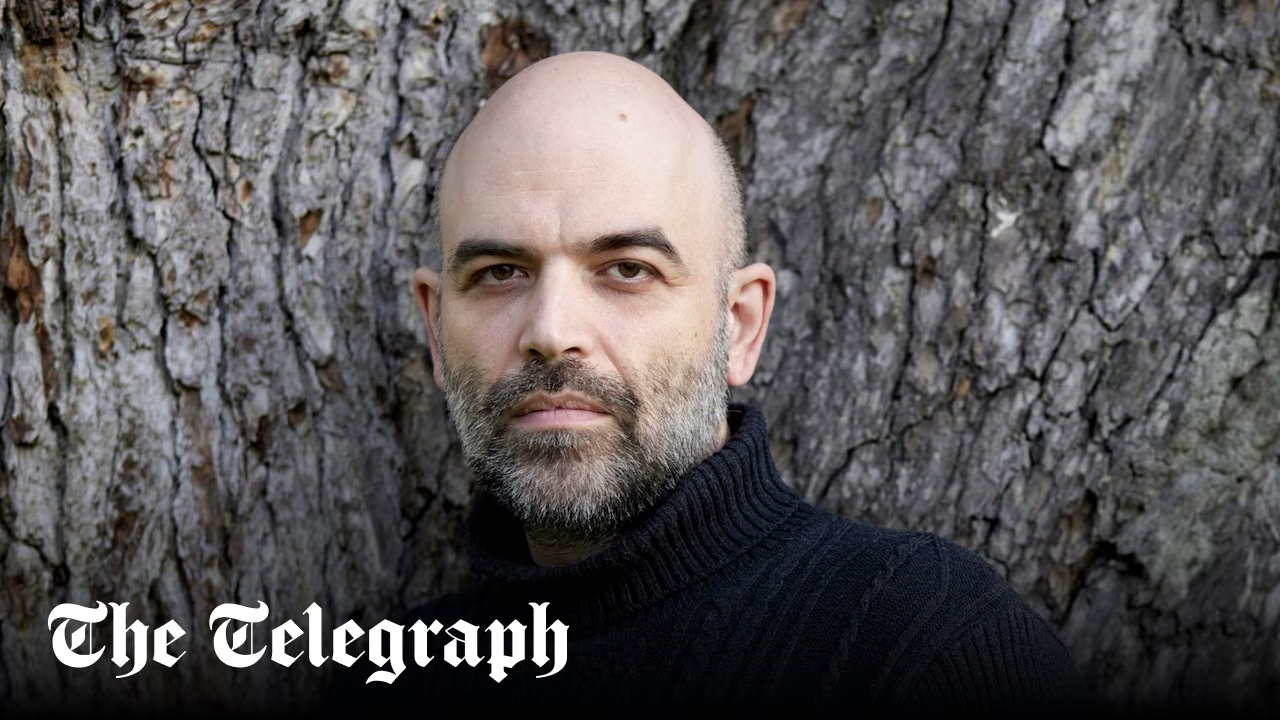
As for Saviano’s parents, they separated before he was famous, but for their own safety both individually relocated from the Naples area long ago. He says he sees them rarely – neither one since last year, in fact. “The most painful part about this situation is what I’ve put my family through. My mother’s sister, my Aunt Silvana, who had been like a third parent to me, died in 2025. She wasn’t married, and apart from me and my mum, hardly anyone attended her funeral. I felt great guilt over that. Silvana, too, had had to move far from the people she loved, living in quasi-solitude, and dying in a city that wasn’t her own. The poor lady paid a heavy price for my actions.”
Does Saviano think he will ever escape the mafia’s orbit? “I doubt it. That relation will always be there. Editors regularly invite me to appear on television shows, and to write articles, when they want analysis on something newsworthy, like a murder or a boss’s arrest.” A gifted communicator, he has his own YouTube channel, with 444,000 subscribers, and sometimes presents programmes on Italian TV. He returned to screens last month with a series called La Giusta Distanza, looking at intriguing crimes from Italian history. These public appearances are carefully planned, with members of his security detail inspecting every venue and meeting every host in advance.
Otherwise, given the restrictions on his movements, Saviano has plenty of time to write. The new book we are here to discuss, Shout It Out!, is his ninth. In essence, it’s a cry for ordinary people to stand together in the face of injustice. It uses famous case studies from history as a guide to how to act in certain circumstances, and what nefariousness to look out for. One chapter, for instance, is devoted to the FBI’s smear campaign against Martin Luther King Jr in the 1960s: Saviano argues that we should always note who is behind such attacks, and ask why they might be making them. (Readers may find here an echo of the writer’s own struggles with Meloni et al.)
Shout It Out! is an interesting book. It has an optimistic veneer, as Saviano gives tips to the next generation of citizens about how they can make society better. Before long, though, you notice his deep-rooted pessimism. From the murdered Alexandrian philosopher Hypatia to the Nazi propagandist Joseph Goebbels, from the Renaissance thinker Giordano Bruno (burnt at the stake by the Inquisition) to the Rwandan broadcaster Kantano Habimana (cheerleader for the 1994 genocide), Saviano considers figures who have suffered injustice or perpetrated it. His book spans centuries, and gives little sense of the world improving.
If anything, it may be getting worse. Certainly, that’s the tenor of our conversation. He says that the drug trade, for instance – the subject of his 2013 book, Zero Zero Zero, which became another big-budget TV drama – is “stronger than ever”, because “cryptocurrency has made it easy for traffickers to hide their money”. And crime organisations now have so much cash flowing through the global economy that “no politician knows how to tackle them”. Saviano thinks the general public are more interested in finishing their latest Netflix obsession than confronting “big truths” about the world.