
Fuel price protests look set to take place across Northern Ireland on Tuesday.
The PSNI has said that it will be “monitoring the situation” after calls for the protests were widely shared on social media.
Currently, eight potential locations have been identified for protests on Tuesday, with HGV drivers and farmers encouraged to take part.
Read more: PSNI ‘monitoring situation’ over potential fuel protests in Northern Ireland

Here’s everything you need to know ahead of the potential protests.
When and where are they expected to take place?
A call on social media has identified eight locations across the north as sites for potential protests on April 14 at 2pm.
These are the Westlink in Belfast, Sprucefield in Lisburn, Larne Harbour, Nutt’s Corner, the Sandyknowes Roundabout in Mallusk, the Toome Bridge on the A6 and Omagh town centre and Ballygawley Roundabout on the A5.
There have also been calls shared online for a protest on Monday, April 13, at 8am from Greysteel to the Culmore Roundabout in Derry.
SDLP MLA Mark H Durkan said that while he understood demonstrations were being planned, he was “not sure who is organising the protests” nor aware of “the reasoning behind these timings”.
“Regardless, I would urge that any protest is carried out safely and with consideration for others,” he said.
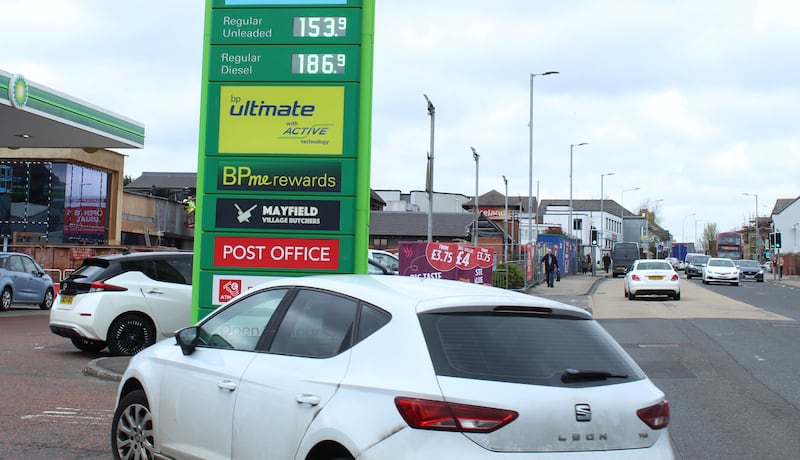 Fuel prices in Glengormley on April 8 PICTURE: SAOIRSE CAMPBELL
“We need urgent, practical solutions to support workers, families, and essential services before the situation worsens further.”
The Northern Ireland Ambulance Service (NIAS) said that it was aware “protests are likely to take place at a number of locations across Northern Ireland on Tuesday, April 14″.
“NIAS would like to reassure the public that every effort is being made to maintain health and social care services as far as possible,” they added.
“If there is any disruption to services, then local providers will advise patients and service users accordingly.
“The safety of both staff and patients remains our priority, and we would ask that emergency service vehicles are not impeded by any protests.”
 NIAS said that it would reassure the public that “every effort is being made to maintain health and social care services as far as possible” PICTURE: CLAUDIA SAVAGE/PA Why are they being held?
The protests are being held in response to the rising price of fuel.
Since the beginning of the US-Israeli war in Iran, global oil prices have skyrocketed.
As a result, the cost of buying fuel at the petrol pumps or oil for home heating have also risen.
A poster for the protests says that they intend to “bring the country to a standstill”.
In the Republic, the protests have called for a cap on kerosene and diesel as well as the interim removal of carbon tax and excise duty.
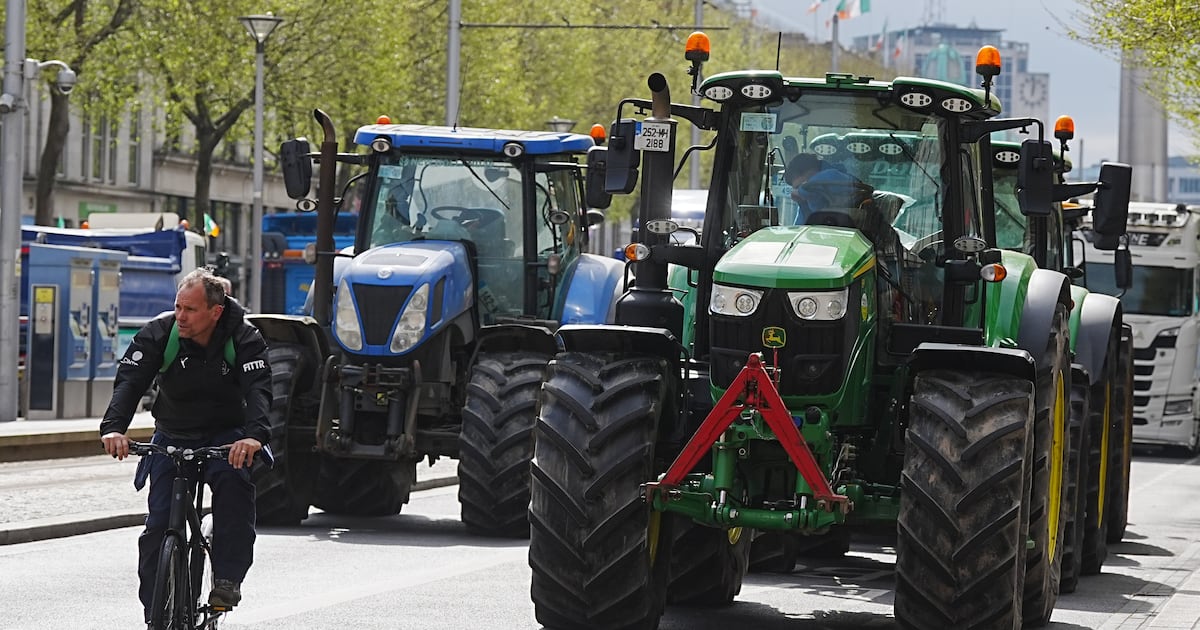
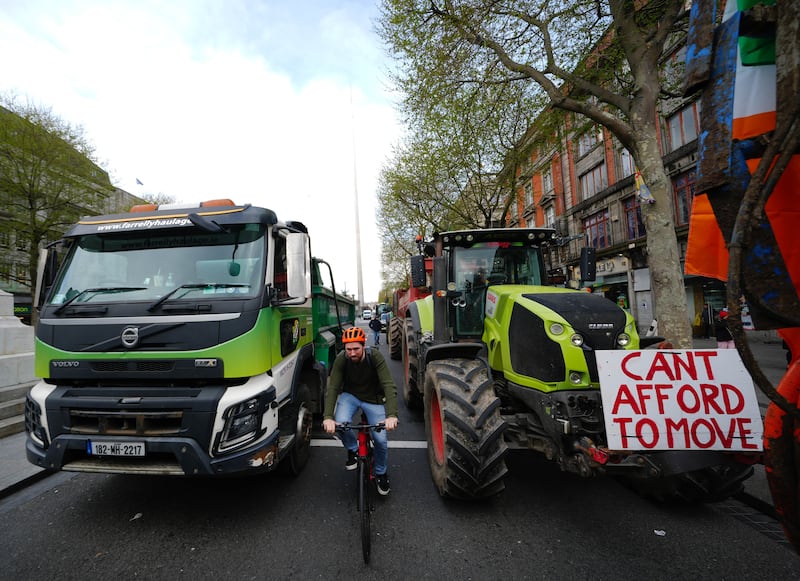 Protests have included slow-moving convoys on motorways and parked vehicles, such as those pictured on O’Connell Street in Dublin city centre PICTURE: BRIAN LAWLESS/PA
Fuel duties in Northern Ireland are reserved matters for the UK Government and are not controlled by the Executive.
Last week, Stormont’s economy minister Caoimhe Archibald called on the UK government to reduce fuel duty “as a matter of urgency”.
What will they look like?
Fuel protests in the Republic have consisted mostly of lorries and tractors parked up on main thoroughfares or slow-moving convoys, so this would also likely also be the case in the north.
On Tuesday, tractors blocked O’Connell Street in Dublin city centre, while traffic was brought to a standstill at around 20 other locations across the country.
What has the response been to similar protests seen in the Republic?
Taoiseach Michéal Martin said that a blockade of an oil refinery in Co Cork on Wednesday as part of the protests was “an act of national sabotage”.
He also described the blocking of traffic in Dublin city centre as “wrong” and said that those breaking the law would be penalised.
“To prevent mobility, to prevent people from accessing livelihoods, medical appointments, disrupting day-to-day activities in the manner that has happened, is wrong and is a wrong form of protest,” he said.
On Thursday, the government announced that the Irish military would be deployed to ease blockages to “critical infrastructure”.