
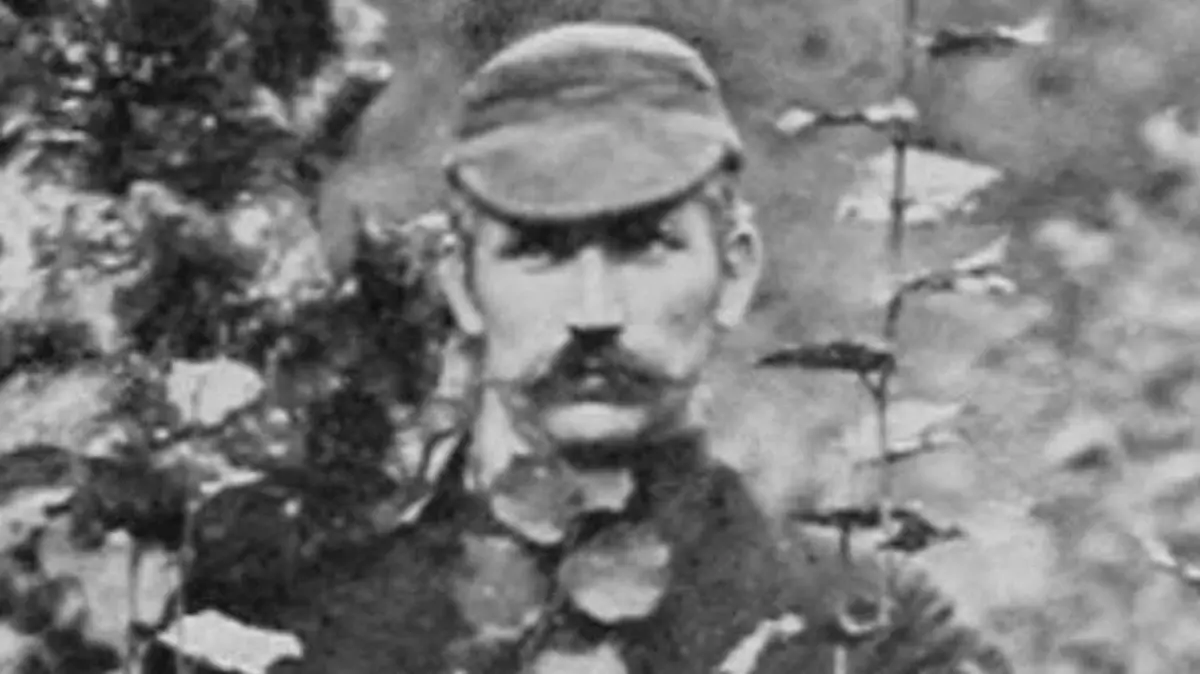
It was a “lucky thing” that Sidney Galpin, one of the founders of the House of Cassell, went down in the autumn of 1882 shooting in Swaledale, the pretty valley that runs like a cartwheel rut between the silent fells of the Pennines in the North Riding of Yorkshire.
If he had not, the shepherd boy, Richard Kearton, who had crippled himself while bird nesting, might have gone on tarring sheep to the end of his days and the world would have been the poorer.
The lad — he was only twenty at the time — came up to La Belle Sauvage and, after some hard early experiences in lodgings in Clerkenwell, taught himself everything that goes to make an attractive writer and photographer, and after sixteen years’ hard work at Cassells, he blossomed into the engaging writer and lecturer we all know.
The foundation of his achievement lay in his hardy upbringing in a very primitive bit of the countryside, a territory so backward that his great-grandfather remembered the first wheeled vehicle of any kind that appeared in the neighbourhood. Before that, every commodity was conveyed on the pack saddle of a horse or donkey.
The Keartons have been in Swaledale since 1350. Speaking of his great-grandfather, he says: “The old fellow had an insatiable appetite for combat and once fought the champion bruiser of Westmorland to a standstill at Tan Hill, the highest inn in England, washed in the same tub, and indulged in a night and day spree that lasted a whole week with his late antagonist.”
What a fine hero he would have made in a modern novel! Life in that valley was a hard affair, an unremitting struggle with nature and sometimes with a hard landlord, like the close-fisted old sinner who “would gladly have made a shirt-stud out of a wart growing on the back of his neck”.
A rough life, too, especially at the sheep washings when the scrubber — for then there were no chemical dips — had to stand for hours up to the armpits in a cold spring of water, sometimes amid hail, and make the sheep clean.
But, as Mr Kearton is a born philosopher, he does not bemoan these hard days, for he says: “The man to be pitied is he who lies down with malice and rises with hatred in his heart. I doubt if science has increased the total sum of human happiness. It is better to work than to brood. I have known few idle men without a grievance of some sort.”
Mr Kearton took a pioneer stop in 1895 when he produced his British Birds’ Nests, for it was the first book of its kind to be illustrated from end to end by photographs taken direct from nature.
An extract from JM Bulloch’s review of A Naturalist’s Pilgrimage by Richard Kearton