
Skoda Enyaq EV
Year: 2026
Fuel: Electric
Verdict: Still one of the easiest EVs to live with – Skoda needs to make a stronger case for why it’s the one to choose
When the Enyaq first broke cover, car giant Skoda opted to introduce the prototype to the world in Durrow, Co Laois. It was a bit of a coup having a big car brand put Ireland on its launch radar.
Motoring hacks from across Europe and further afield travelled to the southeast to drive lime-green ‘camouflaged’ prototypes of the cars around the country roads of the Slieve Bloom Mountains.
Hopeful talk at the time was perhaps the full-blooded international launch of this all-important car could be held in Ireland, with the Skoda bigwigs impressed by the charming locals and the sylvan landscape.
Timing is everything. The morning we visited the event to drive the car for two hours, it was grey and overcast. By the time we left, the snow was falling. And Skoda hadn’t really considered snow tyres a priority for Ireland in February.
Within a week, people were googling Wuhan.
By the time Enyaq EV arrived on forecourts in Ireland, we were still emerging from Covid lockdowns, and cars were not top of our list of talking points.
Perhaps as a result of timing, it has lived its life so far under the shadow of its German sibling. So far this year, the VW ID.4 has recorded 1,048 registrations and is the bestselling EV on the Irish market. The Enyaq is in tenth place, with less than half those sales. Even in its sales heyday of 2023, it peaked at less than half the sales of ID.4.
It deserves to do better, particularly when pitted against a car with which it shares everything but some bodywork and a badge.
One hurdle is undoubtedly Skoda’s everyman reputation and a customer base still wary to embrace electric. That may be a disservice to some loyal Skoda fans, but this is a brand where diesel still dominates. Over 50 per cent of sales are still diesel, and 30 per cent petrol. This is in a market where overall diesel sales are just 12.9 per cent.
Its three bestselling models are majority diesel models. Enyaq lies seventh in sales compared to its Skoda siblings, running bumper-to-bumper with Superb, with its 93 per cent diesel sales.
So, regardless of the wider audience, amongst Skoda’s sizeable and loyal Irish fan base, the figures suggest it has an uphill task.
 Skoda Enyaq 130
[ New BMW iX3 proves there’s life and joy in electric drivingOpens in new window ]
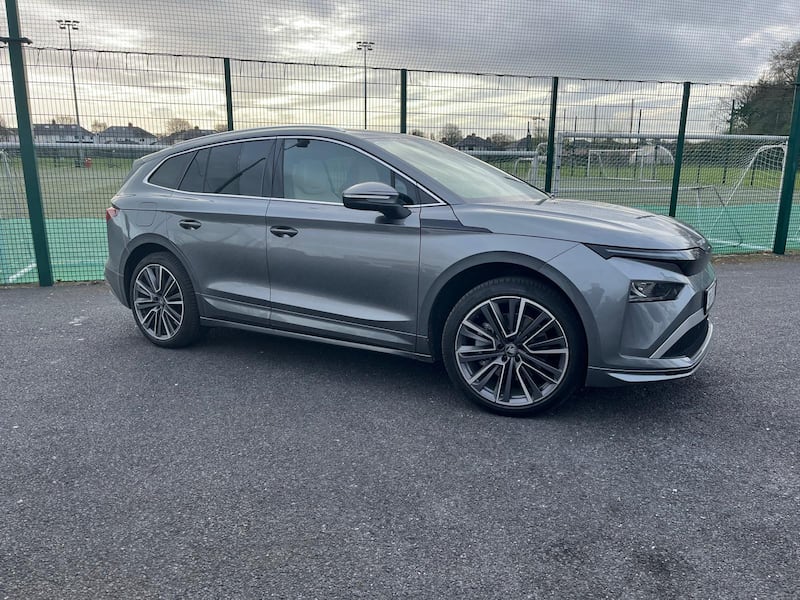
Yet the Enyaq carries the characteristics of Skoda’s fleet. It’s smartly stylish but not loud or brash. It’s roomy, remarkably comfortable and ultimately easy to drive. It’s the comfortable jacket you grab on a miserable day, knowing it will keep you warm, dry, and looking respectable. It sends the right signals as well: you’re doing well enough to afford a new car, but you’re not someone to throw around the cash. Toyota used to own this ‘sensible’ space in Ireland, but Skoda has elbowed its way in there during the last decade or more.
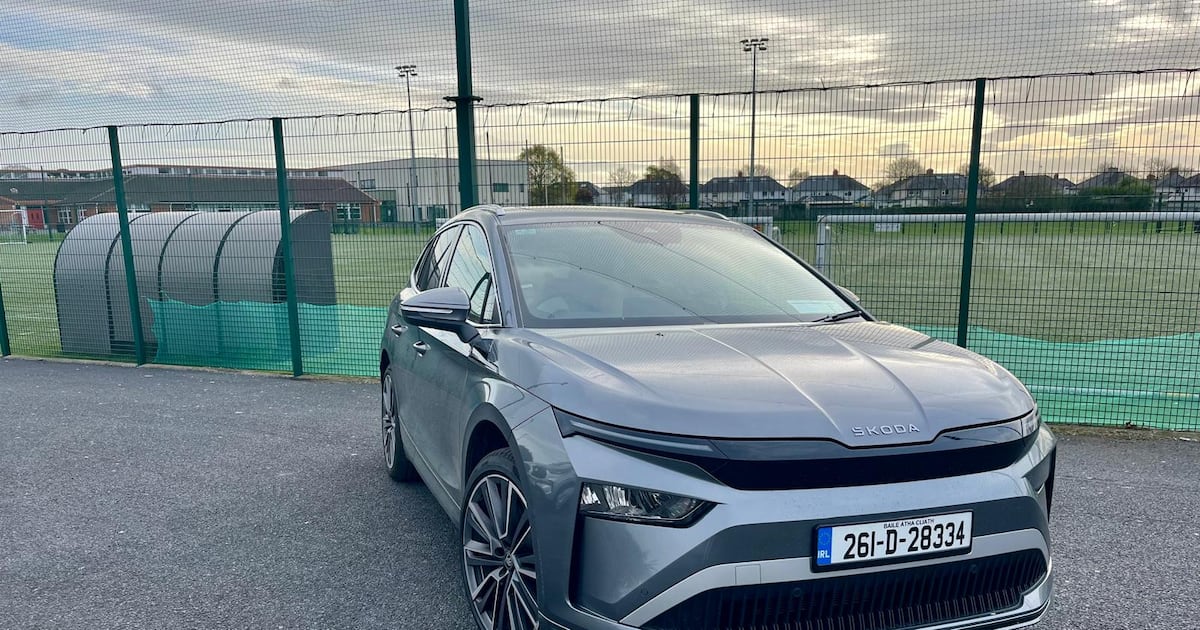
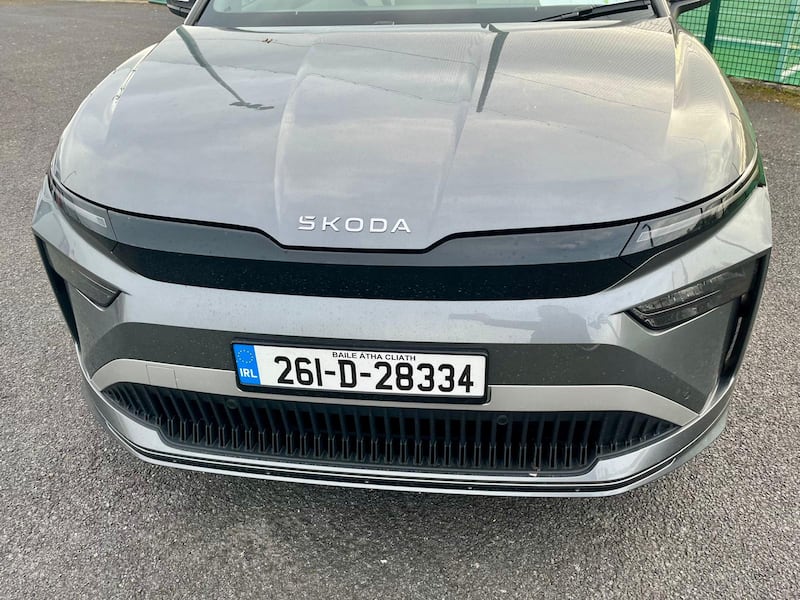
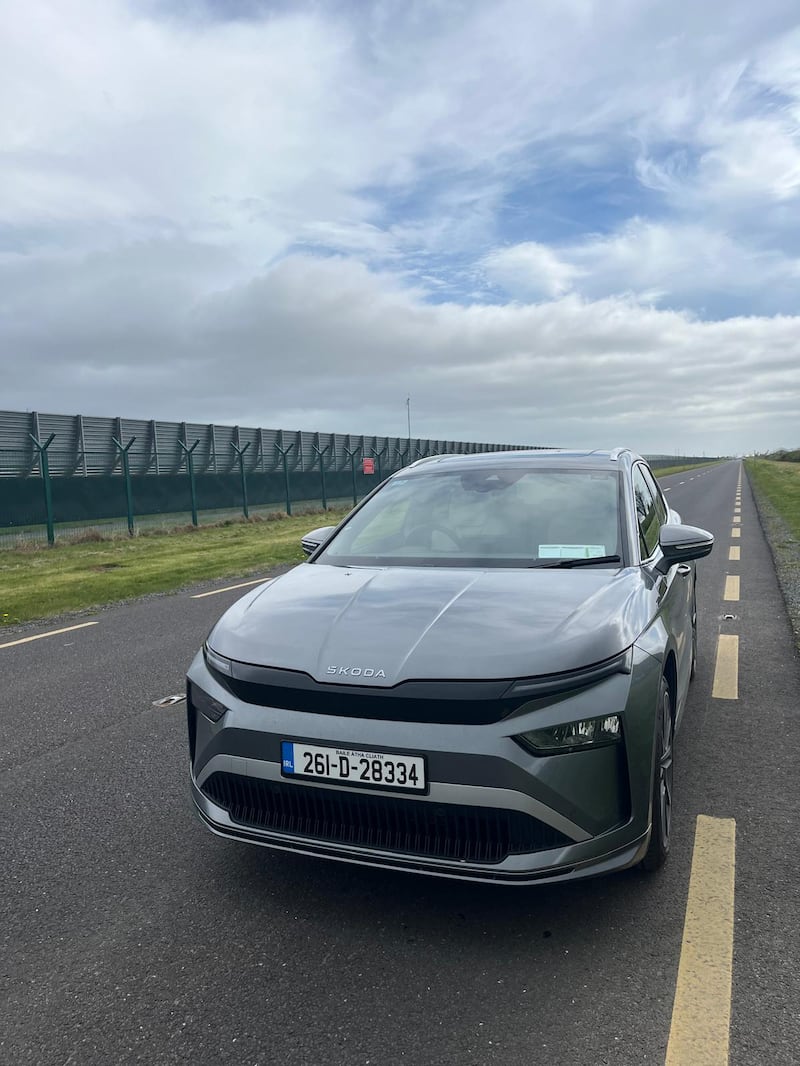
So what has changed to warrant any reconsideration of Enyaq? First up, it’s had a style refresh, most notable in the front nose. Gone is the useless and rather cheap-looking plastic grille for a much smarter, solid integrated bumper. The ‘dodo-like’ bird logo has been replaced with the nameplate Skoda, and the light clusters are now sleeker strips.
 Skoda Enyaq 130
The rest have received more modest touches, with little difference at the rear, but the overall effect is to make the Enyaq look cleaner, squarer and more current when pitted against the likes of Tesla’s Model Y or Hyundai’s Ioniq 5.
The changes have also delivered some aerodynamic efficiencies, with Skoda claiming a better drag coefficient. In simple terms, that means our Enyaq delivered a claimed range of 561km compared to 531km.
Of course, the sort of range we experienced was not within the realms of 560km. With an average consumption of 18.8kWh/100km drawing from the battery pack with 77kWh net storage, we were touching early 400 kms. Even when we tried driving like the throttle was a hot spike, we only managed 16.6kWh/100km.
Charging speeds have been improved. Skoda claims you can get from 10 per cent to 80 per cent in 28 minutes at the max DC charging capability of 135kW.
The Enyaq is an easy, comfortable drive, in much the same way you find with the rest of the EVs built on the VW Group’s MEB parts. Power comes from a 210kW electric motor (the entry version has a 150kW motor, while the RS version we also got to test boasts 250kW).
 Skoda Enyaq 130
That’s a hefty bit of power for a family car, and the Enyaq claims a 0-100km/h time of 6.7 seconds, which is fast for a school run, but not special in the EV world. It’s close to the sweet spot where you can kick down to get out of trouble, but it’s not chomping at the bit every time you tickle the throttle.
Battery regeneration is smoothly applied, and even though there are varied driving modes, the difference between them is negligible. Once you’ve shown the neighbours, you won’t bother changing it again until it leaves your driveway for good. Certainly, when it comes to the suspension, you’d need a PhD graduate in Vehicle Dynamics to spot the difference.
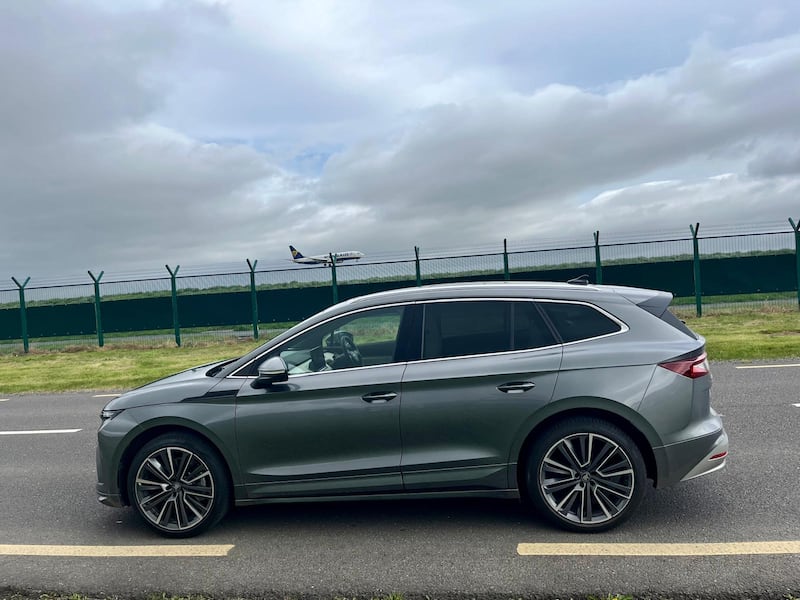
And as with its siblings, the VW ID.4, Cupra Tavascan and Audi Q4 E-tron, the motor is on the rear axle, but that’s not to create some swinging tail drifting action. It’s the way the platform was built for the Group to deliver a tighter turning circle that lets you twist and turn in ridiculously tight town-centre car parks. That means you look like a far more nimble driver behind the wheel of a 4.7-metre-long crossover than you probably deserve.
The suspension delivers on Skoda’s seeming theme: seize the middle ground and placate as many people as possible. It leaves little in the way of steering feedback or road vibration, but for everyday driving, that’s probably a virtue more than a vice.
 Skoda Enyaq 130
If you do try and step it out of line – in the more powerful RS version, for example – the response is a reassuring understeer accompanied by the tut-tut of a warning chime.
For those who prefer a more responsive and engaging drive, there are sharper handling rivals. The Koreans’ Kia EV6 and Hyundai Ioniq 5 are sharper, and from within the VW Group, the Cupra Tavascan does lean towards a more driver-focused camp.
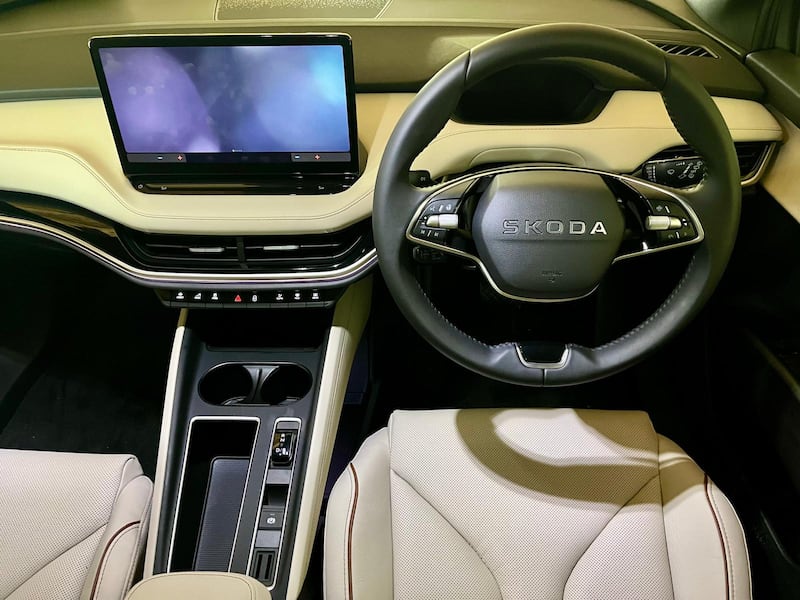
The interior of our 130 Edition, decked out with Laurin & Klement touches, featured leather touches, styling and a finish that would be fitting for any premium brand these days. The tech is subtle rather than sophisticated; the driver’s screen is still more akin to a horizontal phone screen than a proper binnacle. But it upends the idea that Skoda is the cheap alternative to VW. It’s better value.
 Skoda Enyaq 130
And that’s where this car – and brand – needs to make much more of its play, particularly faced with razor-sharp pricing from Chinese brands that are catching the eye of a sizeable cohort of buyers who would previously have been shopping at Skoda.
Its arrival was marred by events outside its control, and since then, the wave of Chinese rivals has given Enyaq a challenging time. Yet the brand has a huge foothold in the massively popular middle ground of Irish motoring. Perhaps the problem is Skoda is not really prepared to direct its customers to the EV instead of diesel if they show any sort of doubt. In a way, that’s good customer care – putting the right customer in the right car. But it might also be a reticence to make the sales pitch for Enyaq. But if they don’t do it, the sales staff for the Chinese brands certainly will.
Lowdown: Skoda Enyaq 130 Edition
Power: 210kW electric motor putting out 545Nm of torque married to a 77kWh battery pack
0-100km/h: 6.7 secs
Official consumption: 15.3 KWh/100km (test car average 18.9 kWh/100km)
Range: 561km
Price: €48,973 as tested (Enyaq starts at €43,790)
[ BYD’s Seal 6 gets the practical car seal of approvalOpens in new window ]