
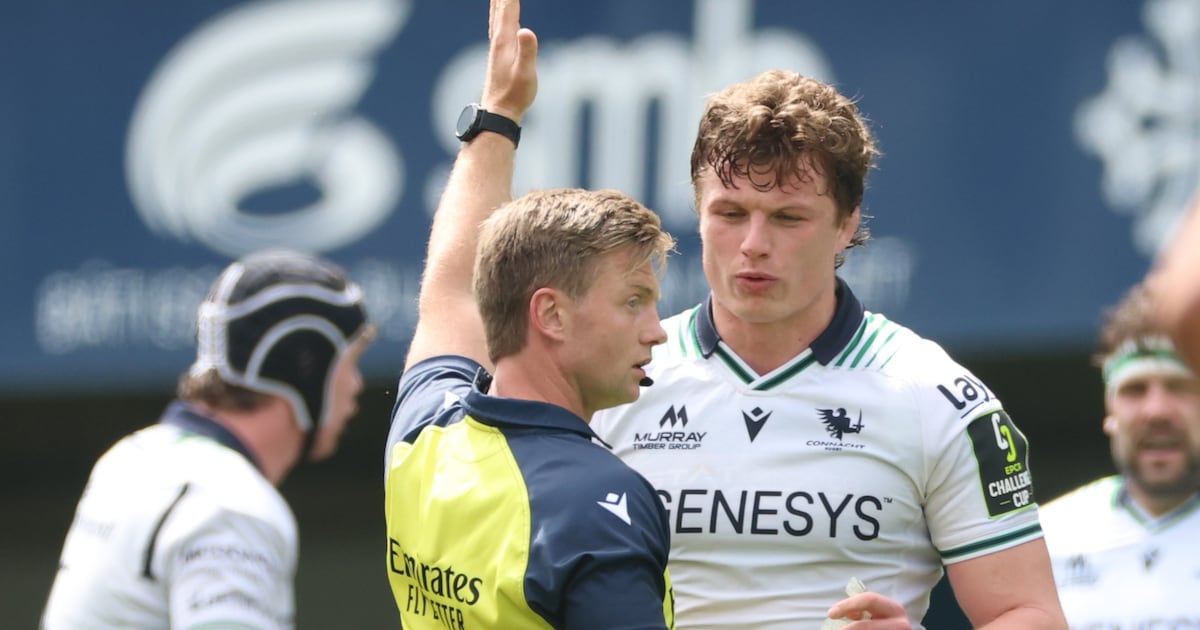
I’ll probably have to suspend my fan-club subscription. Referee Christophe Ridley has been on the elite scene for several years now and his approach to the job has been likable, low-key, not too much chat and relatively accurate. However, his performance in Montpellier v Connacht failed to meet that description.
Maybe he was attempting to emulate the great and highly respected French referee Francis Palmade, who bestrode international rugby like a colossus, way back in bygone times.
Splendidly attired in all royal blue, Palmade was annoyed he couldn’t master the English language. However, a chance visit to the theatre, to watch the mime artist Marcel Marceau, prompted the solution he needed. So, he devised a series of simple but very effective signals to explain his decisions properly.
Several times Ridley offered us his own version of Marceau’s miming; it was exaggerated and unnecessary. Before it catches on, it needs to be scrubbed – nobody should even dream of copying it. The laws have an illustrated section on signalling: like Palmade’s they are simple and effective. Everybody must stick to them.
Ridley was in charge the previous week of Toulon v Stormers and had copped significant flak, particularly from former Springbok coach Nick Mallett, for failing to award the South African team a penalty try when their driving maul was collapsed close to Toulon’s goal line. Mallett’s point was well made. He is a shrewd observer of the game. He also doesn’t have to adhere to World Rugby’s protocols which rightly punish current coaches who go public with their criticism.
I haven’t the foggiest notion whether or not Ridley was smarting from the critique, but he seemed determined to get things right this time around. So, very early on, when Montpellier mauled towards Connacht’s line and were brought down short, the referee told us that he couldn’t award a penalty try, but nevertheless he dispatched Dylan Tierney-Martin to the bin.
The next maul was collapsed by Connacht, and this time Ridley did give the penalty try; plus another sinbin, Shamus Hurley-Langton was the culprit. The first offence was the first real attacking maul and the sanction of penalty plus bin was severe, particularly since it didn’t merit a penalty try. Surely, a warning would have been sufficient. Down to 13 after just six minutes was one heck of a burden.
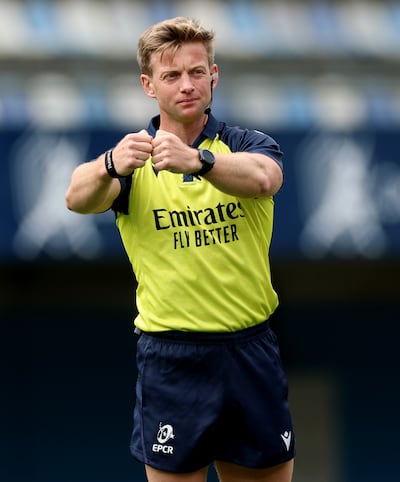 But Connacht could not blame referee Christophe Ridley for their 45-22 Challenge Cup defeat by Montpellier. Photograph: James Crombie/INPHO
Ridley was correct on the penalty try sanction plus sinbin, but if the offences had been in reverse order, would he have binned for Dylan Tierney-Martin’s infringement? Again, it’s impossible to know, but I’d hazard a guess that he wouldn’t have.
Next, as if all of this weren’t enough for Connacht, a silly late obstruction by Shayne Bolton saw the ref produce another yellow, for which there can’t be any complaints.
There were needless non-stop explanations and conversations with players and some other issues for Ridley to consider. Here’s one: Montpellier advised that they would have a six-man lineout, but only put in five players. That’s a clear offence, a simple sanction, but Ridley let them take the throw again. A try from the retake would really have put the cat among the pigeons – very fortunately for the referee it didn’t happen.
Connacht, of course, won’t blame the referee for the defeat, it was a comprehensive victory for the home team. But it was a shame that the wind was taken out of the westerners’ sails quite so early on.
The weekend had started off with a classic. Bath v Northampton in the Champions Cup was an 11-try epic, one of the best matches we’ve seen in this competition. Irish interest in the encounter was supplied by referee Andrew Brace. He was performing really well, assured and firm, with little extraneous chat – then we had the end game.
Seven minutes were left when Henry Arundell carried into Northampton’s 22, where he was tackled. Defender Henry Pollock attempted to poach for the ball, but was penalised and binned. Only a few moments later Bath’s Ted Hill scored the winning try.
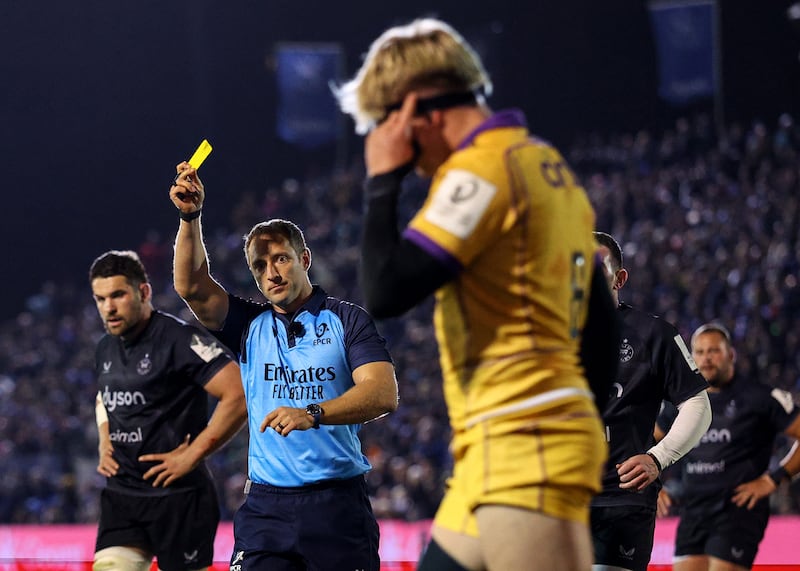 Andrew Brace shows a yellow card to Northampton’s Henry Pollock, but the official’s decision looked wrong. Photograph: Ben Brady/INPHO
It was difficult to see Pollock’s offence, but it was clear and obvious that Bath’s Santiago Carreras completely sealed off the ball, denying the defence any access to it. For me, and for the observant commentary team, the correct call would have seen a penalty to Northampton. There will be questions asked on this one.
Earlier on, Pollock had been lifted in a tackle, well above the horizontal, and then dangerously dropped, fortunately landing on his back. These tackles are fairly unusual nowadays, as referees take an uncompromising stance in dealing with them.
However, Brace decided that a “penalty only” was enough, and the guilty party, Alfie Barbeary, stayed on to become man of the match.
A similar tackle in Ulster v La Rochelle saw Hollie Davidson unhesitatingly yellow card Zac Ward. Nobody can argue against this stiffer sanction, which must be the go-to decision for this level of foul play. Anything worse, and the colour of the card changes.
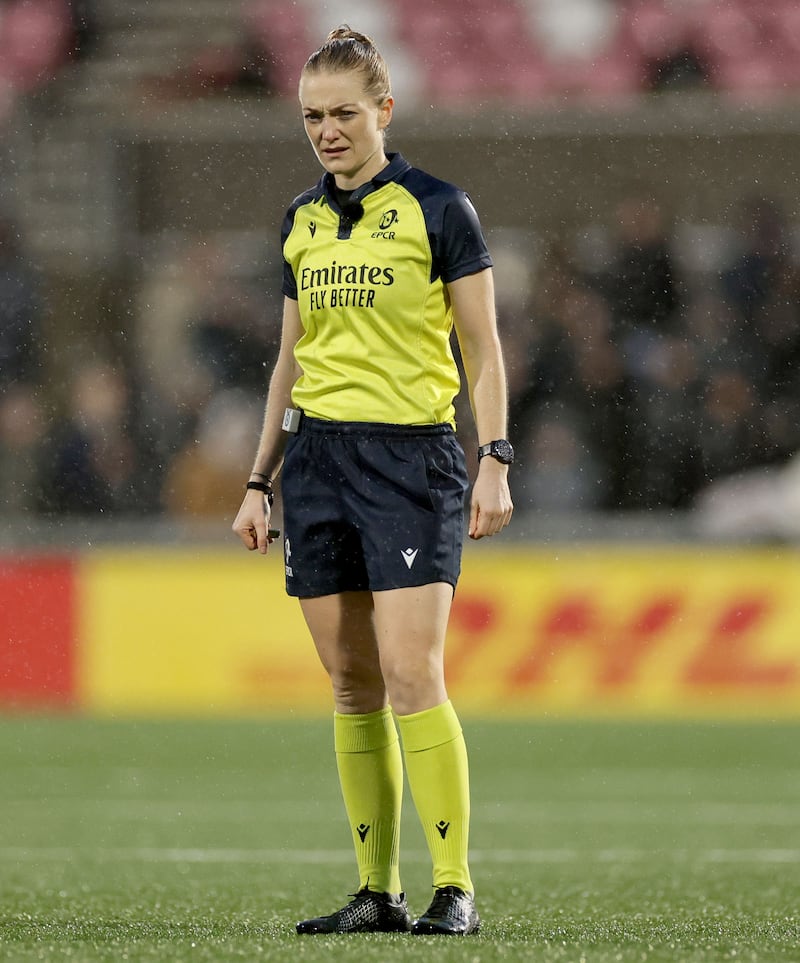 Referee Hollie Davidson takes charge of Saturday’s Ulster v La Rochelle Challenge Cup game in Belfast. Photograph: Laszlo Geczo/INPHO
Davidson has done extremely well, fully deserving of her place at the high table. She has had to put up with some nasty misogyny along the way, which she has dealt with extremely well.
Disgracefully it continues. I overheard a few young low-lifes recently, sniggering into their beer about her. It was unprintable stuff. A disgrace to their families and the fee-paying school they attend – they would undoubtedly be disowned by both.
But Davidson really needn’t worry about these snivelling types. The vast majority of true rugby people are all with her.