
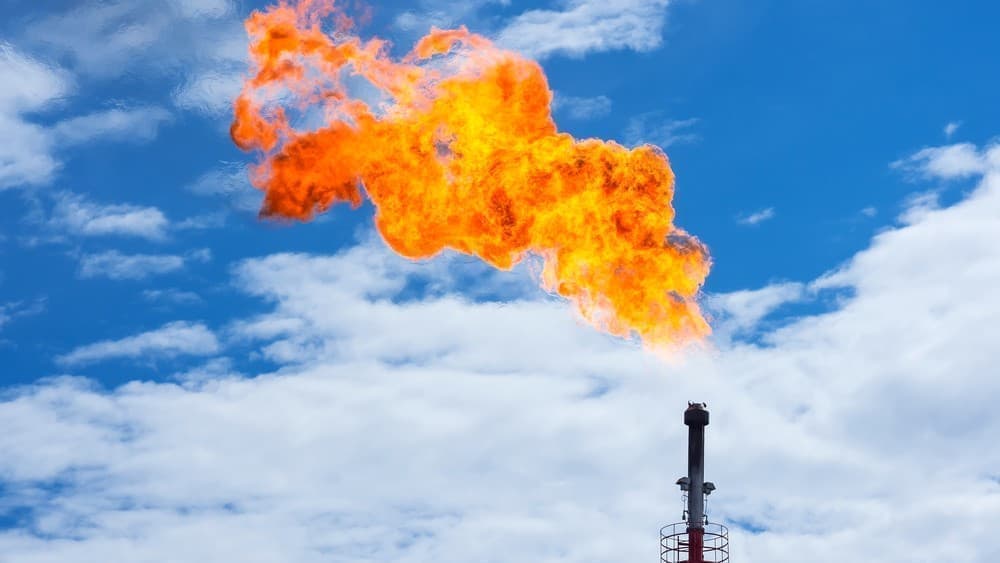
The AI explosion is causing demand for energy to skyrocket around the world. The projections for the future of energy use by data centers are staggering, and the private and public sectors alike are rushing to get ahead of the issue. While Big Tech has thrown a lot of money – and a lot of PR – into expanding the development of current and next gen renewables to meet their ballooning energy needs, the tech sector is causing a lot of fossil fuels expansion, too, casting doubt on previously charted decarbonization timelines.
Take Google, for example. The tech giant’s data centers alone already require as much energy to operate as many entire counties. In 2024, the energy footprint of Google’s data centers clocked in at a staggering 30.8 million megawatt-hours of electricity – nearly double the level from just a few years prior. In an attempt to balance this enormous energy impact, Alphabet, the company behind Google, has made high-profile investments in clean energy startups and pledged to give $10 million to an energy impact fund prioritizing local reliability and clean energy initiatives.
But that’s only part of the story. In fact, $10 million is just a drop in the bucket of Alphabet’s AI- and energy-related investments. “Alphabet invested roughly $90 billion in capital expenditures in 2025 and plans to nearly double that to as much as $185 billion in 2026,” according to a recent report from Cleanview, a market intelligence platform. “Most of that money will flow to data centers—and the infrastructure needed to power them,” the article went on to say. And that significant infrastructure expansion will not be all centered on clean power. Already, Alphabet is – much more quietly – also building up natural gas resources to fuel its generative AI ambitions.

Google is currently partnering with Crusoe Energy to build a data center campus in North Texas that will include a wind farm – and a massive natural gas facility. So far, Google is tight-lipped about the issue, while continuing to promote its image as a champion of clean energy development. In a recent interview with Axios, Google’s head of advanced energy Michael Terrell emphasized its various investments into geothermal, fusion, advanced nuclear reactors and batteries, and said that “I do think our public projects provide a good roadmap into how we’re thinking about solving this challenge.” However, when asked about the role of natural gas in the company’s strategy, Terrell said: “We don’t have anything to say on that.”
Related: Six Stocks That Could Soar in an Era of Regional Instability
However, it’s been clear for years that Google’s artificial intelligence aims are incompatible with its pre-existing decarbonization targets. In 2024, Google admitted that the company’s carbon emissions had skyrocketed by 48 percent over the previous five-year span thanks to the AI boom. Google had previously pledged to reach net zero greenhouse gas emissions by 2030, but the tech giant was forced to concede that “as we further integrate AI into our products, reducing emissions may be challenging.”
However, it’s true that the company is also continuing to push development of next-gen clean energy solutions. The extent to which those efforts amount to greenwashing is, to a large degree, a matter of perspective. “Many climate activists will see Google exploring natural gas as a sort of betrayal,” said Michael Thomas, the founder of Cleanview.
“There’s no doubt that it would be in tension with the company’s stated ‘moonshot’ goal of becoming carbon-free by 2030,” he went on to say. “But it’s also true that Google is voluntarily investing more in clean energy technology than almost any other entity — public or private — in the world.”
And Google is far from alone. Natural gas is currently getting a major boost from all of the biggest players in tech. Microsoft announced a gas-powered data center deal with Chevron just last month, and Meta is currently planning the country’s biggest power facility, which will include no fewer than seven natural gas plants.
By Haley Zaremba for Oilprice.com