
Despite the Mark Carney Liberals announcing that they are scrapping the federal excise tax on gasoline and diesel fuel starting next week, Canadians can still expect an expensive summer at the pumps and that there will be consequences for “every sector of the economy.”
In addition to the effects of the war in the Middle East, gas stations started using a more expensive summer blend on Wednesday, which typically costs about 10 cents more per litre than the winter blend and would negate the federal excise tax cut of about four cents per litre for diesel and 10 cents per litre for gasoline.
“This issue isn’t going away anytime soon,” said Canadians for Affordable Energy president Dan McTeague, a former Liberal MP, noting that gas stations are mandated to use the less volatile summer blend – which replaces butane with cleaner-burning alkylate – every year from April 15 to Sept. 15.
The Liberals announced the federal excise tax cut on gas, diesel and aviation fuel this week and that it would begin next Monday and end on Sept. 7, which almost exactly lines up with the mandated use of more expensive summer-blend fuels.
 Prices to be ‘stuck’ at 160-180 cents per litre
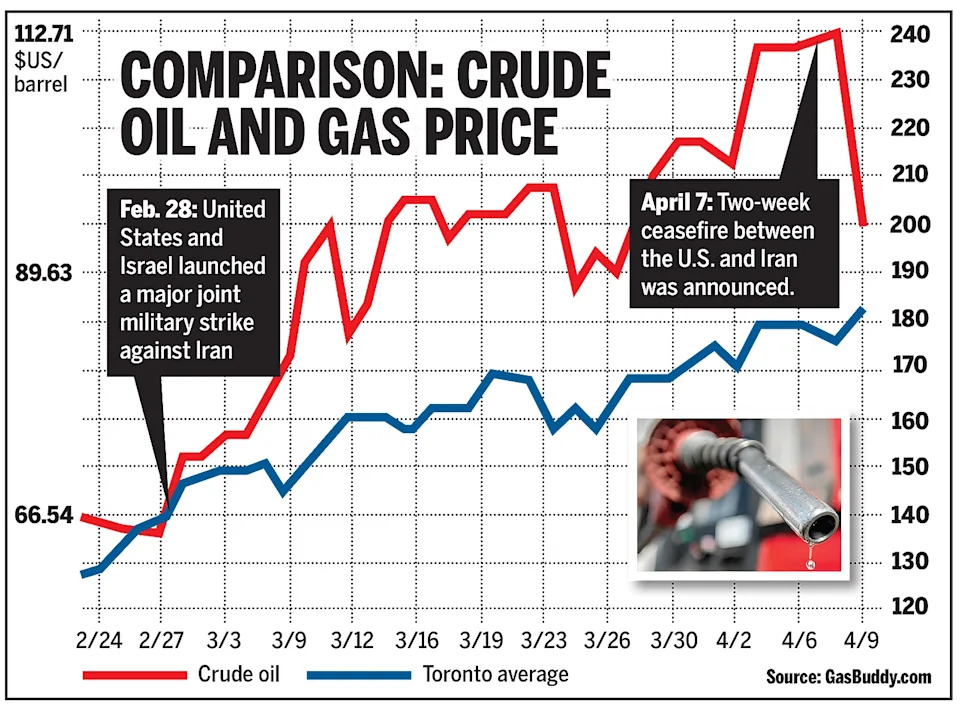
Even with those measures in place, Canadians can still expect to see gas prices “stuck” at about 160 to 180 cents per litre for the “next couple of months and potentially even longer than that,” McTeague said.
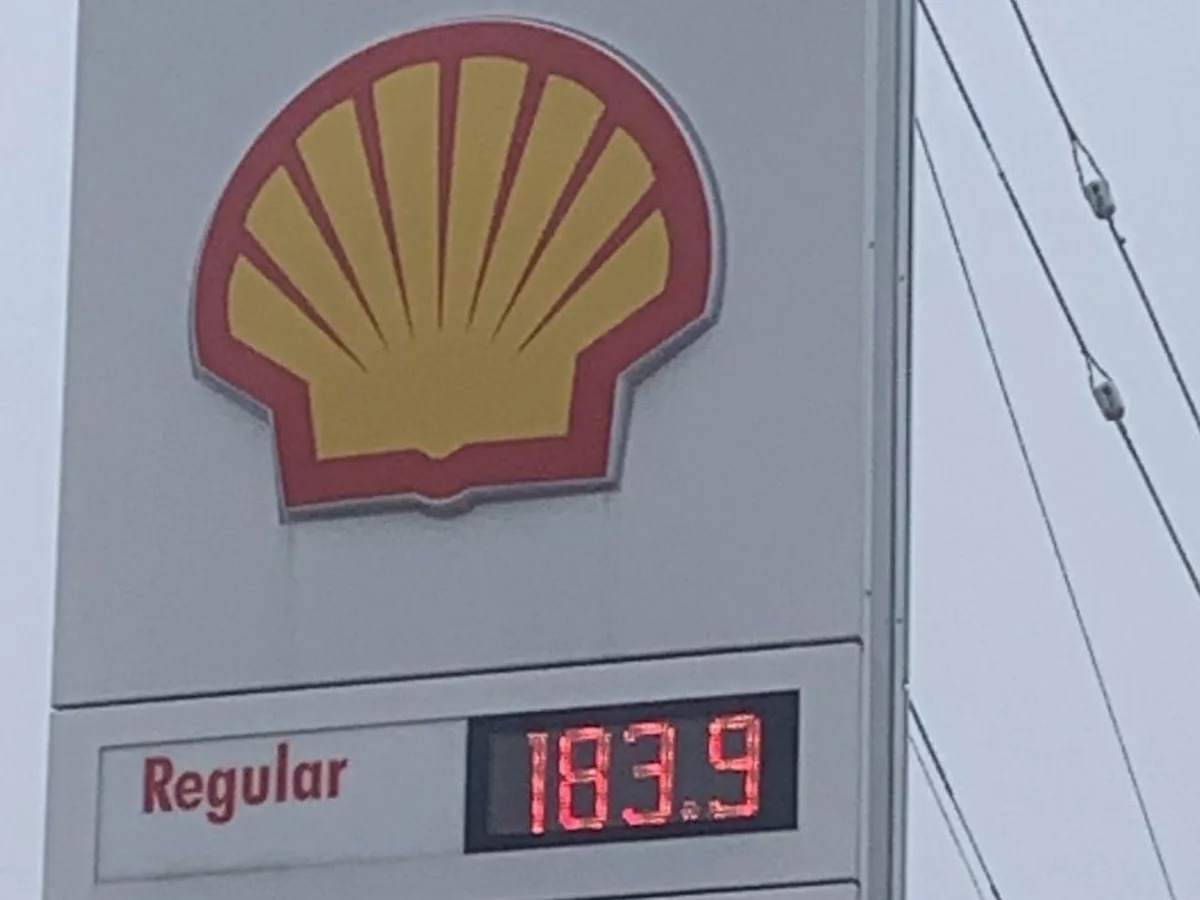
Gas prices in Toronto averaged about 176.9 cents per litre on Wednesday, according to the CityNews gas price tracker, after hitting a high of about 188.9 cents per litre last week. McTeague, meanwhile, predicted the cost to drop to about 173.9 cents per litre on Thursday before rising again by the weekend.
The price of diesel, however, will also make everyday living more expensive as it is widely used in the shipping industry and has well outpaced the cost of gasoline, hitting record highs of about 230 to 240 cents per litre last week in the GTA.
As for the issues in the Middle East, don’t expect ceasefires or the prospect of a peace deal between Iran and the United States to stabilize costs in the long term, McTeague said.
RECOMMENDED VIDEO‘Supply shock’ from war in Iran
He said oil shipments take weeks to arrive at their destination by sea and even then, production facilities have been damaged in places such as Kuwait, Iraq, the United Arab Emirates, Qatar and Bahrain – with some of the damage likely needing years to fix.
“Bottom line, the damage has been done,” he said, adding the industry is already facing a “supply shock.”
In the meantime, he said the federal government needs to suspend the Clean Fuel Standard – what he called the “carbon tax 2.0” – and cut the GST from the price at the pump if it really wants to help consumers.
“It takes away the sting that the government is profiting from this situation,” he said.