
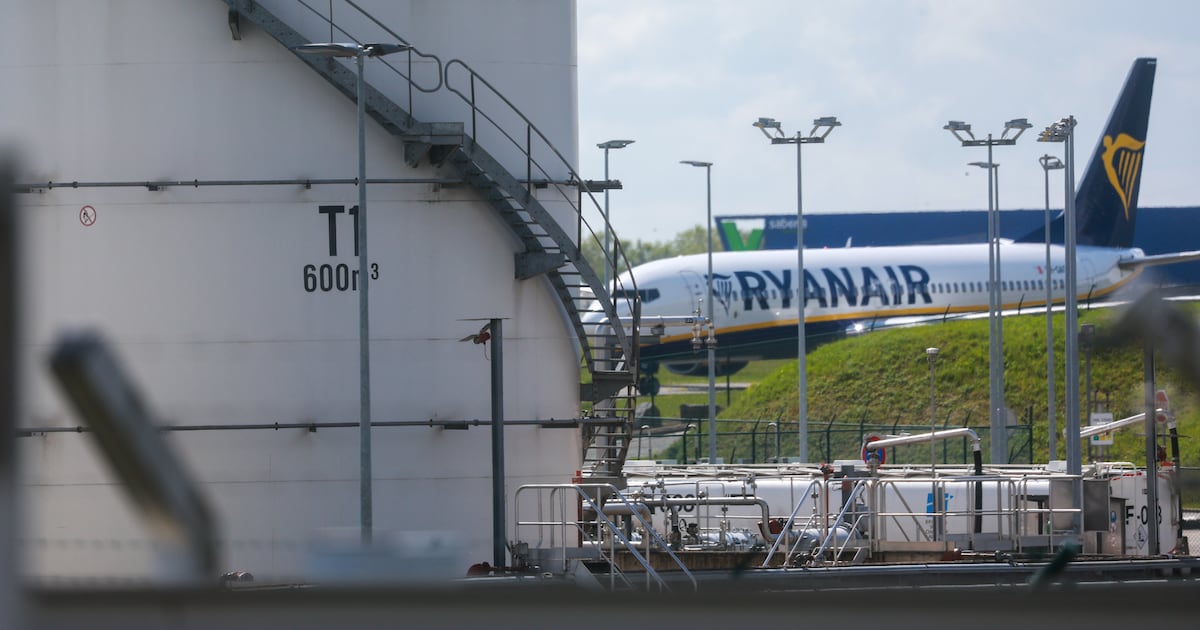
European airlines have “maybe six weeks or so” of remaining jet fuel supplies, the head of the International Energy Agency said on Thursday, and warned of possible flight cancellations “soon” if oil supplies remain blocked by the Iran war.
The agency’s executive director Fatih Birol told the Associated Press that the world was facing “the largest energy crisis we have ever faced”, stemming from efforts to choke the supply of oil, gas and other vital supplies through the Strait of Hormuz.
“It’s a dire strait now, and it is going to have major implications for the global economy. And the longer it goes, the worse it will be for the economic growth and inflation around the world,” he said.
The impact will be “higher petrol prices, higher gas prices, high electricity prices,” said Birol.
Ryanair said earlier this week that its suppliers could guarantee it enough jet fuel only through most of May.
Europe is by far the biggest consumer of jet fuel shipped through the Strait of Hormuz.
Meanwhile, differences between Washington and Tehran over Iran’s nuclear programme are the main obstacle to holding a second round of talks, after negotiations last weekend in Islamabad ended without a breakthrough.
A senior Iranian official told Reuters that fundamental disagreements remain over nuclear issues, adding that “the fate of Iran’s highly enriched uranium and the duration of its nuclear restrictions remain unresolved”.
Pakistan’s army chief Asim Munir visited Tehran on Wednesday and reportedly managed to reduce differences between the sides “in some areas”; it is believed that Thursday’s announcement of a 10-day ceasefire in Lebanon will also help facilitate efforts for a further round of negotiations between the US and Iran, which linked the two fronts.
White House press secretary Karoline Leavitt told reporters that further talks “would very likely” be in the Pakistani capital.
The two-week ceasefire mediated by Pakistan expires next Wednesday and, without a breakthrough in the coming days, there is a real danger of a return to war.
US secretary of defence Pete Hegseth said its forces were ready to resume strikes on Iran if Tehran “chooses poorly” and does not agree to a deal.
“I pray you choose a deal which is within your grasp for the betterment of your people and for the betterment of the world,” he said at a press briefing from the Pentagon. “In the meantime, the war department is locked and loaded.”
He stressed that the US will maintain its blockade of Iran “for as long as it takes”, adding that “if Iran chooses poorly, then they will have a blockade and bombs dropping on infrastructure, power and energy”.
He added: “We’d prefer to do it the nice way, through a deal led by our great vice-president and negotiating team, or we can do it the hard way. We urge this new regime to choose wisely.”
[ Iran has unleashed Gen Z tech warriors to ridicule the Trump administrationOpens in new window ]
Israeli defence minister Israel Katz has warned that Israel will launch “even more painful” strikes against Iran if it does not agree a deal with the US.
“Iran is facing a historic crossroads. This is their moment of choice – between a bridge to the future and an abyss of isolation and destruction,” he said. He added that if Iran chooses the latter option, it will “very quickly discover” that targets Israel has not yet struck are “even more painful that the ones we have already attacked”.
US Central Command said 14 ships have turned back since the US blockade of Iran’s ports and coastline began on Monday.
The military adviser to Iran’s supreme leader warned that Tehran would sink US ships in the Strait of Hormuz if the US decided to “police” the narrow waterway.
Mohsen Rezaei, a former commander-in-chief of Iran’s Islamic Revolutionary Guard Corps (IRGC) who was named as a military adviser by Iran’s supreme leader Mojtaba Khamenei last month, also threatened to take US soldiers hostage if they came ashore and “demand $1 billion each captive”.