
Across the decades of my coaching career, the best club team I encountered was the great Auckland side of the late 1990s. With superstars such as Michael Jones, Carlos Spencer, Zinzan Brooke and Jonah Lomu and coached by Graham Henry, they were supreme in every aspect of play.
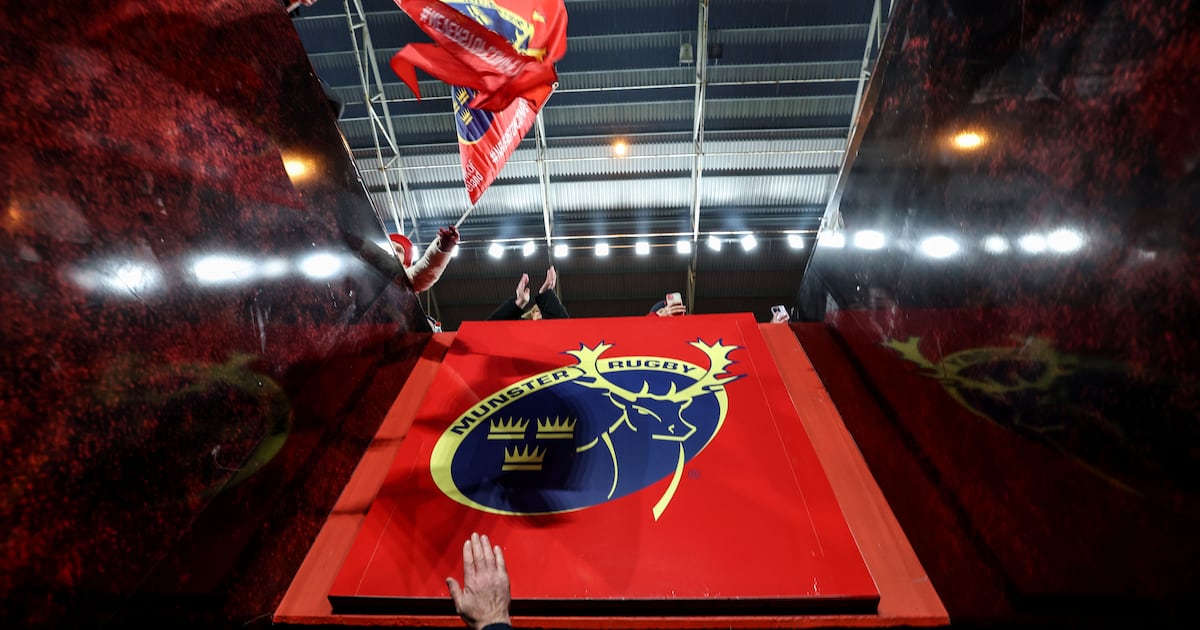
The next best I experienced was Munster.
I write the next few sentences with the deepest of respect and admiration for those Munster players and coaches from the first decade of this century.
 URC preview, women’s Six Nations and Munster’s controversial new appointment
You had to get a lot of things right to beat that Munster team, but the first non-negotiable was being able to match their streetfighting mentality. That Munster team played a game based on toughness. The only way to compete with them was to get down and dirty and find within yourself an even darker attitude.
Their sheer ruthless aggression had most teams beaten before kick-off.
We had a saying at Leinster during those years when preparing to face Munster: “Don’t take a knife to a gun fight.”
It meant that every individual had to prepare for the physical and psychological assault that was coming their way, channel their inner dog to attempt to return the physicality with interest. That is easy for a coach to say. For the players, it was a contest of the highest magnitude.
When you play a truly great club, you do not just take on the players, you must confront the aura of the entire organisation.
Munster were once such a club. They were spectacularly hard to beat.
Under the wonderful influence of legendary leaders such as Mick Galwey, Keith Wood, Peter Clohessy and Anthony Foley, allied to the exceptional talents of Ronan O’Gara, David Wallace, Paul O’Connell, Peter Stringer, John Hayes, Rob Henderson and so many others, Munster mixed their flint-hard edge with a simple yet highly-effective game plan that played to their strengths.
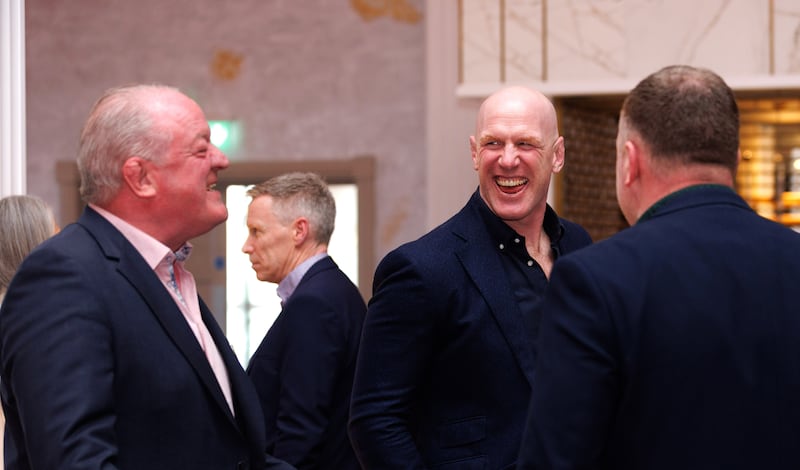 Mick Galwey and Paul O’Connell and a gala event in Cork this month marking the 20th anniversary of Munster’s first Heineken Cup triumph. Photograph: Tom Maher/Inpho
When Leinster and Munster clashed, things often got out of hand. In the heat of battle, words were said. Individuals were provoked. Punches, kicks and elbows flew. The rivalry was soul deep, fuelled by a competitiveness that at times crossed many lines. There was a lot of bad blood.
The surprising offspring of this bitter rivalry was a vast improvement in the performances of the Irish national team. Without Munster’s excellence, one that forced Leinster to rise up and reimagine their running rugby DNA, Ireland would not have experienced the last two decades of unparalleled success.
The foundation of that Munster success was their wonderful long-term chief executive, the late, great Garrett Fitzgerald. He was a gentleman as charming as he was intelligent, creative and shrewd, and his enduring collaboration with the exceptional coach Declan Kidney helped weave the tapestry of their dynasty.
At the turn of the century, Munster’s off-field administration was as exceptional as their on-field talent. Like every winning sporting club in the world, Munster’s success was conceived far away from the grandstands. Winning begins in the back rooms and boardrooms. The relationships forged between the chairman, the board, the CEO and the head coach are the cornerstones of every successful club. Munster had this in spades.
When a club churns through head coaches – as Munster have recently, constantly blaming a single individual for the entire organisation’s failure – it is a guaranteed symptom of significant administrative failures further up the food chain.
Rob Penney, Rassie Erasmus and Johann van Grann have all moved on from Munster to win major competitions. Although Graham Rowntree actually delivered the URC trophy, he also left the club. Clayton McMillan is a proven, successful coach, yet Munster continue to flounder.
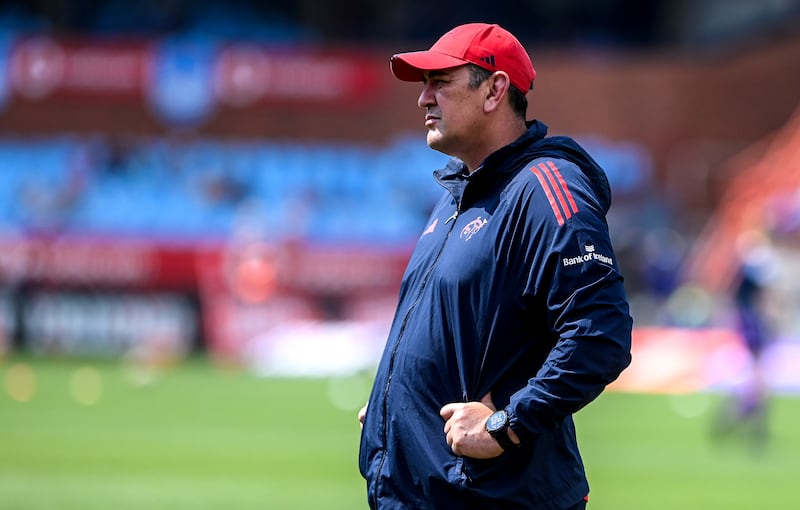 Head coach Clayton McMillan is not responsible for everything that happens at Munster. Photograph: Darren Stewart/Steve Haag Sports/Inpho
Below the professional team, Munster Rugby has many significant issues. The performances of its school system, its academy and its AIL clubs are at best underwhelming.
As we know, the financial situation of Munster is also far from secure. It is painful to see that at almost every level of its organisation, Munster Rugby is not performing as it should be. These significant organisation-wide failures cannot be attributed to the head coach of the professional team.
[ Munster outline voluntary redundancy plan to staff due to financial pressuresOpens in new window ]
The recent controversial appointment of Roger Randle as Munster’s new attack coach – along with the resignations from the Munster Professional Game Committee of Billy Holland, Mick O’Driscoll and Killian Keane – is proof that Munster requires a complete organisational, cultural and structural renewal.
The current players must also take responsibility during this difficult time. In their last two matches Munster have conceded 65 points. How a team defends is a window into their soul. In Munster’s case, that soul is full of doubt and hesitation. It looks like the season cannot end quickly enough.
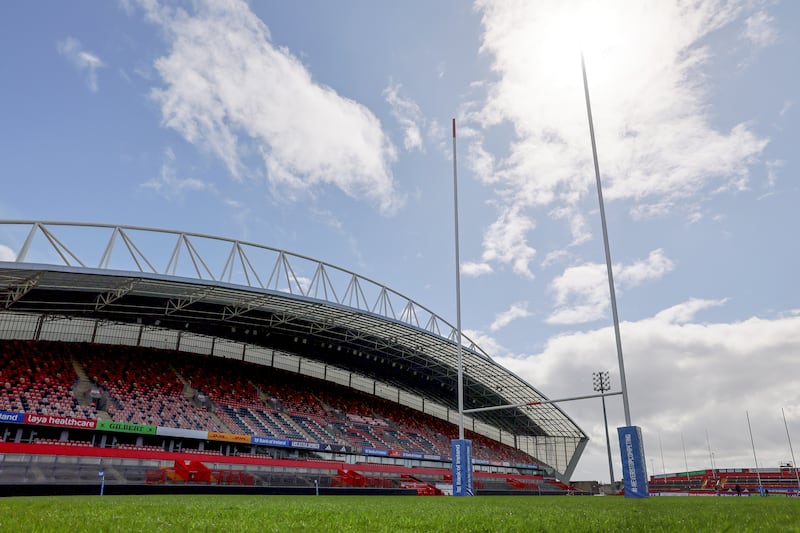 Munster’s soul seems to be full of doubt. Photograph: Laszlo Geczo/Inpho
The fact their clubs’ administration and finances are in trouble is no excuse to miss tackles and allow opposition teams to run up scores. In times like this, it is the duty of the players to inspire their province through their actions.
The provincial teams are at their best when they play with the character that represents the tenacity and spirit of their people. The connection between the people and their team is what has powered the provincial system, which has been one of Irish rugby’s greatest assets. Unlike the Munster teams I coached against, I see no streetfighter mentality in these Munster players.
Munster do have an administrative and cultural template of excellence from the days when Fitzgerald, Kidney, Galwey, Wood and Foley were their alphas.
What is required is a strong broom in the shape of an honest, open and independent review into every aspect of Munster rugby, followed by the appointment of a new generation of leaders who can create an organisation-wide plan that grows a new culture that respects the past but is designed for the future. A group of leaders who will view this difficult period of Munster’s history not as a time of chaos, but as an opportunity to renew, replenish and rebuild.