
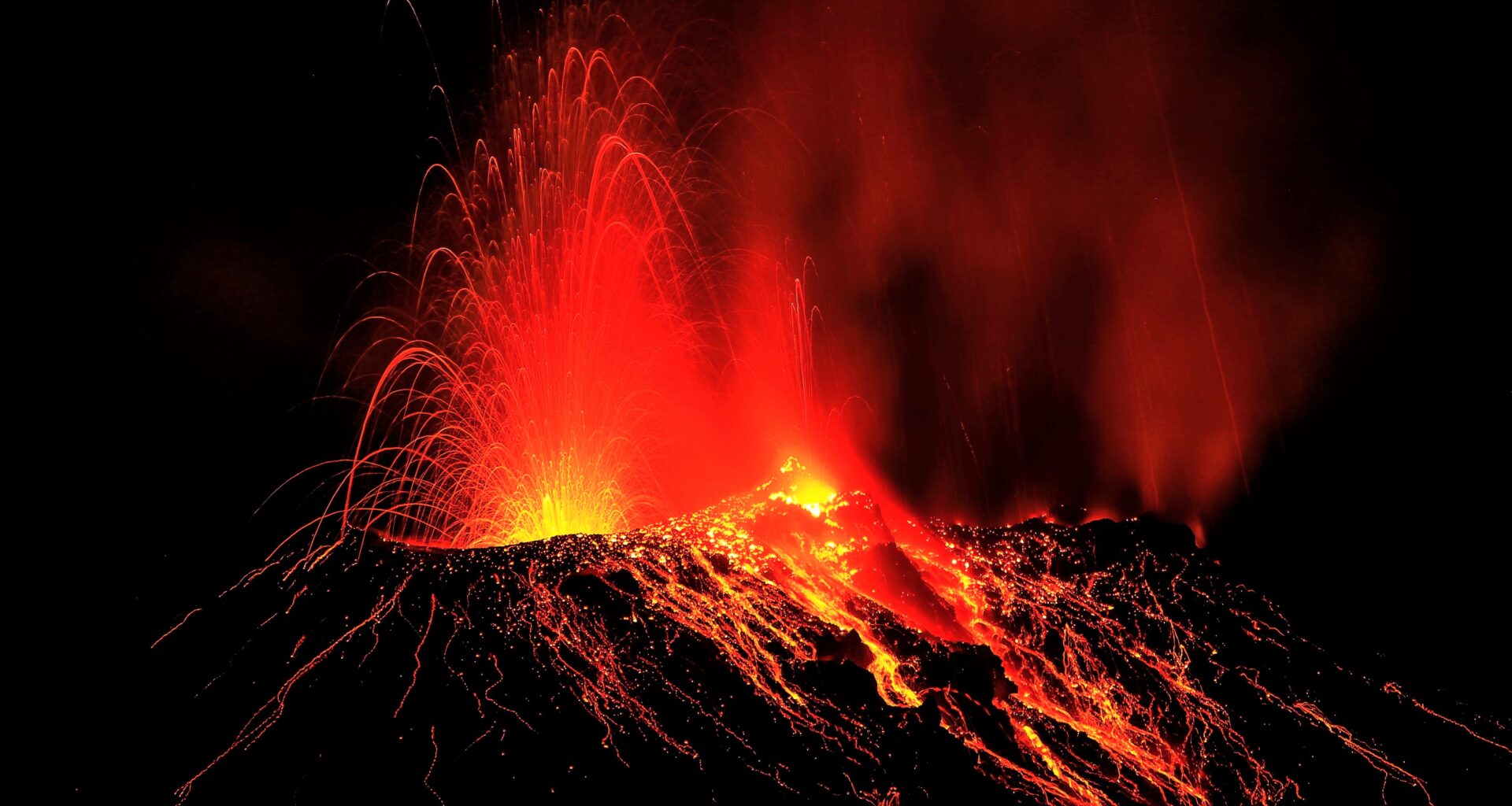
Volcanoes are usually linked to short bursts of climate disruption, but new research suggests their ash may also help drive long-term cooling.
A study of ancient eruptions in the Andes shows how ash falling into the ocean can trigger biological changes that ripple through entire marine food webs.

Those changes can pull carbon dioxide out of the atmosphere and store it deep in the ocean, revealing a powerful natural process that can shape the climate over millions of years.
Reading Earth’s hidden record
Ash-rich sediments and fossil records across the Southern Ocean margins preserve a tightly aligned record of volcanic pulses, algal blooms, and sweeping marine change.
By tracing those signals through geological deposits, Mark Clementz at the University of Wyoming connected repeated Andean eruptions directly to shifts in ocean productivity and atmospheric carbon.
The same interval shows rising algal abundance and declining carbon dioxide levels occurring alongside each major phase of volcanic activity.
That alignment points to a sustained ocean response rather than isolated events, setting up the need to explain how ash could repeatedly drive such large-scale biological and climate effects.
When ash feeds the sea
Explosive eruptions sent ash carrying iron, phosphorus, and silicon into waters around Antarctica, where even small shortages can hold back huge amounts of growth.
Iron, phosphorus, and silicon especially favor diatoms, tiny algae with glassy shells that drive about one-fifth of global primary production.
Classic experiments showed that extra iron can trigger blooms in the Southern Ocean waters when other nutrients are already present.
More growth at the ocean’s base meant more food above it, setting up the larger ecological changes preserved in fossils.
From surface to deep ocean
As algal blooms expanded, more carbon moved out of surface waters and into the dark ocean below.
Oceanographers call this downward transfer the biological pump – the process that sends surface carbon downward as living matter sinks.
When some of that material reaches deep water or mud, less carbon dioxide remains in the air. A single bloom fades quickly, but repeated bursts can keep adding to long-term storage long after the ash settles.
Whales follow food
Marine mammal fossils show that whale life was changing rapidly during the same interval as the ash pulses. Median baleen whale length rose from about 16 feet to 39 feet as feeding grounds and coastlines changed.
Modern baleen whales move more than 3,700 tons of nitrogen each year between feeding and breeding waters.
Larger ancient whales likely strengthened nutrient recycling and stored carbon in sinking bodies, although the new models did not fully account for those effects.
Rebuilding ancient eruptions
To test whether the timing was more than coincidence, the researchers recreated and the ocean’s response.
Most of the simulated ash traveled east across South America into the South Atlantic and then farther toward the Southern Indian Ocean.
Some ash also fell close to shore along the Pacific, giving nearby waters a direct nutrient dose.
Eastward ash pathways made the ring of ocean around Antarctica the clearest target for a repeated fertilizing effect.
Ash sparks fast ocean cooling
When simulated ash hit surface waters, the model ocean reacted strongly and almost at once.
Diatom growth in surface waters more than doubled during the first two years after each nutrient pulse.
Over 300 years, four eruptions helped the ocean pull slightly more carbon dioxide out of the air with each repeating cycle.
Short-lived eruptions could therefore stack their climate effects through time instead of disappearing as isolated events.
Small bursts, lasting impact
Longer model runs showed that spacing mattered almost as much as eruption size in shaping long-term carbon loss from the air.
A single burst of nutrients lowered carbon dioxide for a short time before the ocean gradually returned to its earlier state.
When these bursts kept repeating, the drop in carbon dioxide became larger and lasted much longer, especially when dust and ash built up together.
Repeated nutrient pulses can therefore matter more for climate over time than one giant blast.
Forces combine to cool Earth
Scientists call this interval the Late Miocene, the geologic stretch from about 11.6 to 5.3 million years ago.
“Identifying the mechanisms that drove this transition is critical, particularly for understanding how Earth systems may respond to ongoing and future climate change,” said Clementz.
Growing ice, changing winds, and reorganized currents were also in play, so ash likely worked with other forces rather than alone.
The paper argues that ash was an overlooked contributor, not the only force behind the planet’s cooling.
Lessons from ancient climate
The study does not offer a fix for modern warming, because today’s carbon surge is arriving much faster.
“By identifying links between volcanism, ocean productivity and carbon dioxide drawdown, it provides insight into mechanisms that can influence global climate over long time scales,” said Clementz.
Climate does not move through the air alone – water, food webs, and sediments all help set the pace.
Seen together, ash, blooms, whale turnover, and falling carbon dioxide read less like separate events and more like one connected episode.
That broader view can sharpen decisions about climate resilience, natural resources, and the risks of rapid change. Better records of eruption size, ash chemistry, and ancient ocean circulation should clarify how much cooling this chain actually caused.
The study is published in the journal Communications Earth & Environment.
—–
Like what you read? Subscribe to our newsletter for engaging articles, exclusive content, and the latest updates.
Check us out on EarthSnap, a free app brought to you by Eric Ralls and Earth.com.
—–