
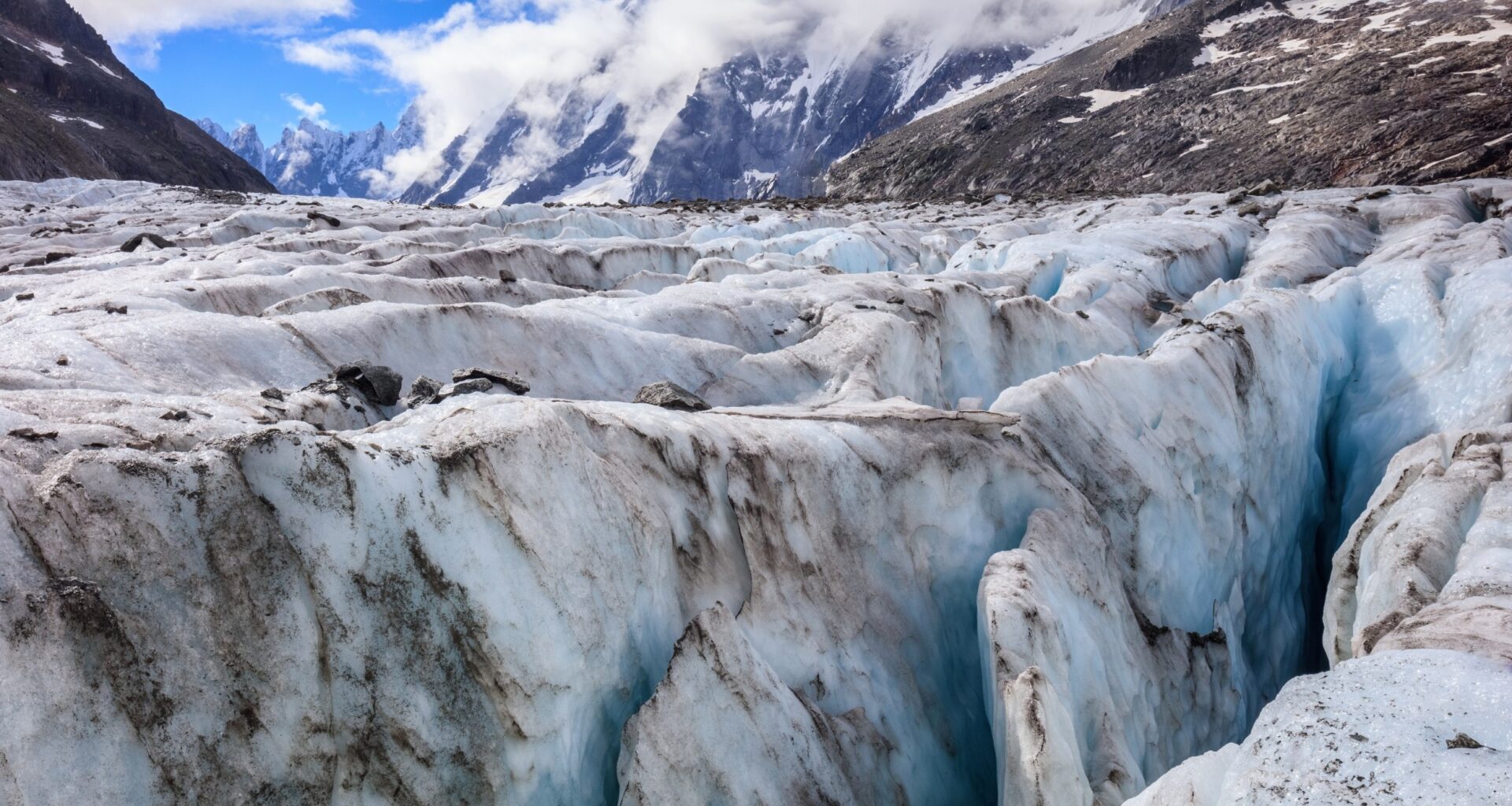
Faster rock weathering on land helped drive Earth’s plunge into a deep ice age about 350 million years ago, according to new research.
The study turns a long-running climate mystery into a more direct story of carbon loss, ocean change, and a planet tipping toward lasting ice.
Evidence sealed in rocks

Ancient limestone in Nevada and Montana preserves the chemical trail of that turning point in Earth’s history.
Reading those layers, Dr. Feifei Zhang at Nanjing University found the same sharp lithium drop in both rock sections.
That fall moved in step with a major rise in carbon isotopes between 359 and 347 million years ago, tightening the timing of the transition.
Because the same pattern appears in two separate basins, the signal demands a broader explanation than any local geological quirk.
Why weathering matters
Rainwater slowly eats into fresh rock during silicate weathering, a chemical process that locks carbon into dissolved material.
Rivers then carry that material to the sea, where it can end up buried in marine sediments.
When weathering speeds up over large areas, the atmosphere can lose carbon dioxide faster than volcanoes replace it.
That made the newly measured signal more than a curiosity, because it pointed to a direct route from rock breakup to cooling.
Lithium balance takes a plunge
Tiny changes in lithium isotopes, the balance between two lithium forms, gave the team its clearest clue.
During rock weathering, lighter lithium tends to get trapped in new clay, while dissolved lithium keeps a different balance.
The researchers saw the lithium balance in seawater plunge by about 12 parts per thousand, a sign that continental weathering had intensified.
Older arguments had leaned on rougher clues, so this cleaner record gave the long-running debate firmer ground.
Checking the signal
Ancient rocks can mislead when later fluids or stray mineral grains overwrite the chemistry they first recorded.
To avoid that trap, the team screened the samples for contamination and compared two sections that formed in different settings.
Both sections showed the same broad swing, which made burial changes, hot fluids, and local mixing far less convincing.
That does not erase every uncertainty, but it leaves a global environmental jolt as the most plausible explanation.
Testing the weathering theory
Computer simulations then tested whether stronger weathering could actually drive the chain of changes seen in the rocks.
Those runs reproduced a roughly 30 percent rise in silicate weathering and a sharp fall in atmospheric carbon dioxide.
In the model, carbon dioxide dropped from about 1,000 parts per million to roughly 200, plus or minus 200.
That range would have pushed Earth much closer to the conditions needed for ice to build and persist.
Why did erosion speed up?
The study does not pin the trigger on one culprit, but it narrows the field to two strong ideas.
One involves rising mountain belts near the equator, where uplift would expose fresh rock and quicken erosion.
Another points to the spread of early seed plants, whose roots and soils could have helped attack minerals.
Either path fits the data, and both would funnel more dissolved nutrients toward coastal seas.
Oceans lost oxygen
More nutrients in seawater would not stay quiet, because marine microbes grow faster when phosphorus and other essentials rise.
As that growth expands, dead organic matter sinks and rots, using up oxygen in deeper water.
The models matched that story with stronger productivity and broader anoxia, water deprived of usable oxygen, during cooling.
That link matters because it joins land chemistry to marine stress, not just to colder air.
A linked sequence of causes
For years, scientists argued over whether buried organic carbon or faster rock weathering did most of the cooling.
This study leaned hardest on weathering, yet it also showed how weathering could feed ocean productivity and bury more carbon.
That combination helps explain why the carbon isotope jump was so large, and why older records had already pointed to marked cooling.
Instead of picking one winner, the paper turns the old rivalry into a linked sequence of causes.
Lessons from the past
Natural weathering still removes carbon dioxide today, but it acts over spans far longer than human emissions.
“The past holds the clues to understanding the present and predicting the future,” said Dr. Zhang.
That idea lands because climate models need to know not only what removes carbon, but how slowly each pathway works.
No ancient process can cancel modern pollution on human timescales, though deep-time evidence can still sharpen long-range forecasts.
By tying one chemical trail in ancient seawater to rock breakdown on land, the study gives this climate reversal a workable mechanism.
Better records from other regions should test whether mountains, plants, or both pushed Earth across the threshold into ice.
The study is published in the journal National Science Review.
—–
Like what you read? Subscribe to our newsletter for engaging articles, exclusive content, and the latest updates.
Check us out on EarthSnap, a free app brought to you by Eric Ralls and Earth.com.
—–