
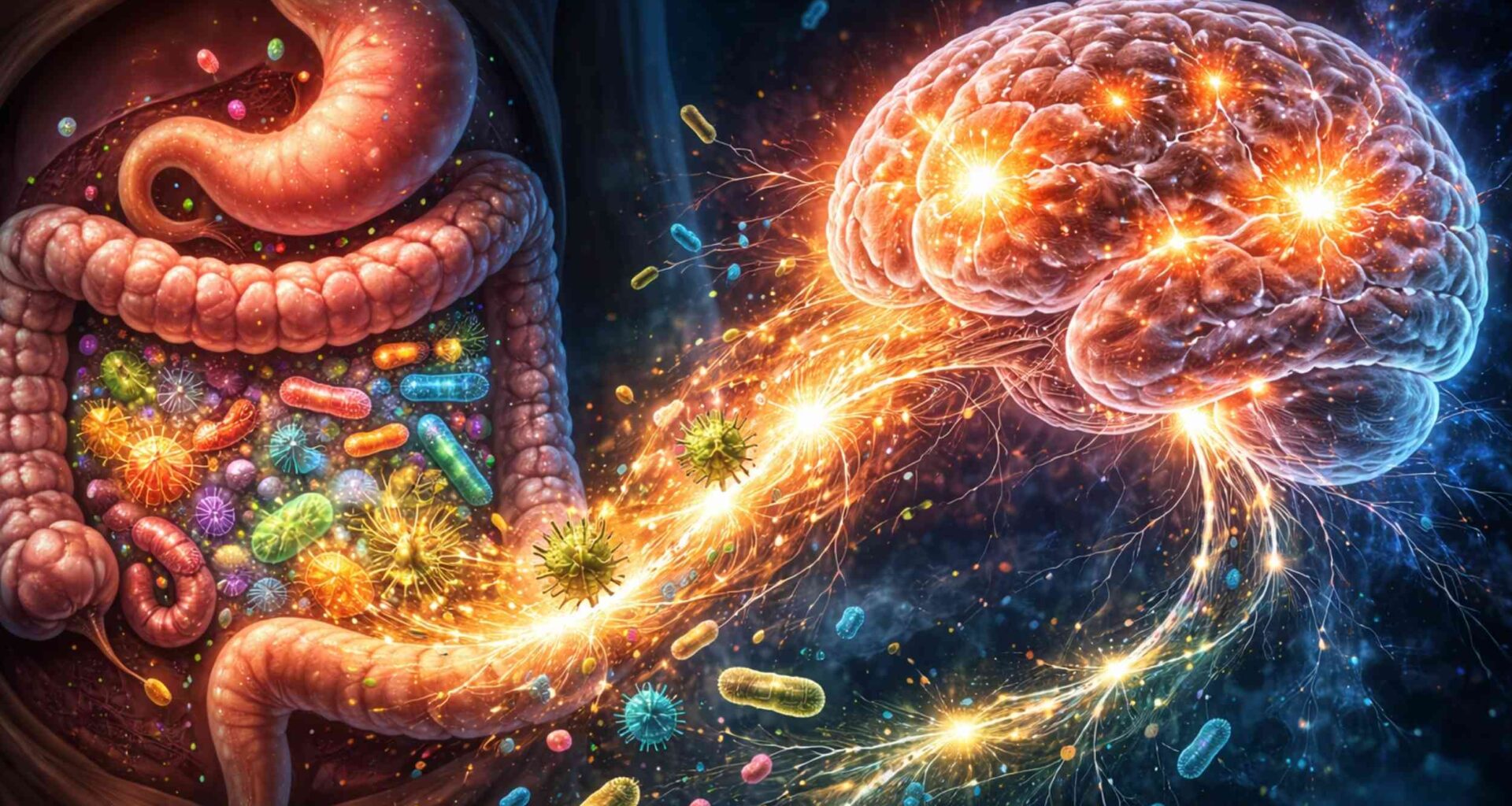
Harmful sugar made by gut bacteria can trigger immune damage connected to two devastating brain diseases.
This data points to the gut as an active driver of disease, not just a bystander far from the brain.
Tracking disease signals in the gut

In patient samples, this sugar ran parallel to signs of ongoing immune attacks.
Dr. Aaron Burberry of Case Western Reserve University (CWRU) linked the bacterial sugar to immune damage in the brain.
That link held across both diseases, indicating a shared process rather than separate, unrelated changes.
The finding focuses on how signals from the gut may be contributing to damage, and why single clues have been less reliable.
From mutation to immune breakdown
The study offers a clearer reason some relatives may get sick while others do not.
Some families carry a C9ORF72 mutation, which is one of the main inherited causes of amyotrophic lateral sclerosis (ALS) and frontotemporal dementia (FTD).
When the gene’s normal cleanup job is weakened, immune cells seemed less able to clear the bacterial sugar.
Gut microbes then appeared more dangerous, because an ordinary immune signal could swell into an inflammatory overreaction.
That chain may explain why one carrier remains healthy, while another moves toward paralysis or severe changes in behavior and language.
Harmful effects of sugar
Trouble started when immune cells encountered glycogen, a stored sugar, made by certain gut bacteria.
Those cells released cytokines, chemical signals that serve as immune alarms and could spread inflammation far beyond the gut.
Burberry said some harmful gut bacteria make forms of glycogen that set off immune responses and damage the brain.
Once that alarm spread, researchers traced the route into brain tissue and the trail of damage.
Differences in dangerous glycoge
Not every stored sugar caused trouble, because the most harmful versions were packed into a denser, more complex shape.
That compact layout likely made the material harder for cells to break down, letting the inflammatory signal linger.
Several kinds of bacteria survived, but one stood out because it could settle into germ-free mice and cause more damage.
As a result, a modifiable bacterial product looked easier to target than a gene fixed from birth.
Effects of frontotemporal dementia
ALS destroys motor neurons, so people can gradually lose the ability to speak, move, swallow, and breathe.
These cells carry signals from the brain and spinal cord to the muscles, which is why the disease gradually robs the body of control.
FTD damages parts of the brain involved in behavior, judgment, and language, and those changes often appear early.
Because these illnesses can overlap in the same person, a trigger that touches both would carry unusual weight.
Bacteria breaking brain defense
One type of gut bacteria proved especially harmful when researchers introduced it into mice lacking their usual microbes.
In animals missing C9ORF72, it helped break down the blood-brain barrier, the protective layer around the brain, and let immune enter.
Far worse damage appeared when that microbe joined a larger gut community, suggesting that environment dictated how destructive it became.
That result fit what happens in the gut, where bacteria rarely act alone.
Early promises of an enzyme
Relief came when the team gave mice alpha-amylase, a digestive enzyme that helps break down large sugar chains, by mouth each day.
Breaking apart the bacterial glycogen improved survival, even after disease-related inflammation had already taken hold.
Those results made bacterial glycogen look like a treatment, one that may one day be tested in people.
Even so, the treatment did not fix every problem in mice, so any therapeutic promises remain in question.
Signs from inside the brain
Inside the brain, treated animals showed quieter microglia, the immune cells that watch for damage in brain tissue.
Levels of inflammatory molecules fell, and leakiness in the blood-brain barrier eased at the same time.
That pattern mattered because activated microglia could damage nearby neurons when alarm signals stayed high for too long.
Motor function barely improved during the short test window, so changes in the brain may occur before visible symptoms improve.
Further research is needed
Human stool samples pointed in the same direction, making the mouse findings significant.
Across 35 people, the harmful glycogen appeared in 20 samples, including 11 of 17 people with sporadic ALS.
It also showed up in eight of nine patients tested within the first 18 months of disease. That timing hinted that the marker might help flag disease early, though this first human sample was still small.
The work connected gut chemistry, immune misfires, genetic risk, and brain injury into one chain.
Larger human studies still need to show who carries these sugars, when they appear, and whether breaking them down can truly slow disease.
The study is published in the journal Cell Reports.
—–
Like what you read? Subscribe to our newsletter for engaging articles, exclusive content, and the latest updates.
Check us out on EarthSnap, a free app brought to you by Eric Ralls and Earth.com.
—–