
“There was this funny thing on Saturday Night Live UK” are words I recently found myself saying when a conversation turned inexorably to the White House.
We are at the halfway point of this debut run of Sky’s very decent British version of the American sketch institution, and last week’s bit with Emma Sidi impersonating Melania Trump was too good not to attempt to describe.
“Never have I ever been friends with Jeffrey Epstein,” Sidi’s Trump declares as she pops up from behind a hedge to interrupt a random London barbecue game of Never Have I Ever.
Throughout this topical yet daft sketch, Melania – her stiffness given the comic-exaggeration treatment – can’t stop bringing Epstein up, though the target of the joke is not so much Trump herself as how her unexpected statement derailed her husband’s efforts to stifle mention of his own relationship with the late sex offender.
Still, four episodes into SNL UK, a question mark hangs over this valiant enterprise. Does it have a future? The show is on hiatus this weekend before it returns to Sky One and Sky’s various digital platforms next Saturday, when it will be hosted by Nicola Coughlan, with Aimee Lou Wood, the Bafta-winning star of Sex Education and The White Lotus, lined up to present the following week. Then there are just two confirmed episodes left.
The ex-Derry Girl has already appeared on the show courtesy of a cameo in the first episode, hosted by Tina Fey. Although it showed definite promise, this was the ropiest of the instalments so far, which is how it should be.
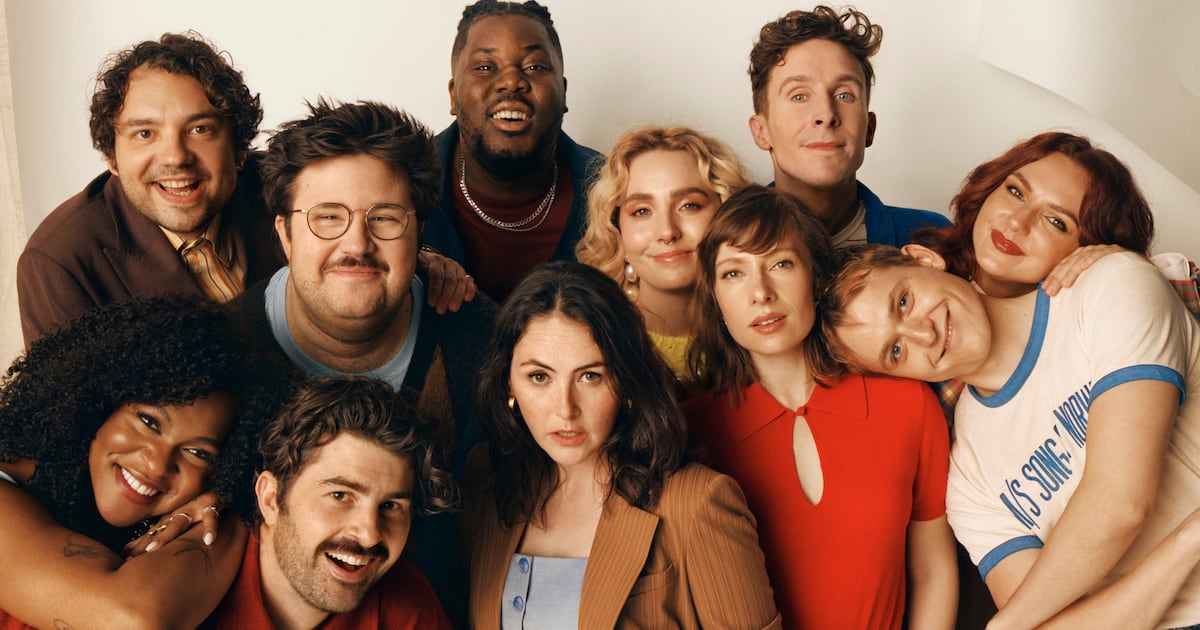
Even over the course of four weeks, the young, fresh, charismatic comics in the SNL UK cast have grown in confidence and now seem right at home on live television, while its large team of writers has spanned sharp-edged satire, delightfully absurd character comedy and parodies of shows more firmly embedded in the schedules than SNL UK itself.
One of its best sketches, for instance, mines suspicions of racial bias on reality TV, combining surreal visual humour with the often overlooked advantage of having an actual point to make.
Viewers are introduced to Great Big Crab Man and its Traitors-esque round table, at which a very confident contestant (Sidi again) appears ridiculously oblivious to the giant crustacean sitting beside her and instead votes to eliminate the remaining ethnic-minority contestants one by one (starting with the most enjoyable of the SNL UK hosts so far, Riz Ahmed).
A Mastermind segment, meanwhile, isn’t about the Clive Myrie-hosted quiz show so much as family dynamics of a relatable sort, with an anxious contestant answering questions on his specialist subject: “Things my mum has told me about people I’ve never met and have no connection to.”
Not everything lands, but that’s normal for sketch shows, and there’s a high degree of subjectivity here. What strikes one viewer as hilarious will seem bafflingly flat, or just plain baffling, to another.
For me, the only consistent negative has been the Americanisms imported from the parent show. They might be useful for recognition value, especially given that SNL UK is also playing in the US via the Peacock streaming service, but some of these format elements manifest oddly on this side of the Atlantic.
The end-of-show clapping and hugging feel distinctly un-British, while even the celebratory announcement of the cast seems a touch brash. As for the concept of the “cold open”, I must admit that the phrase alone makes me shudder.
But as someone who grew up in an era when quotable and much-replayed sketch comedy was a default source of entertainment – and a bankable TV genre in every sense of the word – I welcome any signs of a resurgence. Sky’s sizeable investment has been a pleasant surprise.
[ Raye and Amy Winehouse comparisons are unfair and ironicOpens in new window ]
Do enough of us feel the same for it to keep spending the cash? The key sum for the broadcaster and its parent company, Comcast – which also owns Peacock and the original SNL’s home network, NBC – involves adding the commercial benefit of SNL UK’s viewership (the linear-TV portion of which is negligible) to the value of its clips’ online views (yet to achieve pay-dirt virality) and making a judgment on whether the total justifies a continued outlay. At a reported cost of more than €2 million an episode, there is much to recoup.
While this dry equation is tough to calculate from outside the Sky boardroom, there must be some serious doubts here. SNL UK can make something of a loss on paper and remain on air on the basis that it brings intangible brand goodwill to Sky, the Now streaming platform and Peacock. There’s a difference between this and just haemorrhaging money forever.
The jokes may be mostly sure-footed, but the uncertain economics of television are no laughing matter. If SNL UK falls victim to them, it will be a huge shame.