

Listen to this article
Estimated 4 minutes
The audio version of this article is generated by AI-based technology. Mispronunciations can occur. We are working with our partners to continually review and improve the results.
The Northwest Territories government says it’s not yet clear how Alberta’s latest proposed health reforms, if passed, would change medical care in the province for N.W.T. residents.
The Alberta government’s Bill 29, tabled this month would allow patients to pay for private preventative health testing without a doctor’s referral.
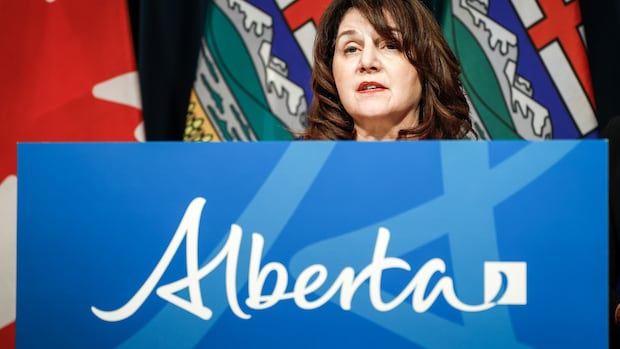
Alberta’s Primary and Preventative Health Services Minister Adriana LaGrange declined an interview to explain how the bill would apply to the N.W.T. patients.
In an email Friday, Alberta’s health ministry said N.W.T. residents won’t see a change in their access to testing. The spokesperson said many patients from the territory already pay for private care in the province, and that Bill 29’s application to Northerners will be clarified with the regulations.
Northern doc expects ‘longer, underfunded line’
Eleanor Crawford, a Nunavut-born family physician who works in both territories, worries Bill 29 could eventually affect Northern patients. Edmonton is a key referral centre for Western Nunavut and the N.W.T. and staffing in health care professions is a “zero sum game,” she said.
Privatizing health care drives up market rates for health care workers, said Crawford. To compete, public systems and hospitals increase costs, which may result in increased service fees passed off to the N.W.T., she said.
“The Alberta government says these bills are about choice and efficiency, but ultimately they’re about creating a fast lane for wealthy people and leaving everyone else, especially Northerners, in a longer, underfunded line,” she said.
LaGrange said in a press conference April 13 that Bill 26: the Health Statutes Amendments Act would “save lives” through early detection, requiring less invasive treatments, and resulting in better health outcomes.
In a video last year, the minister named MRI, CT and full-body scans as potential private health services. In the press announcement last week, she said the province won’t have concrete details for the public until the fall.
Privatizing some tests will free up space in the public system, said LaGrange.
“Publicly funded, medically necessary testing will always remain available and prioritized,” she said.
‘Not yet determined’
Northwest Territories Health Minister Lesa Semmler declined an interview on Bill 29.
A ministerial spokesperson said in an email the proposed bill’s impact on N.W.T. residents “cannot yet be determined.”
Spokesperson Jeremy Bird said in an email Friday that Semmler declined to comment on Bill 29 because “details around how it may be implemented, if passed, are not yet clear.”
Any changes to the N.W.T.’s agreements with Alberta will be “discussed and negotiated between governments,” he said.
Bird said N.W.T. residents may have questions about what Bill 29 means. The territorial government is focused on improving primary care at home and reducing the need for medical travel.
Investing in Northern health workers
Union of Northern Workers President Gayla Thunstrom called for greater investment in recruitment and retention of Northern health workers they represent.
Thunstrom said the N.W.T. government should not support further privatization, which she said puts those who can’t pay “at the bottom of a two-tier system.”
Crawford said Bill 29 is one of two recent health care reforms put forward by the Alberta government that may affect the N.W.T.
“Shifting from a system based on medical need to one based on ability to pay further erodes universal health care,” she said.
Crawford is a member of Canadian Doctors for Medicare, a national organization advocating for universal health care, which has argued Alberta’s Bill 11 contravenes the Canada Health Act by letting doctors work in both the private and public system.
Crawford urged the N.W.T. government to use the “negotiating power” it has through bilateral health agreements with Alberta, and said there are still opportunities to improve Alberta’s system without privatization.
Recommendations from a 2021 Auditor General of Alberta report finding “a lack of efficiency in intake and scheduling” for diagnostic services, have not been followed before considering privatization, she said.