
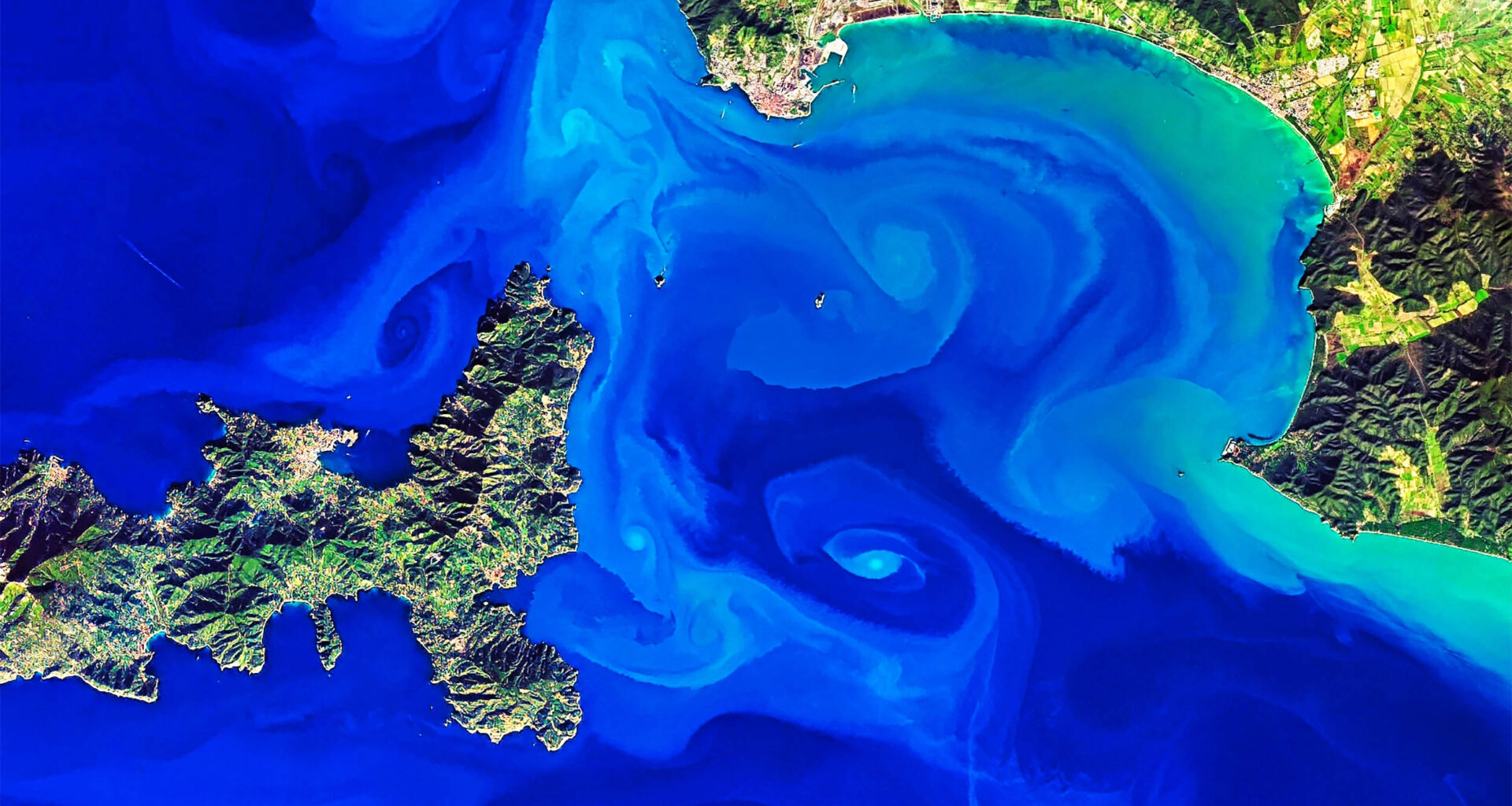
Coastal oceans don’t always change in obvious ways. You might expect stronger currents to drive bigger climate impacts. However, new research shows something quieter and more disruptive is happening beneath the surface – they are called ocean eddies.
Instead of speeding up, powerful ocean currents like the Agulhas Current are churning more intensely, splitting warm and cold water into separate layers. That hidden shift is helping fuel sharper coastal extremes, even when the overall flow looks unchanged.
Detecting ocean eddies

Across the Agulhas Current off South Africa’s southeastern coast, a dense line of moorings captured this growing divide between warming surface water and cooling depths.
Analyzing those observations, Dr. Lisa Beal at the University of Miami’s Rosenstiel School linked the change directly to intensifying ocean eddy activity that is reshaping the current’s structure.
Frequent small-scale instabilities along the inshore edge repeatedly pushed cold, nutrient-rich water upward while trapping heat closer to the surface offshore.
That repeated separation of heat between layers sets up stronger coastal extremes, pointing to a process that demands closer examination in the sections that follow.
A growing temperature divide
Heat did not spread evenly once the swirls squeezed warm, salty water toward the current’s center and colder water onto the shelf.
That sorting increased stratification – creating a sharper split between warm surface water and colder deep water.
Near the surface, older satellite records had already shown warming at three or four times the global ocean average.
Below, the new measurements showed why deep water could stay cool while the system still sent less heat toward higher latitudes.
Heat takes a different path
Ocean eddies do more than stir the current; they also push heat and salt sideways, into the current and off the shelf.
Along the coast, that motion fed upwelling, deep water rising toward the surface, and carried cold, nutrient-rich water onto the shelf.
Because warm surface water often hid that colder pulse from satellites, the deeper cooling was easy to miss.
That hidden exchange helps explain why coastal stress can rise even when satellites show only a warm surface.
Tiny ocean eddies drive big changes
Large meanders, some about 62 miles across, grabbed attention, but they appeared during only about 10 percent of the record.
By contrast, the smaller 6-mile frontal instabilities kept firing along the inshore edge and supplied two-thirds of the cumulative heat loss there.
Each event looked brief, yet the repeated nudges changed the background state more than a few spectacular bends.
Climate change can therefore work through countless modest jolts, not only through the biggest visible disruptions.
The atmosphere feels the shift
South Africa’s atmosphere sits above that altered surface, so warmer surface water can feed more moisture into passing weather systems.
Earlier work had already linked the Agulhas Current to rainfall along South Africa’s southeastern coast and the air above the current.
The new result adds the missing ocean piece by showing how intensified swirls can warm the surface without increasing total flow.
Over land, rising moisture and sharper coastal temperature contrasts can load the dice for heavier rain.
A stable flow hides change
One striking part of the study is what did not change: the total amount of water the current carried stayed stable.
Despite that steady total, the current broadened, moved heat around differently, and created stronger contrasts between surface and depth.
Old ways of tracking change often focus on how much water moves, not on what the flow rearranges.
That gap hints that climate monitoring may need better measures of transport caused by these swirls, not just current strength.
This pattern appears elsewhere
Far from South Africa, other major coastal ocean currents show related signs, including warming surfaces, broader paths, and shoreward movement.
Oceanographers group systems like the Agulhas and Gulf Stream as western boundary currents, fast poleward flows hugging ocean-basin edges.
A recent model-based study also found many of them intensifying onshore as the upper ocean stratified in a warming climate.
“Our findings suggest that eddies are fundamental in shaping how the ocean responds to climate change,” said Dr. Beal.
Coastal life faces new stress
Coastal ecosystems feel both sides of this change because extra nutrients can support growth, while harsher temperature swings raise stress.
“More eddy activity is accelerating surface warming in the Agulhas Current, while simultaneously enhancing hidden upwelling that cools deeper waters,” Dr. Lisa Beal said.
Cold, nutrient-rich water can boost marine growth on parts of the shelf, yet fast swings between warmth and cooling can punish marine life.
Managers and fishing communities may face a trickier future, with winners and losers separated by depth, season, and distance offshore.
More ocean eddy studies needed
Some uncertainty remains because the strongest ocean currents bend instruments downward, leaving the near-surface layer harder to measure directly.
Another limit is geography: the array sampled one stretch of one current, not every latitude where conditions differ.
Even so, the pattern matched known ocean behavior and independent evidence that the Agulhas Current has been broadening while surface waters warm. That makes the result useful now while also making a clear case for longer records in powerful ocean currents.
Looking ahead, the study points to a climate future where coastal seas can grow more extreme not by speeding up, but by churning harder.
Better tracking of these swirls could improve forecasts for rainfall, fisheries, and coastal heat stress long before the damage appears.
The study is published in Nature Climate Change.
—–
Like what you read? Subscribe to our newsletter for engaging articles, exclusive content, and the latest updates.
Check us out on EarthSnap, a free app brought to you by Eric Ralls and Earth.com.
—–