
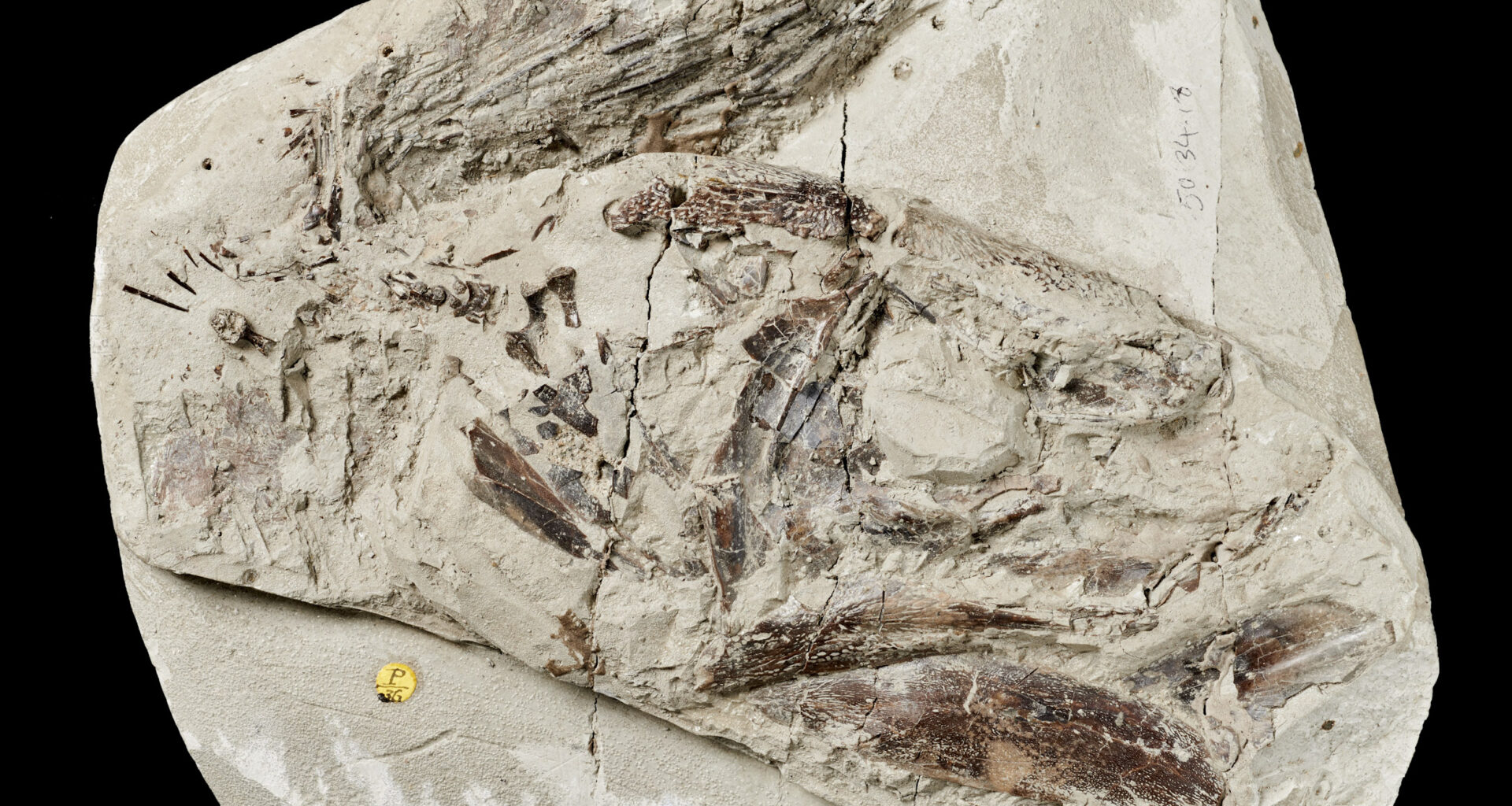
Emma Bernard, fossil fish curator from the Natural History Museum, London, said: “It’s really exciting that Jack and Sam – who are both early in their careers – identified this specimen as a new species. This shows the scientific value of museum collections, and why it is important to continue holding specimens in trust for society while also continuing to research them. Who knows what else technology will reveal about these specimens in years to come!
“Our upcoming exhibition Jurassic Oceans: Monsters of the Deep uses our world-leading collection to take visitors on a deep-dive to meet some of the most fascinating creatures to ever swim beneath the waves.”
The University of Portsmouth runs the largest undergraduate palaeontology course in the UK, with over 150 students currently enrolled across three years of study.
The BSc (Hons) Palaeontology degree , accredited by The Geological Society of London, was the first palaeontology course in the UK, and celebrates its 30th anniversary this year.
It offers a uniquely hands-on learning experience thanks to Portsmouth’s proximity to the most prolific dinosaur site in Europe – the Isle of Wight – nicknamed “Dinosaur Island” for its rich fossil heritage – and the Jurassic Coast.
The research was published in Papers in Palaeontology .