
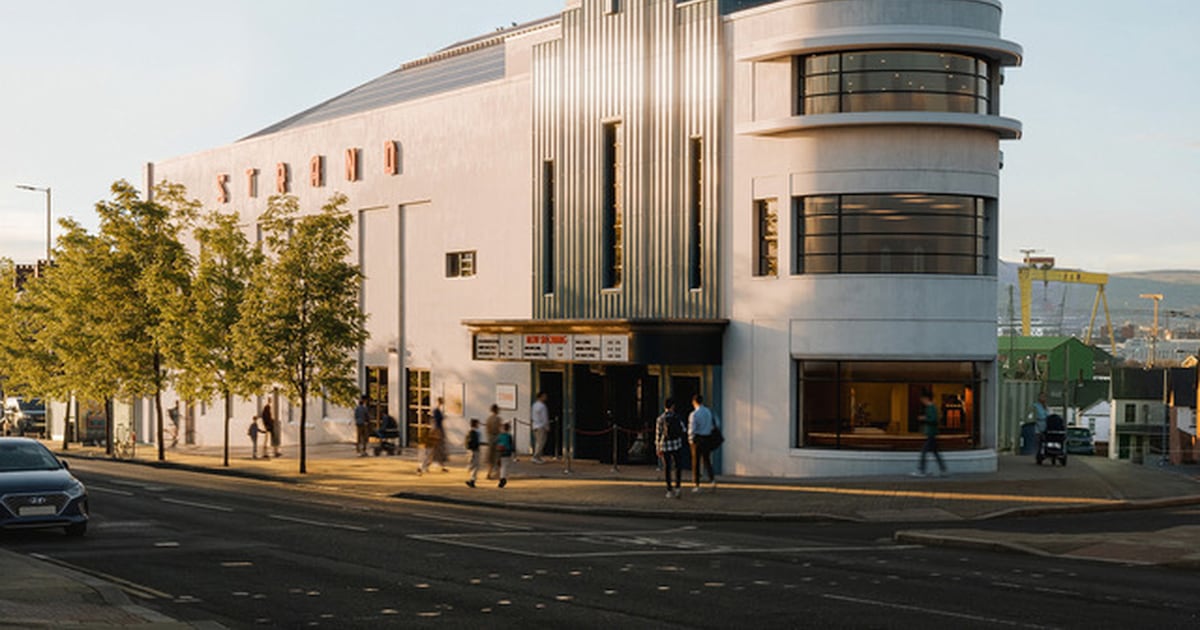
The last surviving 1930s picture house in Northern Ireland has marked its 90th anniversary with a treasure trove of discoveries from its past.
The Strand, in east Belfast, is currently undergoing a major renovation project.
This has led to the finding of original seating and a speaker from 1935, as well as a little tin cup, which is thought to be linked with a Harland & Wolff worker at the nearby world-famous shipyard.
The Strand’s heritage officer Rosie Hickey emphasised that back then cinemas were “all about luxury and glamour”, known as picture houses or palaces.
She said the seats they found were in screen two, which used to be the stalls.
“It’s the sides of the seats we found, they were very, very heavy metal, painted in a kind of bronzy gold paint. For me, to find the actual seats and the original speakers, is amazing,” she said.
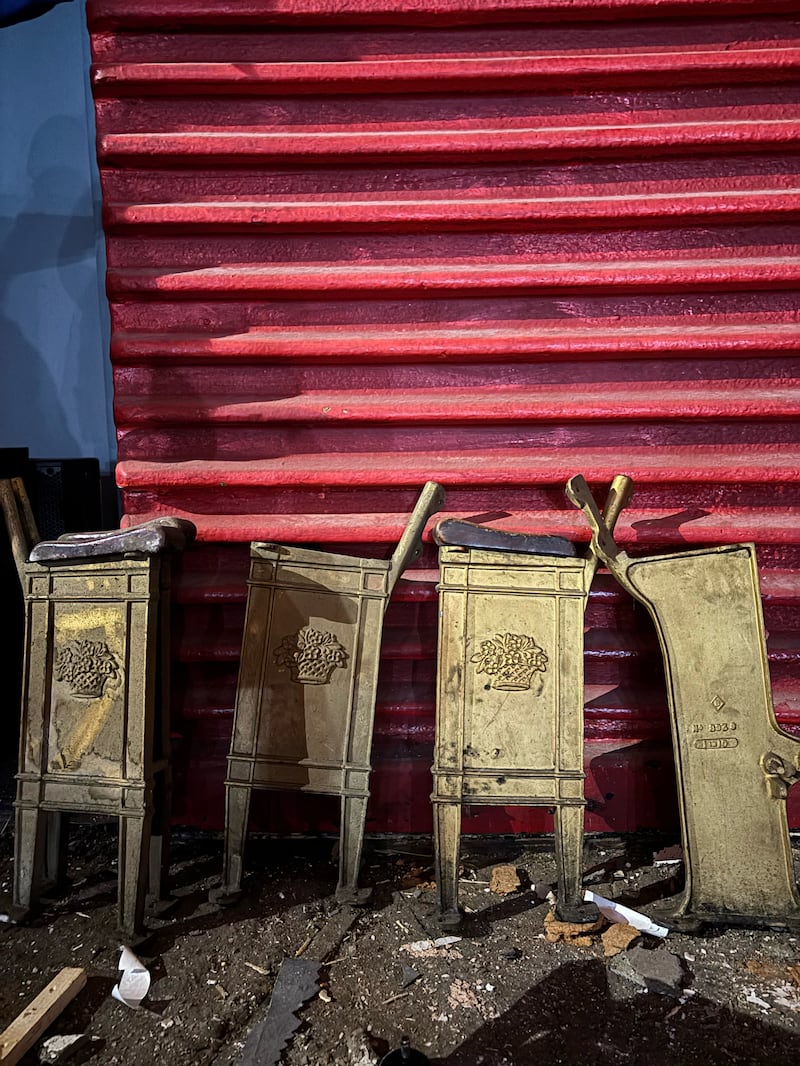 Original chair sides found during the refurbishment of the Strand in Belfast. Photograph: The Strand/PA Wire
The work has also seen the peeling back of paint to reveal the previous colour scheme.
She added: “You might know the Strand as mostly red in colour, but if you scrape away the paint, you can see that at one point in the 80s the walls were a garish purple colour, and if you keep scraping, you’ll find a bronze/gold effect colour.
“It’s amazing to peel away the different layers of time; it’s amazing for us that the building is kind of unveiling its secrets during the renovation project.”
[ Northern Ireland hospital doctors to be balloted on industrial actionOpens in new window ]
The renovation work has also yielded soft drinks cans from the 1980s, following the Strand’s rebirth as a multiplex.
She added one of the most mysterious finds was a little tin cup.
“Just a very modest tin cup with a handle, but that’s exactly the type of tin cup that would have been used by Harland & Wolff workers, they would have traditionally had their tin cup with their tea, along with a piece, a sandwich,” she said.
“The steel frame that is the bones of the Strand would have been riveted and put together by Harland & Wolff workers.
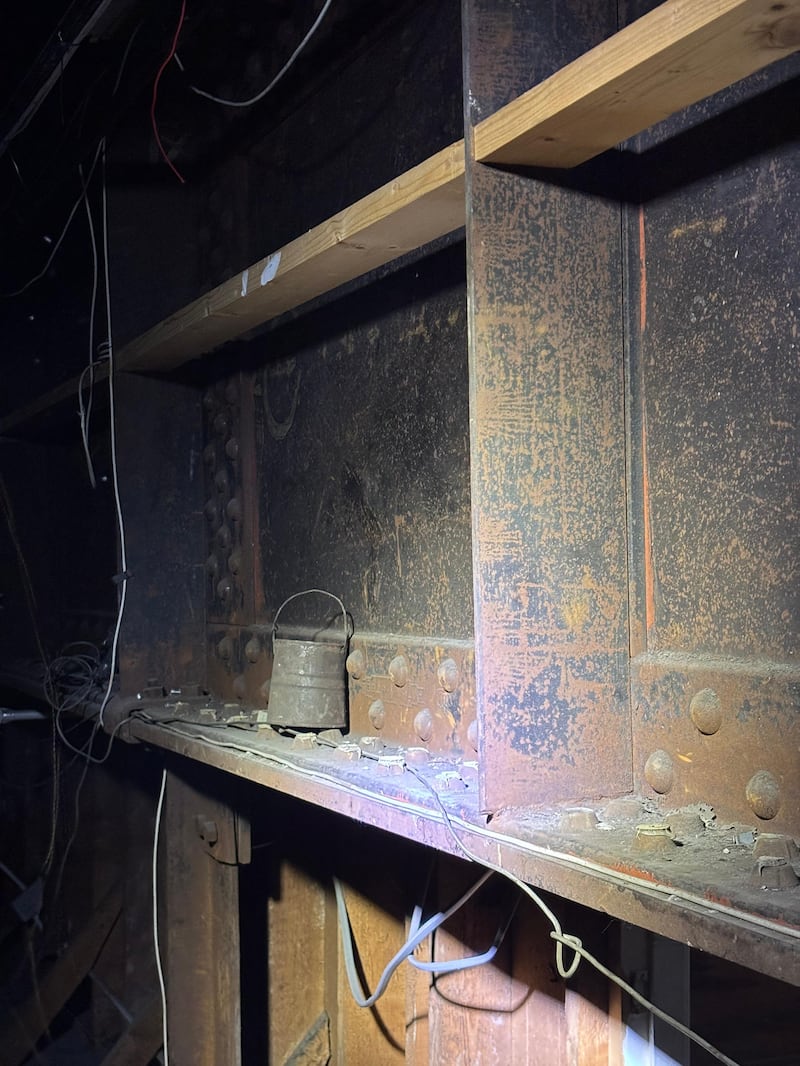 Tin cup found during the refurbishment of the picture house in Belfast. Photograph: The Strand/PA Wire
“So honestly, we don’t know the exact origin of that little tin cup, but I like to think that it was a builder, or a Harland & Wolff employee back in the 1930s, having his piece, sipping tea, and then he left it.
“Something quite simple like a tin cup tells its own story, the association with Harland & Wolff and the people who built the building.”
Hickey has also gathered people’s memories of the venue, compiled a new book based on interviews with scores of people about their memories of the Strand, which was officially launched, along with a short film The Strand at 90 at a special event in the Long Gallery at Stormont on Tuesday evening.
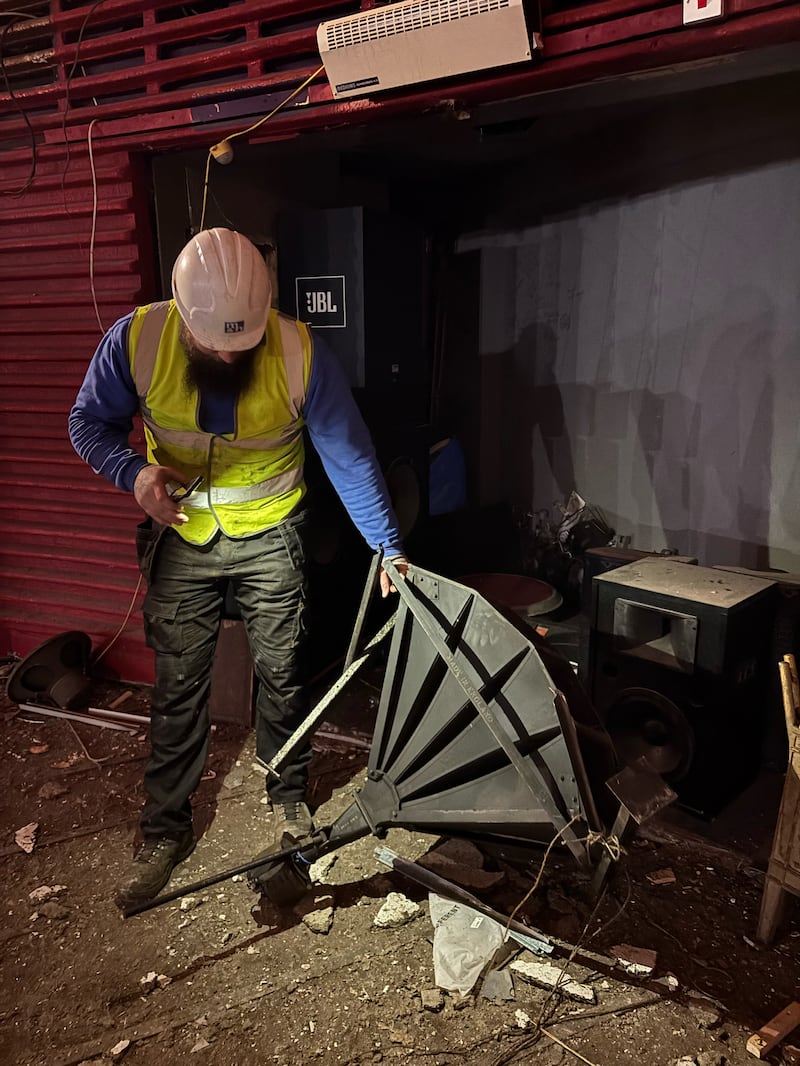 A speaker found during the refurbishment of the picture house in Belfast. Photograph: The Strand/PA Wire
Strands of Our Picture House Past also includes images from museums, archives and family collections.
Meanwhile, The Strand At 90, created by award-winning east Belfast documentary film-maker Ross McClean, is a short film which charts the venue’s history, surviving the bomb blitzes of the second World War and changing entertainment tastes while scores of other picture houses closed.
Narrated by Northern Irish actor and playwright Marie Jones, the film is told through the memories of the people who have played a part in keeping the Strand alive, featuring interviews with champions and patrons of the venue, including Ronnie Rutherford and Linda Smyth.
Speaking at the 90th anniversary event, chief executive of the Strand, Mimi Turtle, said it was a proud moment.
“Celebrating 90 years of the Strand is an incredibly proud moment for everyone connected to this special place,” she said.
“The book and the film capture not only the building’s rich heritage but also the impact that it continues to have in Belfast, celebrating the stories and memories that have a real personal significance to so many people.
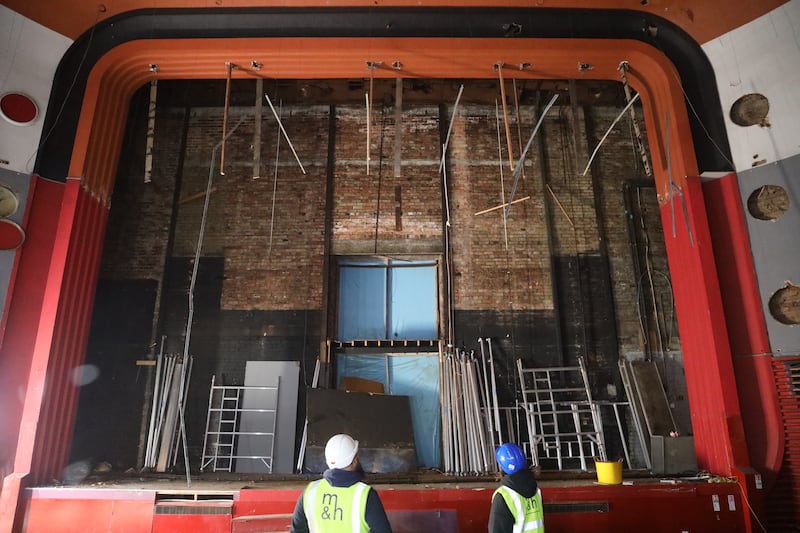 The 1935 proscenium arch during the refurbishment of the picture house in Belfast. Photograph: Danny Meegan/PA Wire
“As our heritage officer Rosie comments in the foreword of Strands of Our Picture House Past, these reflections are far from exhaustive; there are a multitude of additional inserts, photographs and memories that could be included.”
The cinema is scheduled to reopen in late autumn, following the completion of the £7 million (€8 million) restoration delivered by Belfast City Council through a mix of funding support from Levelling Up Funding UK, The National Lottery Heritage Fund, Belfast City Council and several private funders and donors. – PA